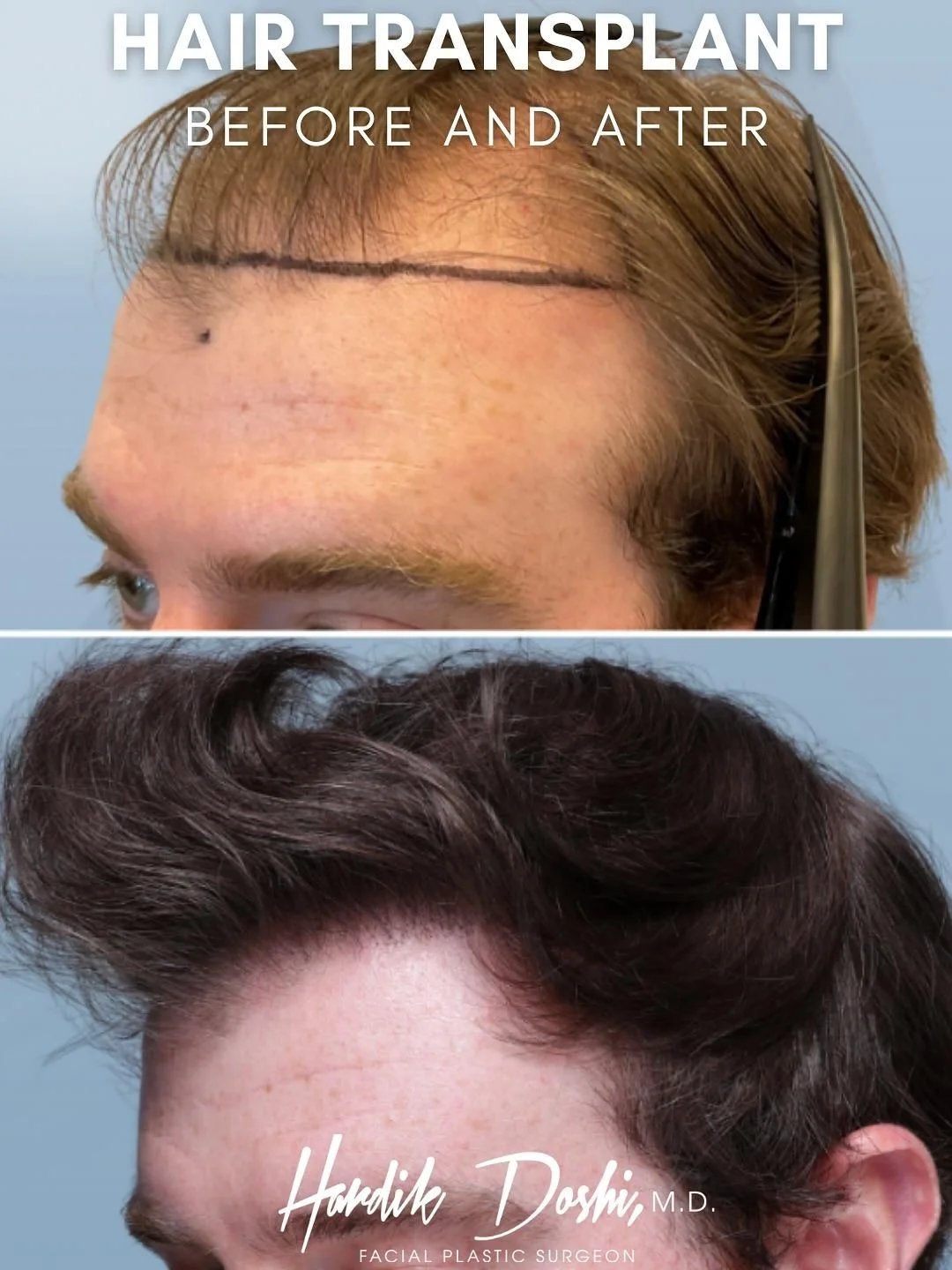
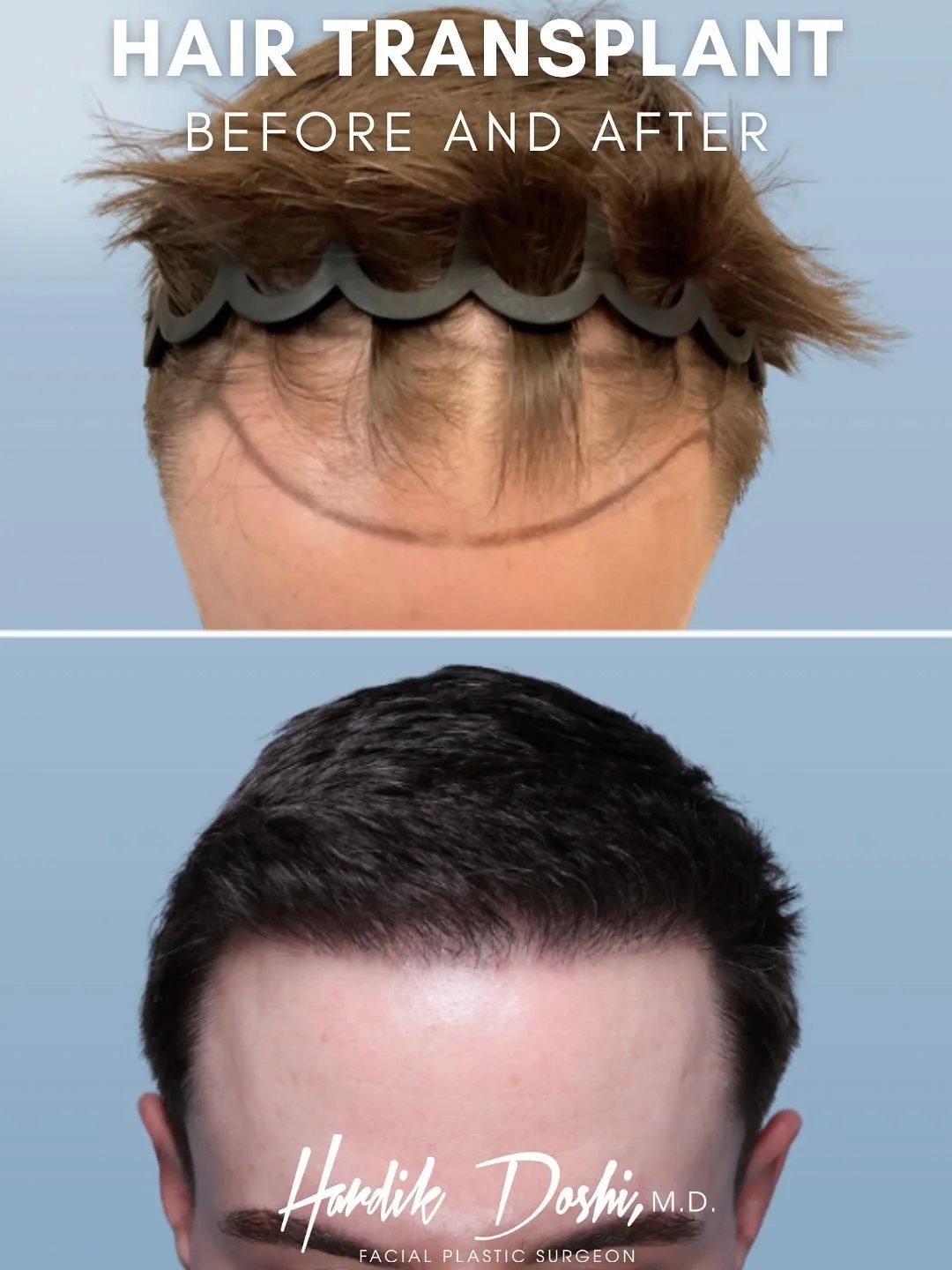
It is the first question almost every hair loss patient asks. You have been watching your hairline change for years, maybe treating it with minoxidil or finasteride, maybe doing nothing. And now you are wondering whether a hair transplant is actually worth it or whether the results will last.
The short answer is yes, a properly performed hair transplant produces permanent results. But there is important nuance behind that answer, and understanding it will help you make a better decision about timing, technique, and what to realistically expect.
Why Hair Transplant Results Are Permanent
The permanence of a hair transplant is rooted in a biological principle called donor dominance, first described by Dr. Norman Orentreich in the 1950s. The concept is straightforward: hair follicles taken from the back and sides of the scalp retain the genetic characteristics of their origin site, even after being transplanted to a different location.
The back and sides of the scalp, the donor zone, contain follicles that are genetically resistant to dihydrotestosterone (DHT), the hormone responsible for androgenetic hair loss, the most common form of hair loss in both men and women. When these follicles are transplanted to a thinning or bald area, they continue to behave as if they were still in the donor zone. They do not fall out in response to DHT. They grow for the rest of the patient's life.
This is why a well-performed FUE hair transplant produces results that are genuinely permanent: the transplanted follicles are fundamentally different from the ones that were lost.
The Important Caveat: Native Hair Continues to Fall
Here is the nuance that patients need to understand clearly before committing to surgery. A hair transplant permanently replaces the follicles that were moved. It does not stop the progression of hair loss in the surrounding native hair.
If you are in your thirties and you transplant the hairline, the transplanted hair will remain for life. But if hair loss continues in the areas behind the hairline or on the crown, the overall result may change over the following decade as native hair thins around the permanent transplanted hair.
This is why timing and planning matter so much, and why Dr. Hardik Doshi is conservative with younger patients. A hairline transplant performed at 25 on someone whose hair loss trajectory is still active can produce a natural-looking result that becomes less natural over ten years if the surrounding native hair continues to thin. The transplanted hairline remains, but the mid-scalp behind it thins, creating an unusual distribution pattern.
The goal of planning is to anticipate this trajectory and design the transplant accordingly, which means preserving donor reserve for future procedures, avoiding over-harvesting, and using medical management alongside surgery to slow the progression of native hair loss.
How Many Sessions Will You Need?
There is no universal answer. The number of sessions depends on the degree of hair loss, the density goal, the availability of donor hair, and the patient's trajectory of ongoing hair loss. Here is how Dr. Doshi approaches it.
Mild hair loss or hairline refinement
Patients with limited recession and good donor supply can often achieve their goals in a single session of 800 to 1,500 grafts. Recovery is straightforward, downtime is minimal, and results are visible within six to twelve months.
Moderate hair loss
Patients with Norwood scale III to IV hair loss typically require 1,500 to 2,500 grafts in a first session. A second session may be appropriate after twelve to eighteen months, once the first transplant has fully grown and the ongoing hair loss pattern has become clearer. This staged approach allows Dr. Doshi to use donor reserves strategically rather than committing everything to a single session.
Advanced hair loss
Patients with Norwood V to VII hair loss have more area to cover and limited donor supply relative to demand. In these cases, the planning conversation is particularly important. Dr. Doshi is direct about what is achievable: transplanting to create natural density across an entirely bald scalp is not realistic for most patients. What is realistic is restoring the frontal zone and hairline, framing the face, and creating an appearance of density from the front that reads as natural.
Younger patients
For patients in their twenties or early thirties with active hair loss, Dr. Doshi takes a deliberately conservative approach. He transplants to address the current concern while preserving donor reserve for future sessions as the loss pattern becomes clearer. He will not harvest aggressively in a young patient who has decades of potential hair loss ahead of them.
FUE vs FUT: Which Produces More Permanent Results?
Both FUE and FUT transplant DHT-resistant follicles from the donor zone and both produce permanent results. The permanence is determined by the donor origin of the hair, not the harvest technique. The difference between the techniques is in the extraction method and what it means for scarring, recovery, and the donor area.
- FUT (follicular unit transplantation, or strip method) involves removing a strip of scalp from the donor area, dividing it into individual follicular units under a microscope, and transplanting them. It leaves a linear scar at the donor site, which can be visible if the hair is worn very short.
- FUE (follicular unit extraction) involves individually extracting follicular units using small punches, typically 0.8 to 0.9mm. It leaves dot scars in the donor zone that are essentially invisible to the naked eye, even at very short hair lengths.
Dr. Doshi performs primarily FUE using 0.8 to 0.9mm micro-punches, which is the most minimally scarring approach available. Approximately 80 percent of the procedures he performs are FUE. FUT remains appropriate for certain patients, particularly women who prefer not to shave the donor area or patients who have already had a linear scar from a prior procedure and want to use the same scar line.
The Hair Growth Timeline: What to Expect Month by Month
One of the most common sources of anxiety after a hair transplant is the shedding phase. Understanding the full growth timeline prevents patients from interpreting normal post-operative changes as a sign that the procedure did not work.
- Weeks 1 to 2: The transplanted grafts settle into their new position. Some scabbing occurs at the implant sites and resolves within ten to fourteen days. The donor area heals simultaneously.
- Weeks 2 to 8: The transplanted hairs enter a resting phase called telogen and shed. This is normal and expected. The follicles themselves are alive and intact beneath the surface; the shaft shedding is part of the natural growth cycle.
- Months 3 to 4: New hair begins to emerge from the transplanted follicles. Growth at this stage is fine and sometimes unpigmented initially.
- Months 4 to 6: Visible growth accelerates. Many patients see meaningful cosmetic improvement by month five or six. Dr. Doshi's patients frequently notice earlier growth than the standard six-month benchmark, which he attributes to the micro-punch technique minimising trauma to the follicles during extraction.
- Months 6 to 12: Hair thickens and matures. The result becomes increasingly defined through this period.
- Month 12 to 18: Final result. The transplanted hair has reached its mature diameter and density. Any further assessment of whether additional sessions are needed should happen after this point, when the full outcome of the first procedure is visible.
Medical Management Alongside Surgery: Protecting What You Have
A hair transplant restores what has been lost. Medical management protects what remains. Dr. Doshi treats these as complementary, not alternative, strategies.
Before surgery he assesses blood work to identify any underlying contributors to hair loss beyond genetics. Nutritional deficiencies, thyroid dysfunction, and iron deficiency are all reversible causes that should be addressed before committing to surgery. He also ensures patients are on appropriate medical management, typically minoxidil and finasteride for appropriate candidates, to slow the progression of native hair loss around the transplant.
Post-operatively he uses PRP therapy to support the healing of the donor scalp and enhance early graft survival. He also offers red light therapy as an adjunct. These are not marketing additions. They are adjuvant interventions with published evidence supporting their role in hair restoration outcomes.
For patients who are earlier in their hair loss journey and not yet ready for surgery, Dr. Doshi is equally happy to discuss a non-surgical management plan. Coming to a consultation with him is not a commitment to surgery. It is a conversation about where you are, where you are headed, and what the right approach is at this stage. Book a hair transplant consultation at his Long Island office.
What Makes a Hair Transplant Last: The Surgeon's Role
The permanence of transplanted hair is biological. But the quality, naturalness, and longevity of the result are surgical. A hair transplant that places grafts in the wrong angulation, at the wrong density distribution, or without consideration for the patient's ongoing hair loss trajectory will produce a result that looks artificial or ages poorly, even if the transplanted hair itself is permanent.
The artistry in FUE hair transplantation lies in designing a hairline that looks natural for the patient's age and face shape, distributing grafts at a density that is appropriate for the donor supply available, angling each follicle to match the natural growth direction of the surrounding hair, and anticipating future loss so the result continues to look intentional rather than isolated as native hair thins.
Dr. Doshi performs every aspect of the procedure himself. He does not delegate the graft placement to technicians. At many high-volume hair transplant practices, the surgeon is involved only in the extraction phase; the placement is performed by non-physician staff. The placement is where the artistry lives, and it is where outcomes diverge most dramatically between practices.
International Hair Transplant Clinics: What Patients Need to Know
Many patients, particularly those with more advanced hair loss, are drawn to international clinics in Turkey, India, or Colombia by price points that are a fraction of US costs. Dr. Doshi is direct about this: price reflects case volume, not necessarily quality, and the risks of international surgery are real.
The primary concerns are over-harvesting and poor artistry. International clinics operating at high volume with technician-led placement frequently harvest more aggressively than is appropriate for the patient's age and hair loss trajectory, leaving them with insufficient donor reserve for future sessions. The immediate result may look dense. The five-year result may leave the patient with a depleted donor area, a pattern of ongoing loss that the transplant did not account for, and limited options.
If you are considering international options, ask specifically about who performs the placement, how many sessions have been performed with your level of hair loss, and what the follow-up protocol is if you are not satisfied with the result.