
Most patients research facelift and rhinoplasty as if they belong in two entirely separate conversations. One is about the jawline, jowls, and neck. The other is about the bridge and tip of the nose. In practice, the two procedures sit closer together than that framing suggests, both anatomically and in how a face reads to the eye, and Dr. Hardik Doshi at Doshi Plastic Surgery on Long Island regularly evaluates patients for whom doing both at once, rather than in two separate surgeries months apart, is the better path.
Why the Nose and the Lower Face Are More Connected Than They Appear
The nose sits at the center of the face, and its proportions are judged relative to everything around it, particularly the chin and jawline. A nose that looks slightly large or undefined on a face with a soft, aging jawline can look entirely different once that jawline is restored to a firmer, more defined contour. Surgeons sometimes see patients request rhinoplasty to address a concern that a facelift, or a change to the chin and jaw, would partially resolve on its own by shifting the visual balance of the face.
This does not mean every rhinoplasty patient secretly needs a facelift, or vice versa. It means that Dr. Doshi evaluates the face as a connected system rather than a set of isolated procedures, which is consistent with the training that underlies his preservation deep plane facelift technique and his approach to rhinoplasty more broadly. A patient in their fifties or sixties considering rhinoplasty for the first time is a very different case than a patient in their thirties, precisely because the aging midface and jawline change how the nose reads against the rest of the face.
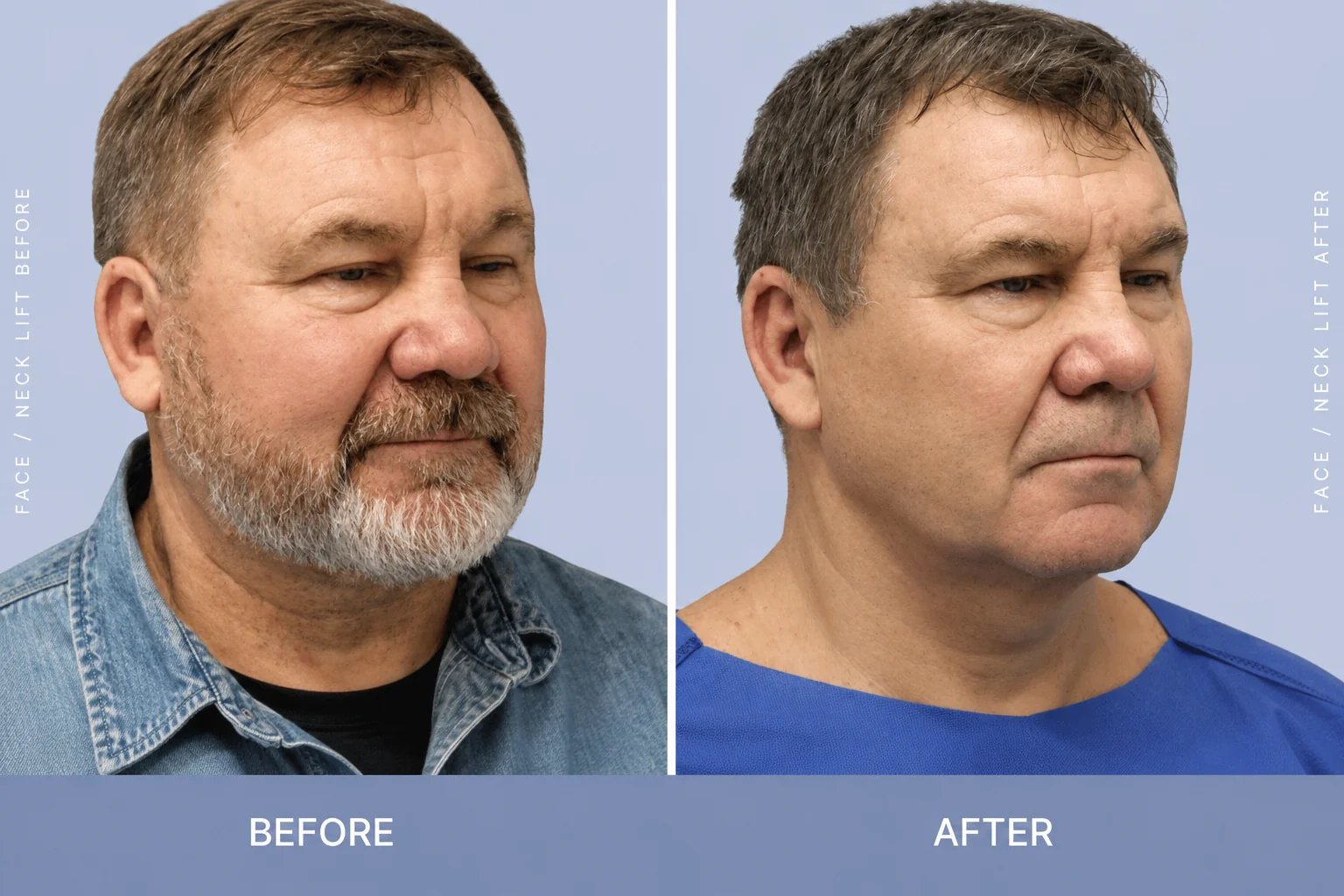
Who Is Actually a Good Candidate for a Combined Procedure
Combining a facelift and rhinoplasty into a single operation is not the right choice for every patient, and Dr. Doshi is direct about that in consultations. The patients for whom it tends to make sense generally share a few characteristics.
Patients already planning both procedures independently. Some patients arrive at a consultation already having decided, separately, that they want a facelift and a rhinoplasty. For these patients, the question is not whether to have both procedures, but whether to have them in one operation or two. Combining them means one recovery period instead of two, and one exposure to anesthesia instead of two, which are meaningful considerations for patients balancing surgery against work and family schedules.
Patients with age-related nasal changes. As the face ages, the nasal tip can begin to droop, and the skin along the bridge can thin in ways that make preexisting irregularities more visible. A patient having a facelift for jowls and neck laxity may also be a reasonable candidate for tip refinement or a minor dorsal adjustment performed in the same setting, since both procedures are already addressing the aging process in adjacent areas of the face.
Patients in good overall health with realistic recovery expectations. A combined procedure takes longer under anesthesia than either surgery performed alone, and the recovery, while still generally manageable, involves swelling and bruising across a larger area of the face at once. Patients need to be realistic about a longer and more involved early recovery window in exchange for a single overall healing process.
Who Should Consider Staging the Procedures Separately
There are equally clear cases where Dr. Doshi will recommend staging the procedures months apart rather than combining them.
Patients whose primary concern is functional, such as breathing difficulty tied to a deviated septum, are sometimes better served by addressing the breathing correction component of rhinoplasty on its own first, particularly if the aesthetic goals for the nose are still evolving or dependent on how the airway work settles. Patients with more complex revision needs in either the nose or the face, where the surgical field is more complicated due to prior surgery, are often better served by isolating the more complex procedure to its own operation, so any complication can be identified and addressed without the added variable of a second simultaneous surgery. And patients who are simply uncertain about wanting both procedures, as opposed to firmly decided, are usually better served by having one procedure first and evaluating the result before deciding on the second.

How the Combined Surgery Is Actually Planned
When a combined procedure is the right fit, Dr. Doshi builds the surgical plan around sequencing and swelling patterns specific to each area. The facelift portion, whether a full deep plane facelift or a more limited mini facelift, addresses the jawline, jowls, and neck. The rhinoplasty portion is planned to work with the facial changes rather than independently of them, since the redefined jawline and neck contour from the facelift will shift how the nose is perceived once swelling resolves.
This is one of the more technically demanding aspects of a combined procedure, since the surgeon has to plan not for how each result will look in isolation, but for how the two results will read together on a face that has just changed in two places simultaneously. Dr. Doshi's training at Columbia and Weill Cornell, combined with more than 5,000 procedures performed across his career, is directly relevant here, since planning a combined facial surgery well requires the kind of pattern recognition that only comes from having managed a large volume of both procedure types individually first.
What Recovery Looks Like When Both Procedures Are Combined
Recovery from a combined facelift and rhinoplasty is longer in its early phase than recovery from either procedure alone, though it does not simply double. Patients can expect more significant swelling and bruising across the midface in the first one to two weeks, since both the nasal tissue and the facelift incision sites are healing at the same time. Nasal splinting and facelift dressings are managed together during this window.
By the two to three week mark, most of the visible bruising has resolved and patients are typically comfortable returning to non-strenuous public activity, similar to the recovery timeline for either procedure independently. The nose, as with any rhinoplasty, continues refining its final shape over several months as internal swelling gradually resolves, while the facelift result stabilizes on a somewhat faster timeline. Patients considering a combined procedure should plan for a recovery window closer to three weeks before feeling fully presentable, rather than the one to two weeks sometimes associated with a facelift alone.
The Cost and Scheduling Case for Combining Procedures
Beyond the clinical reasoning, there is a practical case for combining procedures that many patients find compelling once they understand it. A single surgery means a single anesthesia fee, a single operating room booking, and a single recovery period taken away from work. For patients traveling to Long Island from out of the area for surgery with Dr. Doshi, this also means a single travel and lodging window rather than two separate trips months apart.
That said, cost and convenience should never be the deciding factor on their own. Dr. Doshi's evaluation process is built around whether combining the procedures is medically and aesthetically sound for a specific patient's anatomy, with the scheduling benefits treated as a secondary consideration once the clinical case for combining the surgeries is already clear.
A Deeper Look at the Surgical Sequencing Involved
When Dr. Doshi does move forward with a combined facelift and rhinoplasty, the order of operations within the surgery itself is deliberate rather than incidental. In most combined cases, the facelift portion is addressed first, since it involves broader tissue dissection and typically longer surgical time, and completing it while the patient is freshest under anesthesia is generally the more efficient approach. The rhinoplasty portion follows, performed with full attention once the facelift work is complete, rather than trying to move back and forth between two surgical sites.
This sequencing also has a practical benefit for swelling management. The facelift incisions are typically positioned around the ear and hairline, areas that tend to swell somewhat independently of the central face. Addressing the nose after the facelift portion allows Dr. Doshi to assess the midface's position more accurately once the facelift's lifting effect is already in place, which can inform subtle decisions about tip projection and rotation that are best made with the surrounding facial structure already repositioned.
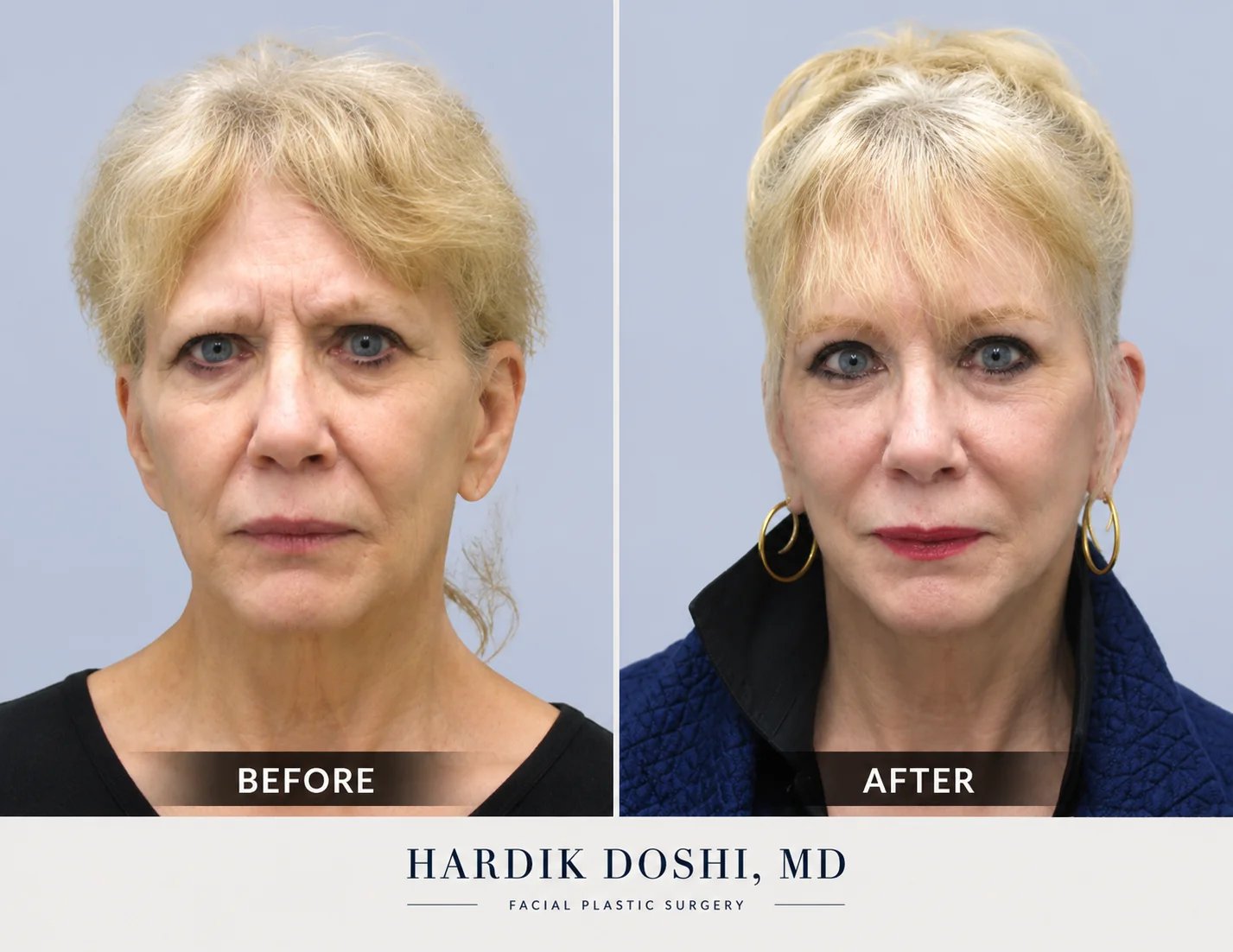
Why Not All Combined Cases Involve a Full Facelift
It is worth noting that "facelift" in the context of a combined procedure does not always mean a full deep plane facelift addressing the entire lower face and neck. Some patients are better candidates for a more limited mini facelift paired with rhinoplasty, particularly younger patients with early signs of jawline softening who do not yet need the more extensive repositioning a full deep plane technique addresses. Dr. Doshi evaluates the appropriate scope of the facelift portion independently from the decision to combine it with rhinoplasty, since combining two procedures should never mean defaulting to a more extensive version of either one than a patient actually needs.
The Anesthesia and Safety Conversation
Combining two procedures into a single operation naturally raises questions about anesthesia time and overall surgical safety, and these are questions Dr. Doshi addresses directly during the planning process. Combined procedures do involve a longer total time under anesthesia than either surgery performed alone, though the combined time is typically less than the sum of two entirely separate operations and their associated anesthesia inductions, since the setup and recovery from anesthesia only happens once.
Patient selection is central to managing this safely. Candidates for combined procedures are evaluated for overall health, cardiovascular fitness, and any history that might affect tolerance for a longer surgical and anesthesia time, with the same rigor applied to a single, longer procedure as would be applied to a shorter one. Patients with health considerations that make a longer combined surgery inadvisable are counseled toward staging the procedures separately instead, prioritizing safety over the scheduling convenience of a single operation.
How Patients Decide Between Combining and Staging
For patients on the fence between combining their facelift and rhinoplasty or staging them separately, Dr. Doshi frames the decision around a few practical questions. How confident is the patient in wanting both procedures, versus wanting to see how one result looks before committing to the second? How much recovery time can realistically be set aside at once, versus spread across two shorter windows months apart? And does the specific combination of concerns, jawline laxity alongside nasal tip drooping, for example, genuinely benefit from being planned and executed together, or would the two procedures produce essentially the same result whether done together or apart?
Patients who are confident in both goals, have the flexibility for a single longer recovery period, and have anatomical concerns that interact meaningfully, such as an aging midface changing how the nose is perceived, tend to be the strongest candidates for combining. Patients who are still deciding on one of the two procedures, or whose recovery schedule realistically only allows for shorter individual windows, are often better served by staging.
What a Combined Consultation Actually Covers
A consultation for a potential combined procedure covers more ground than a single-procedure consultation, and patients should expect it to take longer as a result. Dr. Doshi will typically evaluate the facelift candidacy and the rhinoplasty candidacy independently first, using the same detailed exam process he would use for either procedure on its own, before discussing whether combining them makes sense. This ensures that the decision to combine is built on two independently sound surgical plans, rather than a single combined plan that compromises on either component to make the combination work logistically.
Patients leave this type of consultation with a clear picture of what each procedure would involve on its own, what combining them changes about the recovery and surgical time, and a specific recommendation, based on their individual anatomy and goals, about which approach best serves their outcome.
Why Experience Across Both Procedures Independently Matters Here
A surgeon proposing to combine a facelift and rhinoplasty needs deep, independent expertise in both procedures, not just competence in one with familiarity in the other. This is one of the reasons Dr. Doshi's background, more than 5,000 procedures performed and training at both Columbia and Weill Cornell, is directly relevant to combined cases specifically. Planning a combined surgery well requires the surgeon to hold two separate, detailed surgical plans in mind simultaneously, understanding how decisions in one procedure affect the other, which is a meaningfully different skill than performing either procedure well in isolation.
Patients considering a combined procedure with any surgeon should ask directly about that surgeon's specific experience combining these two procedures, not just their general experience with facelifts and rhinoplasty as separate offerings. The two are related but distinct competencies, and a surgeon who performs each procedure often but rarely combines them may not have the same refined judgment about sequencing and mutual effect that comes from regularly planning combined cases specifically.
The Long Island and Manhattan Context
Dr. Doshi's practice, spanning both Long Island and Manhattan locations, sees a patient population that includes a meaningful number of people balancing demanding professional schedules against the desire for facial rejuvenation. For many of these patients, the scheduling efficiency of a combined procedure carries real practical weight: one recovery period taken away from work rather than two, scheduled around a single block of personal or professional downtime rather than two separate interruptions months apart.
This practical consideration does not override the clinical evaluation Dr. Doshi performs for every combined case, but it does explain why the question comes up often in consultations at both locations. Patients traveling into Manhattan or Long Island from further distances for surgery face similar logistics, where a single combined trip is meaningfully more convenient than two separate visits spaced months apart, particularly for patients coordinating travel, lodging, and time away from family or work commitments around each surgical date.
Setting Realistic Expectations Before Surgery Day
One of the more important parts of preparing for a combined procedure is calibrating expectations around the immediate post-operative period. Patients who have researched a facelift or a rhinoplasty separately often have a mental picture of what the first week of recovery looks like for each procedure individually, and it is worth being explicit that a combined recovery is not simply an average of the two.
In the first several days, patients can expect nasal splinting alongside facelift dressings, meaning both the midface and the areas around the ears will feel restricted and sensitive at the same time. Sleeping elevated, a standard recommendation after either procedure alone, becomes even more important after a combined surgery, since it helps manage swelling in both surgical areas simultaneously. Most patients find the first four to five days the most demanding, followed by a steadier week of improvement through the two-week mark, at which point most visible bruising has resolved and the emotional adjustment to seeing early results, before final swelling has resolved, becomes the more prominent part of the experience.
Setting this expectation clearly during the consultation, rather than letting a patient discover the more demanding early recovery window in real time, is part of what allows a combined procedure to feel manageable rather than overwhelming once surgery day actually arrives.
Making the Final Decision With Confidence
Patients weighing a combined facelift and rhinoplasty against staging the two procedures separately ultimately benefit most from a decision built on a complete, independently evaluated understanding of both procedures, rather than a decision driven primarily by scheduling convenience. Dr. Doshi's approach ensures that whichever path a patient chooses, combined or staged, the underlying surgical plan for each individual procedure has been fully thought through on its own merits first. This gives patients confidence that the final decision reflects what their specific anatomy and goals actually call for, rather than a compromise reached simply because combining two procedures seemed like the more efficient option on paper.
Why This Decision Should Never Be Rushed
Given how much depends on individual anatomy, health status, and personal scheduling flexibility, the decision to combine or stage a facelift and rhinoplasty is one of the areas where taking extra time before committing pays off. Patients are encouraged to sit with the information from their consultation, discuss it with family if helpful, and return with follow-up questions before finalizing a surgical date. Dr. Doshi's practice, spanning both Long Island and Manhattan, accommodates this kind of unhurried decision-making, recognizing that a combined procedure in particular carries enough additional complexity that a confident, well-considered decision matters more than an efficient one.
A Final Note on Individualized Planning
If there is one theme that runs through every part of this discussion, it is that combining a facelift and rhinoplasty is never a default recommendation, and it is never a decision made to simplify scheduling at the expense of surgical judgment. Dr. Doshi's evaluation process treats each procedure as its own complete surgical question first, then layers on the question of combination only once both individual plans are sound. This sequencing is what allows patients to trust that whichever path they choose, the underlying reasoning was built around their specific face and their specific goals, not around what was most convenient to schedule.
Traveling for a Combined Procedure
Patients coming from outside the immediate Long Island and Manhattan area to see Dr. Doshi specifically for a combined procedure should plan their travel around a longer stay than they might for a single procedure alone. While every patient's recovery timeline varies, a general guideline is to plan for at least ten to fourteen days in the area before traveling home, allowing enough time for the most visible bruising and swelling to resolve and for a post-operative check-in before departure. Patients traveling a significant distance are encouraged to discuss this timeline directly during their consultation, so travel arrangements can be planned around a realistic recovery window rather than an overly optimistic one.
A Note on Post-Operative Follow-Up
Patients who undergo a combined procedure should expect a more structured post-operative follow-up schedule than a single-procedure patient might, simply because two separate healing processes need to be monitored together. Dr. Doshi typically schedules an earlier initial follow-up visit within the first week, when nasal splint removal and an early check of the facelift incision sites both need attention, followed by additional visits at roughly the two-week and one-month marks to track how both areas are settling. Patients traveling from outside the immediate area should factor this follow-up schedule into their planning, since at least the earliest post-operative visit typically needs to happen in person before returning home.
Closing Perspective
Combining a facelift and rhinoplasty into one surgery is neither an automatic upgrade nor an unusual request. It is one legitimate path among several, and the right choice for any individual patient depends on anatomy, health, timeline flexibility, and the specific way their facial concerns interact. Dr. Doshi's role in that decision is to evaluate each of those factors honestly and build a recommendation around them, rather than defaulting to whichever answer sounds most efficient on paper.