
Facial liposuction is a popular way to remove fat that builds up at the bottom of the chin and neck. Due to genetics, some people have excess fat around their chin and neck that no amount of diet or exercise can remove. One of the most common uses for face liposuction is to remove a "double chin." This treatment usually takes about one hour.
Liposuction is frequently used to improve the definition and shape of the treated region after other procedures, such as a facelift, neck lift, or cheek implants. FaceTite is another procedure often performed that complements the effects of liposuction. It can help shrink and firm the skin and improve the effects of liposuction in both younger and older individuals.
Facial Liposuction Procedure
With minimal sedation and a local anesthetic, facial liposuction can be completed in under an hour. However, if you're having other facial treatments done at the same time, general anesthesia may be necessary. Following a thorough consultation, you and your surgeon will make this decision together.
Liposuction of the face is carried out in the same way as liposuction is performed on other body parts. The amount of fat that is eliminated is the key difference. On average, only a few ounces of fat are eliminated from your face. Liposuction of the thighs, on the other hand, may remove several pounds of fat.
Your exact surgical procedure will depend on which areas are being addressed with liposuction. Your surgeon will create a small incision beneath your chin, or between your gums and the bottom of your inner lower lip, to treat the jowls or chin region. A small tube called a cannula will then be inserted and moved back and forth to break up the fat tissues. After that, the fat is suctioned out.
Other liposuction technologies may be used to emulsify the fat before it is removed. Ultrasound-assisted liposuction, power-assisted liposuction, laser-assisted liposuction, and water-assisted liposuction are some of the options. These methods allow a less invasive operation that causes less trauma to the treatment area. Your surgeon will close your wounds when the right amount of fat has been removed. The results of facial liposuction are instantaneous.
Facial Liposuction Side Effects
You may suffer some soreness and swelling right after the treatment, but this will go away on its own after a few days. In most cases, over-the-counter pain relievers will take care of any discomfort you may have in the first few days. There is a risk of changes to your skin, such as bumpy, wavy, or withered skin, due to poor skin elasticity and unusual healing.
Facial Liposuction Recovery
Recovery is less complicated if facial liposuction is performed alone. If you have additional treatments at the same time, you may have a longer recovery period. Expect some discomfort and pain, which can be managed with over-the-counter or prescription medicines. Swelling and bruising are other common side effects. You will wear a compression garment to help minimize swelling for one or two weeks.
If you can cover the treated region with a scarf or turtleneck garment, you should be able to return to work in five days or less. Your diet may be restricted if the incisions are in your mouth. To improve your healing period, strictly follow your surgeon's postoperative advice.
Facial Liposuction Results
After a day, you'll be able to begin to see the benefits of your facial liposuction treatment. Your jawline and neck are more sculpted and contoured. By the third day, your bandages will be completely removed. Because the incisions are so small and hidden beneath the chin, scarring is minimal. They will gradually fade away. You'll be ready to show off your new look in about a week if you heal quickly. Even after a month and a half, your new appearance continues to improve as the skin contracts.
Final Thoughts
With only about a week of downtime, this popular procedure helps to achieve a pleasant, refined, and youthful look. Depending on the patient’s specific needs, liposuction may be performed with local anesthesia and sedation or may require general anesthesia for some patients. In terms of effectiveness, it lasts approximately seven to ten years.
This is why facial liposuction is one of the most gratifying cosmetic procedures for patients.
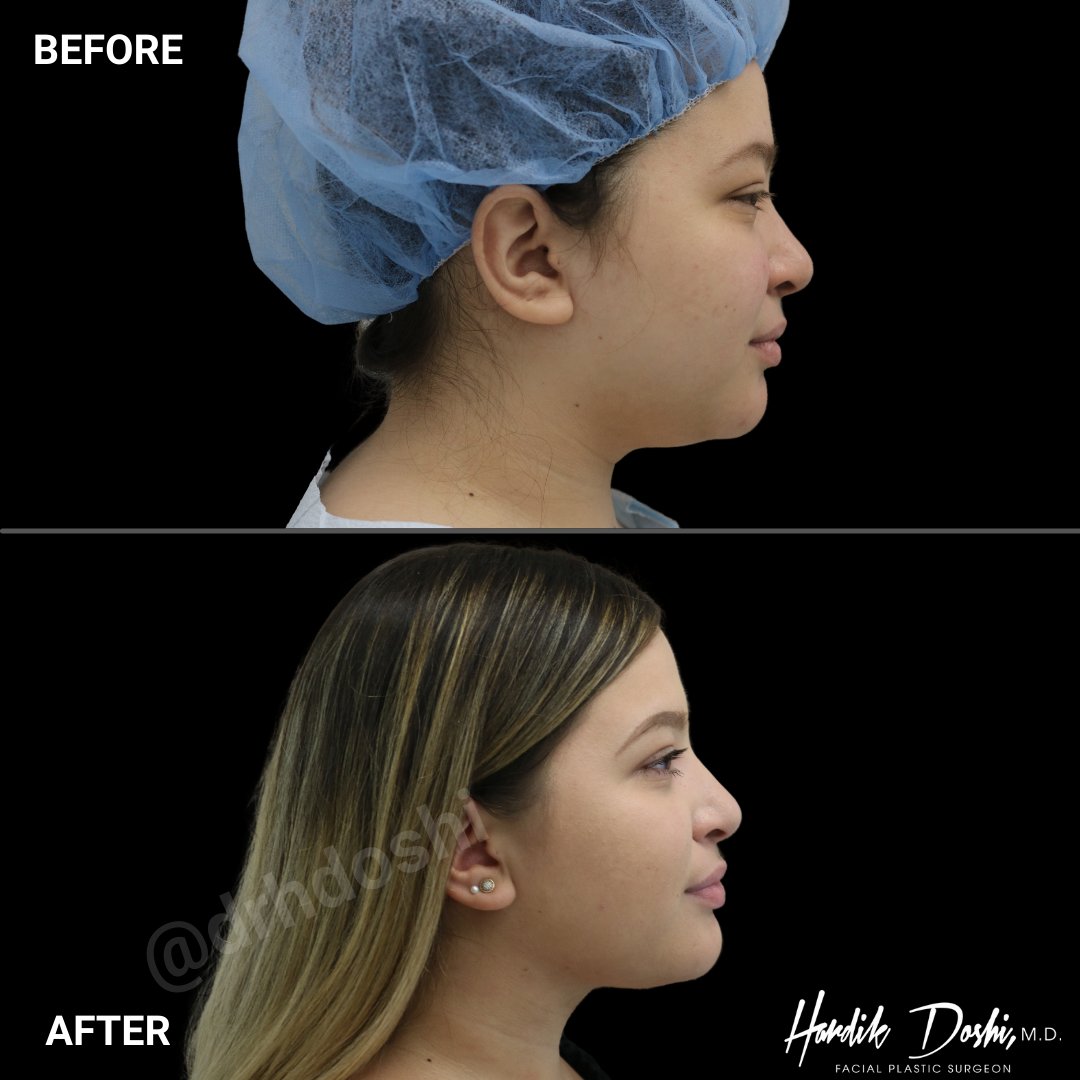
Who Is a Good Candidate for Facial Liposuction
Facial liposuction works best when the problem is fat and not skin. The strongest candidates have a localized pocket of fat under the chin or along the jawline, skin that still has good elasticity so it can contract after the fat is removed, and a weight that has been stable for some time. Younger patients with a stubborn "double chin" that persists despite a healthy lifestyle are a typical example, and so are people whose family members carry fullness in the same area.
Liposuction does not tighten loose skin on its own. If the skin has already lost much of its elasticity, removing the fat underneath can leave the area looking looser rather than sharper. That is the main reason a consultation includes pinching and testing the skin, and not only measuring the fat.
When the Problem Is Not Just Fat
A full-looking neck is not always a fat problem. Several other things can create the same appearance, and each points to a different treatment:
Loose skin and platysma bands. With age, the thin muscle under the skin of the neck separates and forms vertical bands, and the skin sags in front of them. Fat removal does not correct this. A neck lift tightens the muscle and redrapes the skin, and it is the more suitable operation in these cases.
Fat beneath the muscle. Some fullness sits deeper than a standard liposuction cannula reaches. This is also usually addressed as part of a neck lift.
A recessed chin. When the chin sits back, the neck seems to merge with the jaw and looks heavier than it is. In that case a chin augmentation can improve the profile more than removing fat would.
Jowls from descent of the face. Fullness along the jawline can come from the cheeks and soft tissues dropping, not from excess fat. A deep plane facelift repositions those tissues instead.
Telling these apart is the real work of a consultation, and it is why a recommendation can end up being a different procedure from the one a patient came in asking about. The article on neck lift on Long Island goes into how the neck is assessed.
Facial Liposuction Compared With Other Options
Patients who ask about facial liposuction are usually also weighing a less invasive route, so it helps to see how the common options differ.
Fat dissolving injections. Injectable treatments break down small amounts of fat under the chin without surgery, but they usually require several sessions and cause swelling between visits. They suit mild fullness. Read more on the fat dissolving page, and the comparison of Kybella, Ultherapy and neck lift sets out where each makes sense.
Buccal fat removal. This addresses fullness in the lower cheeks, not the chin or jawline. It is a different area and a different operation, described on the buccal fat removal page.
Facial fat transfer. Fat transfer is close to the opposite goal, using fat to restore volume where the face has lost it. Some patients have fat removed from one area and used elsewhere, which is covered in the facial fat transfer overview.
Jawline contouring. Where the goal is a sharper jawline more broadly, the discussion in jawline contouring options compares surgical and non-surgical routes together.
Combining Liposuction With a Neck Lift or Facelift
Liposuction is often done alongside a lifting procedure instead of on its own. Sculpting the fat first gives the surgeon a cleaner contour to work with, and the lift then handles the skin and muscle that fat removal cannot. This pairing is common with a mini facelift or a deep plane facelift, and the overview of the types of facelifts explains how those operations differ.
Combining procedures means a longer recovery than liposuction alone, and general anesthesia becomes more likely, as noted earlier on this page. The advantage is a single recovery period instead of two.
Weight Changes and GLP-1 Medications
Weight loss changes the neck. Losing weight, including with GLP-1 medications, can reduce fat under the chin, but it can also leave skin looser than before, particularly after rapid loss. Surgeons generally prefer a stable weight before operating, because new weight change after facial liposuction can alter the result. The article on the GLP-1 facelift looks at how facial and neck changes after weight loss are approached.
Risks Worth Knowing
Facial liposuction is generally a short procedure, and the risks are modest, but they are real. Contour irregularities such as waviness or small dents can occur, especially in thin skin or where healing is uneven. Asymmetry, prolonged swelling, bruising and temporary numbness are possible. Infection and fluid collection are uncommon. Rarely, a branch of the nerve that moves the lower lip can be irritated during jawline work, which is usually temporary. Choosing a surgeon who treats the face and neck regularly, and who explains these risks plainly, is part of reducing them.
What Results Look Like Over Time
Much of the early change you see is hidden under swelling. The contour looks clearer as the swelling fades, and the skin continues to settle over the following weeks. The fat cells that are removed do not grow back in that area, but the cells that remain can enlarge if you gain weight, and the skin continues to age. How long a result looks its best therefore depends on weight stability and on how your skin ages, which is why maintaining a steady weight is part of the aftercare conversation.
Preparing for the Consultation
Bring a list of medications and supplements, since some affect bleeding, and expect profile photographs and an examination of how your skin responds when it is pinched and moved. The pre-surgery checklist covers practical preparation, and the pre and post operative instructions explain what is asked of you around the date of surgery. Patients who live far away can begin with a video consultation. The main service page for liposuction gives the procedure overview, and a consultation with Dr. Doshi is the way to find out which approach suits your anatomy.
Facial Liposuction Questions
Will the fat come back after facial liposuction?
The fat cells removed from the treated area do not return. The remaining fat cells can still enlarge with weight gain, so the area can become fuller again if your weight rises significantly.
Does facial liposuction tighten the skin?
Not by itself. Skin with good elasticity tends to contract after fat removal, and treatments such as FaceTite can help it firm up, but loose skin is better addressed by a lifting procedure.
How is facial liposuction different from Kybella?
Liposuction removes the fat in a single procedure, while Kybella dissolves it gradually over several treatments. Liposuction suits larger or firmer pockets of fat, and injections suit smaller areas of mild fullness.
Can I have facial liposuction if I have loose neck skin?
It depends on how loose the skin is. Mild laxity may be acceptable, but significant looseness usually means a neck lift would give a better result than liposuction alone.
When can I exercise again after facial liposuction?
Light activity is often fine within days, but strenuous exercise generally waits until your surgeon clears it. The timing depends on whether liposuction was combined with other procedures.
Does facial liposuction leave a scar?
The incisions are very small and placed under the chin or inside the lower lip, so scarring is minimal and fades over time.