
Searching "hair transplant near me" or "hair transplant clinic near me" usually means you are at the very beginning of the process. You know you are losing hair, you have probably watched a few YouTube videos, and you have no idea what an actual in person consultation involves. That uncertainty stops a lot of people from booking the first appointment, which is unfortunate, because the consultation itself is low pressure, informative, and the single best way to find out whether hair transplantation is even the right solution for your specific pattern of loss.
This guide is written as a straightforward question and answer resource, covering the actual questions patients ask before, during, and after their first visit to Dr. Hardik Doshi's practice on Long Island for a hair transplant consultation. Dr. Doshi has built his consultation process specifically around answering these questions clearly and honestly, rather than rushing patients toward a decision before they have the information they need.
Before the Consultation
The overwhelming majority of hair loss in both men and women is androgenetic alopecia, commonly called male or female pattern hair loss. This is a genetically driven, hormone sensitive process in which certain hair follicles gradually become smaller and produce shorter, finer hairs over time until they stop producing visible hair altogether. Other, less common causes include telogen effluvium, which is temporary shedding triggered by stress, illness, or hormonal changes, traction alopecia caused by tight hairstyles, and scarring alopecia. This distinction matters enormously, because a hair transplant only works for permanent, pattern based hair loss, not for active shedding conditions, which need to be diagnosed and, if possible, treated first.
Dr. Doshi spends real time on this distinction during consultation, since recommending a transplant for the wrong type of hair loss would set a patient up for a disappointing outcome regardless of how technically well the procedure itself is performed.
No referral is needed. Most patients book directly. In some cases, if your hair loss pattern looks unusual for your age or does not fit a typical pattern, Dr. Doshi may recommend basic bloodwork, checking thyroid function, iron levels, and hormone markers, or a dermatology referral before proceeding, simply to rule out an underlying medical cause that a transplant would not address.
You do not need to know this in advance. That is exactly what the consultation determines. That said, a few general patterns are worth knowing. Candidates generally need a stable, healthy donor area, usually the back and sides of the scalp, with enough density to harvest from, and hair loss that has stabilized enough to plan around, rather than hair that is actively, rapidly thinning in an unpredictable pattern.
Not much preparation is required, though a few things help the visit go more smoothly. Avoiding a fresh haircut right before your appointment can make it easier for Dr. Doshi to assess your natural density and growth pattern. If you have used any hair loss medications, whether prescription or over the counter, it is worth noting when you started and whether you noticed any change, since this history informs the overall plan.
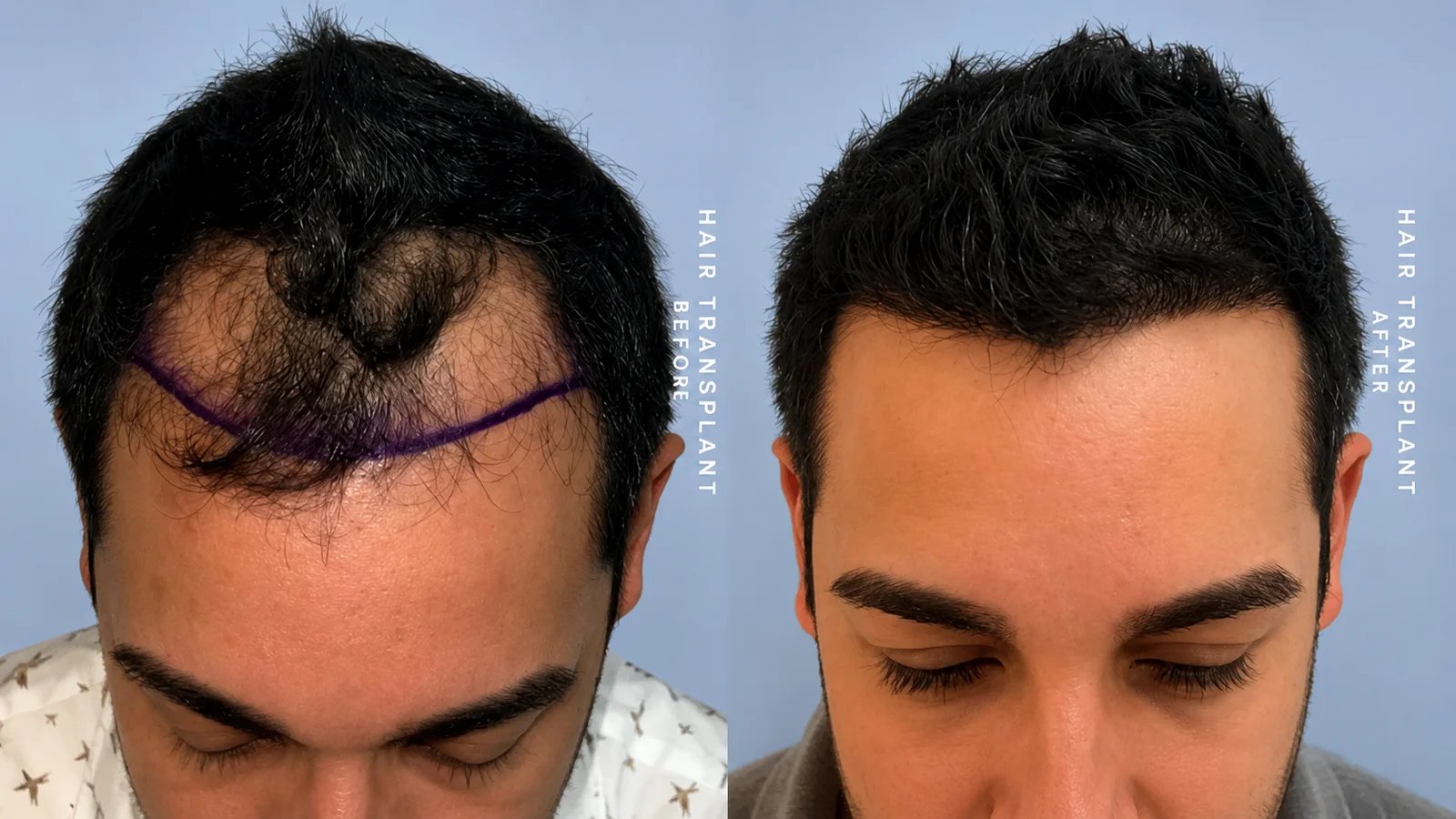
Arriving for the Consultation
A typical first consultation runs thirty to sixty minutes and includes several distinct parts.
The visit begins with a conversation about your history, including when you first noticed thinning, how it has progressed, family history of hair loss, which is one of the strongest predictors of your own pattern, and any treatments you have already tried.
Next comes a close scalp examination, looking at both the areas of thinning and the donor area at the back and sides of the scalp, assessing density, hair caliber, meaning thickness, and scalp laxity, meaning how mobile the skin is, which affects certain harvesting techniques.
Photography and, often, digital density mapping follow, used both for planning and to give you an objective before reference for tracking results later.
Dr. Doshi then leads a discussion of your goals. Are you trying to restore a receded hairline, thicken an overall thinning crown, or both? Your goals shape the entire plan from that point forward.
An honest conversation about what is realistic comes next, including how many grafts your donor area can reasonably support without leaving that area visibly thinned itself.
Finally, there is a walkthrough of technique options, primarily FUE, which stands for Follicular Unit Extraction, versus FUT, which stands for Follicular Unit Transplantation, sometimes called strip harvesting, and which one fits your goals, scalp characteristics, and lifestyle.
This is one of the most common concerns patients bring up after researching hair transplant clinics online, because the industry has a reputation, not always undeserved, for high volume clinics where a sales consultant does most of the talking and the surgeon does little more than the procedure itself. At Dr. Doshi's practice, the consultation is a genuine clinical visit, not a sales process. The goal is an honest scalp assessment and a straightforward answer about whether a transplant makes sense for you, not a push toward the most expensive package available.
You will be told that directly. Common reasons a transplant might not be recommended, or might be recommended only with modified expectations, include a donor area that is already too thin to harvest heavily from, hair loss that has not stabilized yet, meaning further loss could outpace what a transplant restores, or a pattern better suited to non surgical treatment first, such as PRP therapy or medical management, before considering surgery. Dr. Doshi would rather tell a patient honestly that they are not a good candidate yet than perform a procedure that is unlikely to hold up well over time.
Understanding the Technique Options
FUE extracts individual hair follicles directly from the donor area using a small punch tool, leaving tiny, dot like scars that are typically not visible even with very short hairstyles. It is generally preferred by patients who like to keep their hair short or shaved.
FUT removes a thin strip of scalp from the donor area, which is then dissected into individual grafts under magnification. The donor site is closed as a single fine line, which is well hidden under hair of moderate to longer length, but is a consideration for patients who wear their hair very short.
Neither technique is universally better. The right choice depends on your hair length preferences, scalp laxity, the number of grafts needed, and how much time you want to spend in recovery. Dr. Doshi reviews both options with every patient rather than defaulting to a single preferred technique, since the best choice genuinely varies from person to person.
This is one of the most individual answers in the entire consultation, because it depends on the size of the area being restored, the density you are trying to achieve, and your hair's natural characteristics. Curly or coarse hair, for instance, provides more visual coverage per graft than straight, fine hair. Graft counts for a hairline restoration might range from several hundred to well over a thousand, while a full crown and hairline restoration can require significantly more, sometimes performed across more than one session.
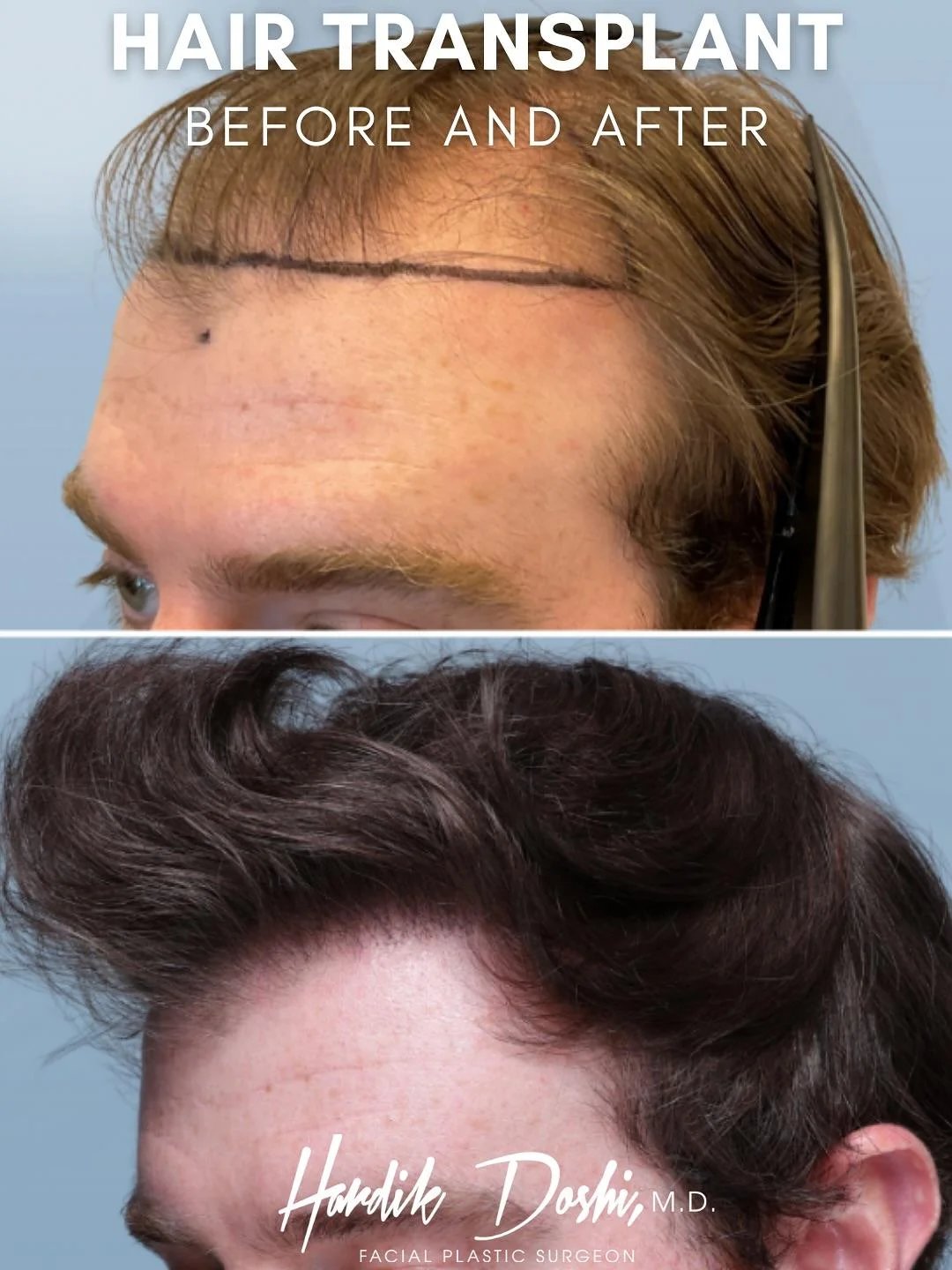
Yes, and this is one of the areas where experience matters most. A natural looking hairline is not a straight line. It has subtle irregularity, softer, finer hairs placed at the very front edge, and a gradual increase in density moving backward, mimicking the way hair actually grows in someone who has never lost any. Dr. Doshi plans hairline design around your natural facial proportions and the direction your existing hair grows, rather than applying a single template to every patient.
What Happens After the Consultation
You will receive a personalized treatment plan outlining the recommended technique, estimated graft count, expected timeline, and cost. Most patients do not schedule surgery on the same day as their first consultation. It is common, and encouraged, to take time to think it over, ask follow up questions, and in some cases schedule a second visit before committing.
Hair transplantation is performed under local anesthesia, typically taking anywhere from four to eight hours depending on graft count and technique. Patients are awake and comfortable throughout, often watching movies or listening to music during the harvesting and placement process. Most patients go home the same day.
In the first one to three days, expect mild scalp tightness and swelling, particularly in the forehead, which can temporarily migrate down toward the eyes in some patients, though this settles within a few days.
Between days four and ten, small scabs form around each transplanted graft and gradually flake off. The transplanted hairs themselves often shed during this period, which is completely normal and expected. The follicle stays alive under the skin even though the visible hair sheds temporarily.
From roughly week three through week twelve, patients go through a dormant period where the scalp looks essentially back to normal, with little visible change, while the follicles reset internally before starting a new growth cycle.
Between months three and six, new hair growth becomes visible, initially fine and sparse.
Between months six and twelve, hair continues to thicken and fill in, with most patients seeing sixty to eighty percent of their final result by month nine.
By month twelve to eighteen, final density and thickness are typically reached.
No, and this is one of the most frequently misunderstood parts of the process. Because transplanted hair follicles go through a genuine shed and regrowth cycle rather than simply staying put, patience through the middle months, roughly month two through month five, when very little visible change is happening, is one of the hardest parts of the entire process for most patients, even though it is entirely normal. Dr. Doshi checks in with patients during exactly this stretch, since it is when reassurance tends to matter most.
Yes, though they are fairly limited in duration. Strenuous exercise is typically restricted for about one to two weeks, since increased blood pressure and sweating can affect the healing grafts. Direct sun exposure on the scalp should be minimized for the first several weeks, and a hat is often recommended for protection once your surgeon confirms it is safe to wear one without disturbing the grafts. Swimming pools and hot tubs are generally avoided for a couple of weeks as well, due to infection risk during the early healing period.
Cost and Practical Questions
Hair transplantation is considered a cosmetic procedure and is not typically covered by insurance. Cost depends primarily on the number of grafts and the technique used, and is discussed transparently as part of your personalized treatment plan during consultation. See our financing page for information on payment options.
Yes. Female pattern hair loss has a different distribution than male pattern loss, more often diffuse thinning across the crown and part line rather than a receding hairline, but many women are excellent candidates for transplantation, particularly when a stable donor area is present. Dr. Doshi evaluates female pattern hair loss with the same care given to male patients, since the underlying diagnosis has a real effect on whether surgery is the right recommendation.
Yes. Dr. Doshi's practice regularly works with out of area and out of state patients for both consultations, including virtual options, and procedures. See our traveling patients guide for details on planning a visit.
A general sense of your hair loss timeline, any relevant family history, a list of any treatments you have already tried, including over the counter or prescription options, and, if helpful, photos from several years ago showing your hairline or density before it started changing. These are genuinely useful for planning, and Dr. Doshi often refers back to them when mapping out a treatment strategy.
Most patients hear back within one to two business days to set up an initial consultation, and virtual consultation options are available for patients who want an initial conversation before committing to an in person visit.
Common Misconceptions About Hair Transplants
A few misunderstandings come up often enough during consultations that they are worth addressing directly.
One common misconception is that a hair transplant stops future hair loss everywhere on the scalp. It does not. A transplant relocates permanent, healthy follicles from the donor area into thinning zones, but it does not change the biology of the hair that was already there before surgery. This is why Dr. Doshi often discusses ongoing medical management, such as topical or oral treatments, alongside a transplant plan for patients whose hair loss is still active in areas that were not transplanted. The goal is to protect the investment in the transplanted area by slowing further loss in the surrounding, untreated hair.
Another common misconception is that more grafts always means a better result. In reality, graft placement, density distribution, and hairline design matter just as much as the raw graft count, sometimes more. A lower graft count placed with careful attention to natural density gradients can look more convincing than a higher graft count placed without that same care. Dr. Doshi emphasizes this distinction because patients researching cost per graft online can end up focused on the wrong metric entirely.
A third misconception is that results are immediate. As the recovery timeline above makes clear, meaningful visible growth does not begin until months three or four, and the full result takes a year or more to fully mature. Patients who go into the procedure expecting a dramatic, immediate change are often the ones who struggle most with the quiet, uneventful middle months of recovery, simply because they were not told to expect them.
Finally, many patients assume that a hair transplant clinic and a board certified facial plastic surgeon's practice are functionally the same thing. They are not always the same, and the distinction matters. Hair transplantation is a surgical procedure involving the scalp's blood supply, healing tissue, and careful aesthetic judgment about facial framing. Dr. Doshi's background as a double board certified facial plastic surgeon means hairline design decisions are made with the same attention given to any other facial procedure, rather than treated as a purely mechanical, high volume process.
How Dr. Doshi Approaches Long-Term Hair Restoration Planning
One of the more overlooked parts of a good hair transplant consultation is planning for the future, not just the immediate result. Because pattern hair loss is a progressive condition, a hairline or crown restoration performed today needs to account for how your hair loss might continue to change over the next ten, twenty, or thirty years, not just how it looks the month after surgery.
Dr. Doshi factors this into graft planning by being deliberately conservative with the placement and density of the frontal hairline in younger patients, whose pattern of loss has not fully revealed itself yet. Setting a hairline too low, or too aggressively dense, in a twenty five year old whose hair loss is still evolving can create a result that looks disconnected from the rest of the scalp years later, if the surrounding native hair continues to recede while the transplanted hairline stays fixed in place. This is a well known long term pitfall in the hair restoration field, and avoiding it requires thinking several steps ahead rather than optimizing purely for how the result looks in the first year.
For patients whose hair loss has already stabilized, usually somewhat older patients whose pattern has been consistent for several years, planning can be more definitive, since there is less uncertainty about how the surrounding native hair will behave going forward.
This kind of long range thinking is also why Dr. Doshi sometimes recommends a staged approach for patients with more extensive hair loss, prioritizing the hairline and frontal area in a first session and revisiting the crown or mid scalp in a later session once it becomes clearer how much additional donor supply will be needed and how the initial results have matured. Staging is not about upselling additional procedures. It is a genuine strategy for making a limited donor supply go as far as possible over a patient's lifetime, since the donor area, unlike the areas prone to pattern loss, offers a fixed and non renewable supply of transplantable hair.
Life After a Hair Transplant: What Ongoing Care Looks Like
Once the initial recovery period is behind you, ongoing care is fairly minimal, but a few habits help protect your results over the long term.
Regular use of any medical therapies recommended by Dr. Doshi, whether topical treatments or other options discussed during consultation, helps protect the native hair surrounding the transplanted area, since that hair remains susceptible to the same genetic pattern loss that affected the areas already treated.
Routine follow up visits, typically at several points during the first year and then periodically afterward, allow Dr. Doshi to track how the transplanted grafts are maturing and to catch and address any areas that might benefit from a touch up session down the line.
Sun protection on the scalp, particularly for patients who keep their hair very short, is worth maintaining well beyond the initial healing period, since sun exposure over many years can affect scalp skin health generally.
Most patients find that once they are a year or so out from their procedure, hair restoration becomes a low maintenance part of their routine rather than something requiring ongoing active management, which is part of why so many patients describe the investment as one of the more satisfying decisions they have made about their appearance.
Ready to Find Out Where You Stand?
The only way to know whether a hair transplant is right for your specific hair loss pattern is a direct scalp assessment. If you have been searching for a hair transplant clinic and want a straightforward, non sales driven consultation, Dr. Doshi's practice on Long Island is a good place to start.
Learn more about hair transplant options, PRP therapy, and hair transplant scar revision for patients who have had prior procedures elsewhere. You can also read our FUE hair transplant guide and permanent hair transplant guide for more detail on the technique and expected outcomes. When you are ready, schedule a consultation or explore our virtual consultation option with Dr. Doshi directly.