
If you had FUE hair transplant surgery recently and you're now watching hair fall out, not just at the transplanted sites but in the surrounding native hair you didn't expect to be affected, you are experiencing one of the most common and most anxiety-inducing parts of the entire recovery process: shock loss. It is also one of the most misunderstood, because the name itself sounds like something has gone wrong, when in the overwhelming majority of cases, it is an expected, temporary, and ultimately reversible part of normal healing.
At Doshi Plastic Surgery, patients undergoing FUE are counseled about shock loss as part of the expected recovery process, including when shedding typically begins, when the temporary thinning may look most pronounced, and when regrowth should become visible. Understanding this timeline before surgery can make the recovery period much less alarming.
This guide is organized by checkpoint, so you can find where you currently are in recovery and know specifically what's expected at that stage.
Weeks 1–2: Grafts Settling, No Shock Loss Yet
In the first two weeks after FUE surgery, you're primarily dealing with scab formation and healing at the transplant sites, along with some redness and mild swelling that typically peaks around day two or three and resolves within the first week to ten days. Shock loss, the shedding of existing native hair, typically hasn't started yet at this point. If you notice hair falling out in this window, it's more likely related to gentle dislodging of scabs during washing than true shock loss, which follows a different, slightly delayed timeline.
What's normal: Scabbing, mild redness, some tenderness at the donor and recipient sites, and hair strands coming out attached to healing scabs during gentle washing.
What warrants a call to your surgical team: Excessive bleeding, signs of infection like increasing redness, warmth, or pus, or pain that's worsening rather than improving.
Weeks 2–4: The Onset of Shock Loss
This is typically when shock loss begins in surrounding native hair, the hair that wasn't part of the transplant itself. Transplanted grafts go through their own separate shedding process around this same window, which we cover in our guide to hair transplant shedding. The native hair loss described below is a distinct phenomenon with its own cause
Shock loss in surrounding native hair is a separate phenomenon, believed to result from the physical trauma of the surgical process, localized inflammation, and temporary disruption to blood supply in the treated area, pushing nearby native follicles into a resting phase (telogen) prematurely. This can be alarming because it can affect a visibly larger area than just the specific transplanted zone, sometimes making the donor or recipient area look thinner overall than it did immediately after surgery, before rebounding in the following months.
What's normal: Noticeable thinning of both transplanted hair and surrounding native hair in this window, sometimes significant enough that patients feel their overall hair density has decreased compared to before surgery.
What warrants a call to your surgical team: Any signs of infection persisting from the earlier window, or shock loss that seems to be spreading well beyond the treated area into completely untouched regions of the scalp, which would warrant evaluation to rule out other causes.
Months 2–3: The Trough, and Why This Is the Hardest Part Psychologically
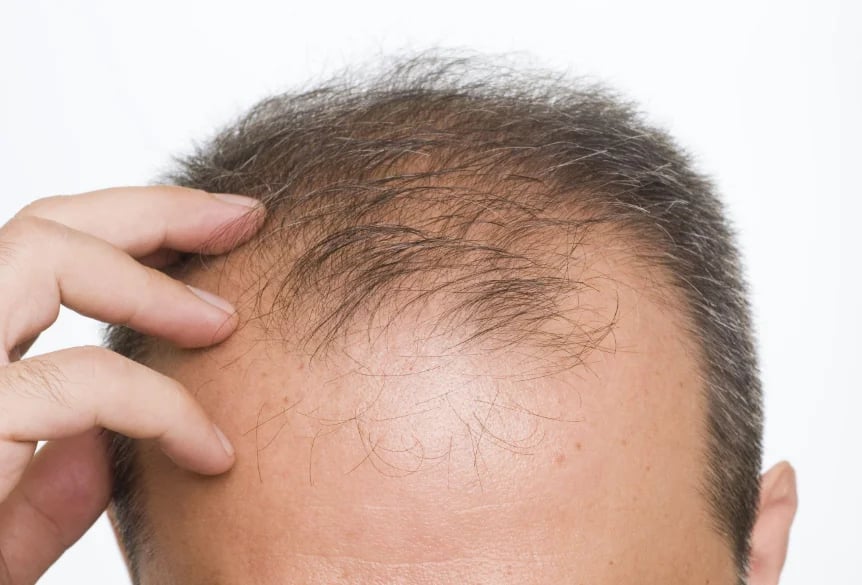
This period is, for many patients, the most difficult part of the entire recovery process emotionally, even though it is not the period of greatest medical concern. By this point, most of the transplanted hair shafts have shed, native hair affected by shock loss may still be in a resting phase, and new growth from the transplanted follicles typically hasn't become visible yet. This creates what patients often describe as looking "worse than before surgery," a genuinely accurate description of how the area can appear during this specific window, even though it reflects an expected and temporary stage rather than a failed outcome.
This is also the point at which patients are most likely to search anxiously online, compare their timeline unfavorably to other patients' before-and-after photos posted at different stages of their own recovery, and worry that something has gone specifically wrong in their case. Understanding that this trough is a normal, well-documented stage of the FUE recovery timeline, rather than a sign of failure, is one of the most important pieces of information a patient can have going into this period.
What's normal: Continued thinness or minimal visible growth, native hair that shed from shock loss still not regrown, general appearance that can look like limited or no progress compared to the immediate post-op period.
What warrants a call to your surgical team: Persistent scalp irritation, unusual scarring at graft sites, or significant anxiety about the process, which, while not a medical emergency, is worth discussing directly with your surgical team, who can review your specific case and set realistic expectations for your individual timeline.
Months 4–6: Early Regrowth Becomes Visible
This is typically when patients begin to see the first genuinely encouraging signs of the process working: fine, often initially thin or wispy new hair growth emerging from the transplanted follicles, and native hair affected by shock loss beginning to regrow as those follicles exit their resting phase and re-enter active growth. Growth at this stage is rarely uniform, some grafts and some areas of native regrowth will be ahead of others, which is normal and not a sign that specific grafts have failed while others succeeded.
What's normal: Patchy, uneven new growth, hair that initially comes in finer or lighter in color than its eventual mature texture, and continued gradual improvement in overall density.
What warrants a call to your surgical team: Complete absence of any new growth by month six in a significant portion of the transplanted area, which would be reasonable to flag for evaluation, though even this doesn't necessarily indicate failure and should be assessed individually.
Months 8–12: Maturation and the Point of Meaningful Assessment
By eight to twelve months, most patients have a much clearer picture of their actual result, with density continuing to improve and hair texture maturing toward its final appearance. This is generally considered a more appropriate point to meaningfully assess the outcome of the procedure than any earlier checkpoint, since both transplanted and shock-loss-affected native hair have had adequate time to complete their growth cycle.
What's normal: Continued gradual thickening and maturation of hair texture, with some patients still seeing modest improvement even beyond the twelve-month mark.
What warrants a call to your surgical team: Any areas that remain persistently thin or bare at this stage relative to the rest of the transplanted or shock-loss-affected area, which is the appropriate point to discuss with your surgeon whether those specific areas need additional evaluation or a touch-up procedure.
What's Actually Happening at the Follicular Level During Shock Loss
Understanding the biology underneath the visible shedding can make the process feel less alarming, since it clarifies that hair follicles are following a well-understood, predictable cycle rather than being permanently damaged. Every hair follicle on the scalp cycles through three phases: anagen, the active growth phase that normally lasts years for a given follicle, catagen, a brief transitional phase, and telogen, a resting phase lasting a few months before the follicle re-enters anagen and produces a new hair shaft. Under normal circumstances, roughly 85 to 90 percent of scalp follicles are in anagen at any given time, with the remainder distributed across catagen and telogen.
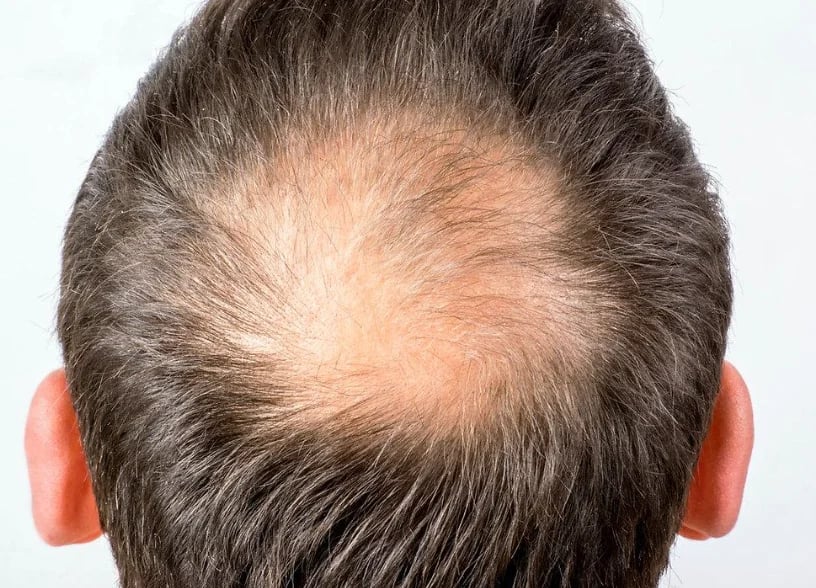
The trauma, inflammation, and temporary disruption to local blood supply associated with FUE surgery can push a portion of nearby follicles that were in anagen prematurely into telogen, a phenomenon technically referred to as telogen effluvium when it occurs more broadly, though in the context of hair transplant surgery specifically it's generally just called shock loss. Because telogen has a defined, predictable duration, typically two to four months, the follicles affected by this premature shift are, in the great majority of cases, still alive and functioning, simply paused in a resting phase before naturally cycling back into active growth. This is the biological basis for why shock loss is, in most cases, temporary and reversible rather than permanent hair loss.
How FUE Technique Choices Can Influence the Degree of Shock Loss
While shock loss cannot be entirely eliminated, certain technical choices during the FUE procedure itself can meaningfully influence its severity. The density of graft extraction in the donor area, and correspondingly the density of graft placement in the recipient area, directly affects how much surrounding tissue trauma and disruption to local blood supply occurs during the procedure. Higher-density sessions, while sometimes desirable for achieving more dramatic coverage in a single procedure, generally carry a correspondingly higher likelihood of noticeable shock loss compared to more conservative, lower-density sessions performed over multiple staged procedures.
The specific instrumentation and technique used for graft extraction also plays a role, with more precise, lower-trauma extraction methods generally associated with less surrounding tissue disruption than less refined techniques. This is part of why the specific surgeon and clinic performing the procedure meaningfully affects the shock loss experience, not just the fact that FUE was chosen as the overall transplant method, since technique execution varies considerably even among providers using the same general FUE approach.
The Psychological Dimension of Recovery, and Why It Deserves Direct Attention
It's worth naming directly that the emotional experience of watching your hair appear to worsen after a procedure specifically intended to improve it is genuinely difficult, and dismissing this as simply "part of the normal process" without acknowledgment can leave patients feeling unsupported during an already vulnerable period. Patients who understand, going into surgery, that this specific trough period is expected and who have a clear sense of the typical timeline tend to navigate this phase with meaningfully less anxiety than patients who are caught off guard by it.
This is precisely why a thorough pre-surgical consultation should include explicit discussion of the shock loss timeline, not as an afterthought buried in general post-operative instructions, but as a specific, anticipated part of the conversation about what recovery will actually look and feel like. Patients who have access to their surgical team during this period, with a clear understanding of when a phone call is warranted versus when a symptom is simply part of the expected process, generally report a meaningfully better overall experience even when their actual physical recovery timeline is identical to a patient who wasn't given this context.
Why Shock Loss Happens More With Some Techniques and Patients Than Others
Not every FUE patient experiences the same degree of shock loss, and understanding the contributing factors can help set expectations before surgery rather than only during recovery. Patients with existing hair miniaturization in the areas surrounding the transplant, meaning hair that was already thinning due to androgenetic alopecia even if not yet visibly bald, tend to be more susceptible to noticeable shock loss, since those follicles were already more vulnerable before any surgical trauma was introduced. The density and extent of the procedure also plays a role, more extensive sessions covering larger areas tend to carry a higher likelihood of noticeable shock loss simply due to the greater degree of surrounding tissue disruption involved.
This is part of why a thorough pre-surgical evaluation, including an honest assessment of ongoing hair miniaturization in areas surrounding the planned transplant zone, matters for setting accurate expectations about shock loss specifically, not just about the transplanted area's expected results.
Practical Steps to Support Healing During the Shock Loss Period
While shock loss itself follows its own biological timeline that can't be dramatically accelerated, there are practical, supportive steps patients can take during this period that many surgical teams recommend, both for general healing and for supporting the overall health of the scalp environment during this vulnerable window. Gentle, consistent scalp hygiene following your surgical team's specific washing instructions helps minimize infection risk without disturbing healing grafts, particularly important in the first two to three weeks. Avoiding tight hats, helmets, or other headwear that creates friction or pressure on the treated area during the healing period reduces unnecessary mechanical stress on follicles that are already navigating the shock loss process.
Nutritional support, adequate protein intake and, where appropriate for the individual patient, attention to micronutrients relevant to hair growth like iron, zinc, and biotin, is sometimes discussed as a general supportive measure, though it's worth being realistic that nutrition alone won't meaningfully accelerate the biological timeline of shock loss resolution described earlier in this piece. Managing stress during this period is also worth mentioning directly, since psychological stress itself is an independent, separate cause of telogen effluvium, and a patient already anxious about their surgical recovery experiencing additional hair shedding from stress-related causes can further complicate the clinical picture and the patient's own ability to distinguish expected surgical shock loss from a separate, compounding stress response.
When Shock Loss Doesn't Fully Reverse
While the overwhelming majority of shock loss is temporary and fully reversible, it's honest to acknowledge that a small subset of patients experience some degree of persistent thinning in affected native hair that doesn't fully return to its pre-surgical density. This is more likely in patients who already had significant ongoing hair miniaturization before surgery, where the shock loss event may have accelerated a thinning process that was already underway independent of the transplant itself. This is a meaningful reason why addressing ongoing hair loss with appropriate medical therapy, such as finasteride or minoxidil where appropriate for the individual patient, alongside a transplant procedure, is often recommended rather than relying on the transplant alone to address the full picture of a patient's hair loss.