
There is a specific type of lip concern that brings patients to a consultation having already spent years and thousands of dollars on filler - and leaving with the same concern they arrived with. The lips are fuller. They are plumper. In certain lighting, in certain photographs, they look close to what the patient was hoping for. And yet something is still wrong. The upper lip still looks flat. It still looks long. The smile still lacks the youthful definition the patient remembers from their twenties. The upper teeth still do not show the way they used to.
This is not a failure of filler technique or filler product. It is a failure of treatment selection. These patients do not have a volume problem. They have a structural problem - and filler, however skillfully placed, addresses volume without touching the structure.
The lip lift is the structural solution. It is a surgical procedure that shortens the philtrum - the vertical distance between the base of the nose and the top of the upper lip - permanently repositioning the lip to a more youthful proportion. It is one of the highest-impact, lowest-profile procedures in facial plastic surgery. And it is one of the most consistently misunderstood, most commonly deferred, and most frequently substituted for the wrong treatment.
This guide explains what a lip lift actually does, why filler cannot replicate it, who on Long Island and in the Manhattan market is genuinely a candidate, what the different techniques involve, what recovery looks like, and what to look for in a surgeon performing this procedure.
The Anatomy Behind Lip Ageing - What Is Actually Changing
Understanding why the lip ages requires understanding a single anatomical measurement: the philtrum length. The philtrum is the vertical distance between the base of the nose - specifically the columella, the soft tissue column between the nostrils - and the top of the upper lip's pink tissue, the vermilion border.
The Youthful Philtrum
In a youthful face, the philtrum measures approximately eleven to thirteen millimetres in women and slightly more in men. At this length, the upper lip sits in a position that shows a visible amount of the pink vermilion tissue at rest, displays the upper teeth slightly when the mouth is relaxed, and has a defined cupid's bow with upward-curving corners. The lip looks full not primarily because it has large volume but because it is in the right position relative to the nose above it.
What Ageing Does to the Philtrum
As the face ages, the philtrum elongates. This happens for two reasons: the skin of the upper lip loses elasticity and stretches over time, and the underlying maxillary bone undergoes mild resorption, reducing the scaffolding the lip rests on. By the time most patients seek treatment, the philtrum may have elongated by three to five millimetres from its youthful proportion - a change that sounds small but is visually significant. The lip looks flat. It looks long. The vermilion show has reduced. The teeth display has diminished. The cupid's bow has flattened.
Why Filler Does Not Address This
Hyaluronic acid filler adds volume to the lip body. It plumps the vermilion, increases projection, and can be used to define the border of the lip. What it cannot do is shorten the philtrum. It cannot lift the vermilion border superiorly. It cannot restore the structural proportional relationship between the nose and the mouth that elongation has disrupted. Adding volume to a lip that is flat because it is long simply makes it larger - not younger. And in many patients, the cumulative effect of multiple filler sessions to address a structural problem is a lip that looks overfilled and unnatural rather than youthfully proportioned.
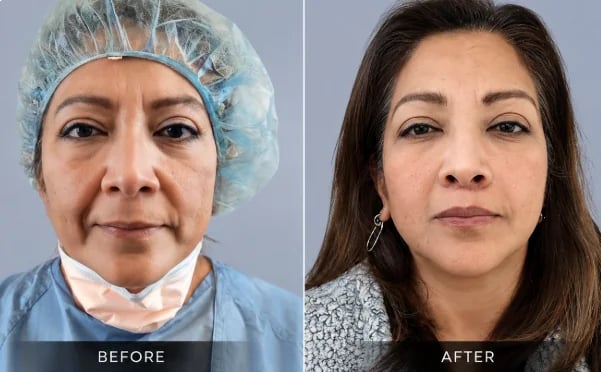
What a Lip Lift Actually Does
A lip lift - specifically the subnasal lip lift, the most anatomically appropriate technique for most patients - removes a precisely measured strip of skin from the base of the nose, shortening the philtrum and lifting the vermilion border superiorly. The change is structural and permanent.
The Specific Changes the Procedure Produces
Shortening the philtrum to a more youthful proportion is the primary change. The extent of shortening - typically three to five millimetres depending on the individual - is determined by careful measurement of the philtrum length and an assessment of the patient's facial proportions. Too little shortening produces a minimal result; too much creates an unnatural appearance where the lip appears to be pulling upward toward the nose. The correct amount is specific to each patient and requires both measurement and aesthetic judgment.
Increasing the visible display of the upper lip's pink tissue is the most immediately visible consequence. As the vermilion border lifts, more of the pink lip tissue becomes visible at rest. The lip appears fuller without having had anything added - the fullness comes from the repositioning, not from volume.
Lifting the cupid's bow - the curved upper border of the lip - is a secondary effect that most patients find particularly satisfying. The defined arch of the cupid's bow that characterises a youthful mouth becomes more pronounced as the vermilion border lifts.
Increasing the display of the upper teeth at rest is another consistent effect. The slight visibility of the upper incisors when the mouth is relaxed is a consistent marker of youth. As the philtrum elongates with age, this display diminishes. The lip lift restores it.
What the Lip Lift Does Not Do
The lip lift does not add volume to the lip body. Patients who have both a long philtrum and genuinely thin lip tissue may benefit from combining a lip lift with conservative filler - the lift corrects the proportion and the filler adds the body volume that the repositioned lip can now express naturally. But for many patients, the lift alone produces all the fullness they were seeking by placing the lip in its correct anatomical position.
Techniques - The Subnasal Lift, the Corner Lift, and When Each Is Used
The Subnasal Lip Lift (Bullhorn Technique)
The subnasal lip lift is the primary technique for the vast majority of lip lift patients. The incision follows the contour of the nasal base - curving around the nostrils on either side of the columella in the shape that gives the procedure its alternative name, the bullhorn lift. This incision placement follows the natural shadow and crease at the base of the nose, producing a scar that is essentially invisible once healed in a patient cared for by a surgeon with the precision this procedure demands.
The amount of skin removed is the most critical surgical decision. It determines the degree of philtrum shortening and therefore the degree of lip position change. This is not a decision that can be made without precise measurement, careful assessment of the patient's specific facial proportions, and an honest consultation about what degree of change is achievable and appropriate for the individual face.
The Corner Lip Lift (Commissuroplasty)
The corner lip lift addresses the corners of the mouth - the commissures - that turn downward with age, creating the perpetually sad or disapproving expression that many patients find as distressing as the philtrum elongation. Small, carefully placed excisions at the corners of the mouth lift them to a neutral or slightly upturned position. The scar placement at the corner of the mouth requires precision - poorly planned corner lifts produce visible scars in a highly conspicuous location.
Some patients benefit from both techniques simultaneously. Most require one or the other. The consultation assessment determines which - and occasionally confirms that neither is the right intervention and that the patient's concern is better addressed differently.
The Italian Lip Lift
A variation of the subnasal technique using two separate incisions placed beneath each nostril independently rather than the continuous bullhorn pattern. Some surgeons prefer this for patients with a flat columella or specific nostril anatomy that makes the standard bullhorn approach less ideal. The aesthetic outcome is anatomically equivalent; the choice is technique-specific and anatomy-driven.
Who Is a Candidate - The Honest Assessment for Long Island Patients
The lip lift is appropriate for a specific patient profile. The most important element of any lip lift consultation is determining whether the patient's concern is genuinely a structural one - a philtrum that is too long - or a volume one that filler is addressing correctly, or a combination that benefits from both.
Strong Candidates
Patients with a philtrum length of fifteen millimetres or greater - adjusted for the individual's overall facial proportions - are the clearest candidates. Patients who have been receiving lip filler and consistently feel that the result is not quite right - fuller but still flat and long rather than genuinely youthful - are very frequently structural candidates whose concern filler cannot resolve. Patients who manually pull the upper lip upward (toward the nose) and immediately feel that this is the look they have been trying to achieve are describing a structural repositioning, not a volume addition, and are strong candidates.
Patients who have lost upper tooth display with age and who want to restore the slight visibility of the upper incisors at rest are good candidates. Patients with a flattened cupid's bow that is due to philtrum elongation rather than inherent lip shape are good candidates.
Patients Who May Not Be Candidates
Patients with a philtrum that is already within normal proportions - typically fifteen millimetres or less - whose primary concern is lip volume rather than proportion are better served by filler. Patients who are not ready for a permanent structural change and prefer an adjustable option are better served by filler in the interim. Patients with specific nasal anatomy - very wide or very asymmetric nostrils - may require an adapted technique that the surgeon should assess and discuss in detail before proceeding.
The Combination Patient
A significant proportion of lip lift patients benefit from combining the procedure with conservative lip filler, typically performed three months after the lift once healing is complete. The lift corrects the proportion. The filler adds body volume that the correctly positioned lip can now support naturally without looking overfilled. This combination produces the most comprehensive lip rejuvenation - structural and volumetric simultaneously - and represents the correct treatment for patients who have both a long philtrum and genuinely thin lip tissue.
The Surgery, Recovery, and What to Expect
The Procedure
The lip lift is typically performed under local anaesthesia with oral sedation or light IV sedation as a day case. The procedure takes approximately thirty to sixty minutes for the subnasal technique alone, or longer when combined with a corner lift or other simultaneous procedures. Dr. Doshi performs the procedure at his Long Island and Manhattan locations, with the full pre-operative assessment, surgical planning, and closure performed personally.
The First Week
Swelling is immediate and concentrated in the upper lip and the area beneath the nose. The lip will appear more elevated and fuller than the final result during this period - patients often find the early appearance more dramatic than what will settle. Fine sutures close the incision and are removed at five to seven days. Bruising is typically mild and resolves within the first ten days. Soft foods are recommended for the first week to minimise movement around the incision.
Weeks Two Through Six
By day seven, sutures are removed and the incision is entering its active healing phase. The scar will appear pink during weeks two through six - this is a normal and expected part of healing and not an indication of a poor outcome. Swelling reduces significantly through weeks two and three. Most patients feel comfortable in social and professional situations by week two to three, with any residual pinkness at the incision site easily covered with makeup from week two onward.
Three to Six Months - The Final Result
The scar matures over three to six months, fading from pink to a pale, skin-toned line that follows the natural crease at the nasal base. Diligent sun protection of the incision site during this period significantly accelerates scar fading. The final result - both the proportional change and the scar appearance - is assessed at this stage. In the vast majority of patients, the scar is undetectable in normal social and professional situations. The lip lift produces a permanent structural change that does not dissolve, does not migrate, and does not require maintenance.

Why Dr. Doshi for Lip Lift Surgery on Long Island
Dr. Hardik Doshi is a double board-certified facial plastic surgeon - ABFPRS and ABOHNS - practising across Long Island and Manhattan. His approach to the lip lift reflects the same philosophy that guides all of his surgical work: precise anatomical assessment, a structural solution to a structural problem, and a result that looks like a better version of the patient rather than a procedure that has been done to them.
His preservation rhinoplasty background - working in and around the nasal base anatomy with precision - directly informs his lip lift technique. The relationship between the nasal base, the columella, the nostril anatomy, and the upper lip is one that a rhinoplasty-trained surgeon understands at a depth that most cosmetic practitioners do not. This understanding is directly relevant to how the lip lift incision is designed, placed, and closed.
To arrange a consultation at Doshi Plastic Surgery, visit doshiplasticsurgery.com/contact/