
The neck is one of the earliest areas of the face and head to show visible signs of aging, and it is one of the most difficult to address with non-surgical treatments alone. Patients frequently arrive at consultations at Doshi Plastic Surgery having already tried a range of topical creams, radio frequency devices, and ultrasound treatments. Some of those treatments offer modest improvement. None of them replicate what surgery can achieve when significant skin laxity, muscle banding, or submental fullness is present.
Dr. Hardik Doshi is a double board-certified facial plastic surgeon with practices in Long Beach, Huntington, and Manhattan who performs neck lift surgery as a standalone procedure for patients whose concerns are localized to the neck region. What follows is a complete account of what the surgery involves, who is well-suited for it, what recovery looks like, and what patients can realistically expect from results.

What the Aging Neck Actually Looks Like and Why It Happens
The changes that occur in the neck with age are driven by several intersecting anatomical processes. Understanding them is useful not just for deciding whether surgery is appropriate, but for understanding why certain surgical approaches produce better results than others.
The platysma is a thin, flat muscle that runs along the front of the neck from the collarbone to the jawline. In youth, this muscle is tight and well-positioned, contributing to the clean, defined angle between the chin and neck that is associated with a youthful profile. As decades pass, the platysma stretches, separates along the midline, and develops visible vertical bands. These bands are the cords that many patients describe as turkey neck or neck wattles. They are not a skin problem. They are a muscle problem, and they require a muscular solution.
Skin laxity develops separately. The skin of the neck, like the skin elsewhere on the face and body, loses elasticity over time as collagen and elastin production declines. Without the structural support provided by underlying tissues, the skin begins to drape rather than adhere, creating loose folds and the characteristic sagging of the aging neck.
Submental fat, the fat beneath the chin, accumulates in many patients with age regardless of overall body weight. While liposuction alone can address submental fat in younger patients whose skin retains enough elasticity to redrape, older patients typically require skin removal in addition to fat reduction to achieve a clean result.
A well-performed neck lift addresses all three of these components in a coordinated way. Targeting only one produces an incomplete and often temporary result.
The Anatomy of a Neck Lift Procedure
A neck lift is not a single standardized operation. It is a set of techniques that are combined differently depending on what each patient's anatomy requires. The decisions made during the consultation and refined during surgery determine whether the result is clean and durable or simply adequate and short-lived.
The standard approach begins with small incisions placed strategically to minimize visible scarring. Incisions are typically placed beneath the chin in the natural submental crease and, depending on the extent of the procedure, behind the ears where they are hidden by the natural contour of the ear and hairline. These incisions provide access to the neck from multiple vectors, allowing the surgeon to address all layers without compromising the natural landmarks of the ear and hairline.
Once access is established, the procedure typically involves four distinct components. The first is liposuction or direct excision of submental fat to define the neck and chin angle. The second is platysmaplasty, the suture-based tightening and sometimes partial resection of the platysma muscle to eliminate banding and restore a clean midline. The third is skin re-draping, in which the loosened skin is pulled posteriorly and superiorly to eliminate laxity. The fourth is skin excision, removing the redundant skin that remains after re-draping.
The order and extent of each component are determined by the patient's anatomy. Patients with primarily skin laxity and well-positioned platysma require less muscular work. Patients with prominent banding need extensive platysmaplasty. Patients with heavy submental fat accumulation need fat management as the first priority. Dr. Doshi assesses each of these dimensions individually during the consultation.
Who Is a Good Candidate for Neck Lift Surgery
Neck lift surgery is appropriate for patients whose neck concerns have reached a threshold that non-surgical treatments cannot realistically address. This threshold is not determined by age. It is determined by the nature and degree of the anatomical changes present.
Patients with significant platysma banding are typically the most straightforward candidates. The vertical cords of a separated platysma are a muscular problem that topical treatments and energy-based devices cannot correct. Once banding is established and visible at rest, surgical correction is the only option that produces lasting improvement.
Patients with moderate to severe skin laxity are also strong candidates. The skin of the neck does not respond to non-surgical tightening treatments with the same reliability as the skin of the face, in part because the forces of gravity are more pronounced in this region. When the skin has stretched enough that it folds or drapes visibly, surgery is the appropriate intervention.
Patients with submental fullness that has not responded to liposuction alone or to Kybella injections are candidates if their skin quality warrants a more comprehensive approach. In some cases, particularly in younger patients whose skin retains good elasticity, liposuction alone is sufficient. In others, particularly when skin laxity accompanies the fat accumulation, a full neck lift is indicated.
Health-related criteria are equally important. Good candidates are in stable general health, are non-smokers or are able to stop smoking for a minimum of four to six weeks before and after surgery, and have a realistic understanding of what surgery can and cannot achieve. Patients with certain medical conditions that affect wound healing or clotting are evaluated carefully and may require medical clearance before proceeding.
Neck Lift Versus Facelift: Which One Addresses Your Concern
One of the most common questions in the neck lift consultation is whether a neck lift alone is sufficient or whether a facelift is the more appropriate procedure. The answer depends entirely on where the patient's concerns are anatomically located.
A neck lift is designed to address the neck, from the submental region beneath the chin to the lower neck. If a patient's primary concerns are neck banding, jowling limited to the lower jaw, skin laxity below the jawline, or submental fullness, a neck lift targets these areas directly and effectively.
A facelift extends the scope of treatment to the midface and lower face in addition to the neck. Patients who have significant descent of the midface tissues, deepening of the nasolabial folds, or volume redistribution in the cheeks typically benefit from the additional repositioning that a facelift provides. Adding neck lift components to a facelift is standard practice because the two procedures use overlapping incisions and address adjacent anatomical structures.
Some patients who initially present asking about a facelift are determined during consultation to need only a neck lift. The reverse is also true: patients who come in asking about a neck lift are sometimes found to have concerns that extend into the lower face and that would be best addressed with a more comprehensive approach. Dr. Doshi maps this out precisely during the consultation and recommends the procedure scope that addresses the actual anatomical concerns rather than defaulting to either a larger or smaller operation.
The Consultation Process for Neck Lift at Doshi Plastic Surgery
The neck lift consultation at Doshi Plastic Surgery is built around a systematic evaluation of the neck anatomy combined with a detailed discussion of patient goals and expectations. Dr. Doshi examines the degree of skin laxity, the presence and severity of platysma banding, the volume and distribution of submental fat, and the relationship between the neck and the lower face.
He uses this assessment to determine whether a standalone neck lift addresses the concern or whether the patient would benefit from a broader procedure. He also evaluates the skin quality, which influences how the skin will respond to re-draping and how well the result will hold over time.
The consultation includes a candid discussion of what surgery can realistically achieve. Neck lift surgery does not stop the aging process. It repositions and removes tissue that has already changed, effectively turning the clock back by a meaningful margin. Patients who understand this clearly and whose expectations align with what the procedure can produce are the patients who are most satisfied with their results.
Patients also receive complete information about the surgical plan, the anesthesia approach, the facility, and the recovery process. Dr. Doshi is available directly by phone during recovery, and follow-up appointments are structured to ensure the healing process is monitored appropriately.
Neck Lift Recovery: A Week-by-Week Account
Recovery from neck lift surgery follows a predictable progression, though individual variation exists based on the extent of the procedure and each patient's healing physiology.
In the first forty-eight to seventy-two hours, swelling and bruising are at their peak. Most patients experience tightness and mild discomfort in the neck region, managed with oral pain medications. A compression garment is worn continuously during this period to support the tissues and minimize fluid accumulation. Rest is essential, and head elevation is maintained to reduce swelling.
By the end of the first week, most patients feel significantly more comfortable and are moving about freely at home. The compression garment continues to be worn, typically for two to three weeks total. Bruising begins to fade and localized swelling softens. Patients typically have their first post-operative appointment within the first week.
By ten to fourteen days, most patients with desk-based work are able to return to professional environments. Physical activity remains restricted. Incision sites are healing but still maturing, and sun protection of the incision areas is important throughout this period.
At three to four weeks, patients can resume moderate exercise and most normal activities. Swelling continues to improve, and the neck begins to look and feel more settled. The final result takes three to six months to fully materialize as residual swelling resolves and tissues find their final position.
What Results Look Like and How Long They Last
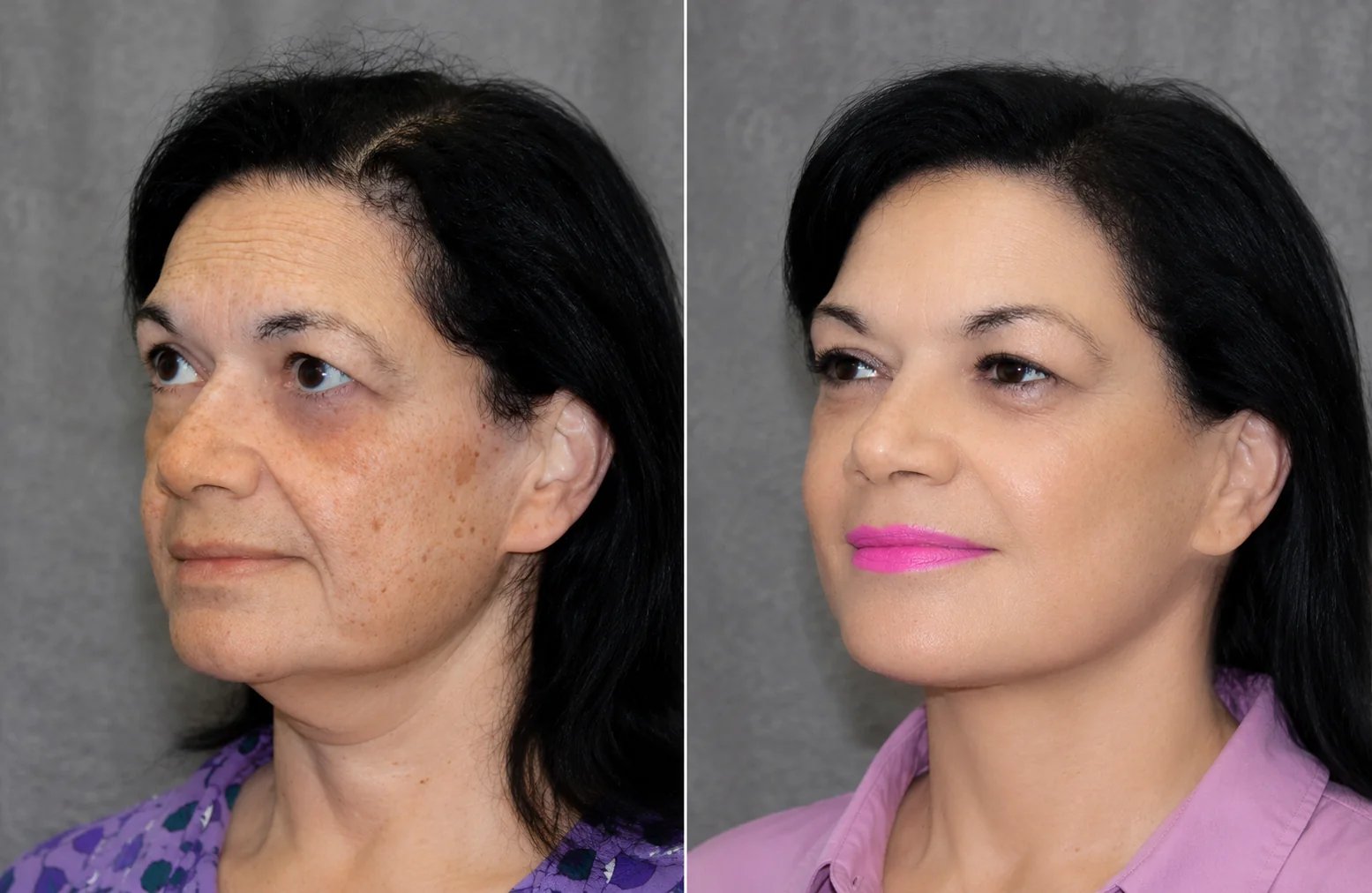
The result of a well-performed neck lift is a neck profile that looks natural, rested, and proportionate to the rest of the face. The goal is never an overcorrected or windswept appearance but rather a version of the patient's face that looks like it did a decade or more earlier.
Specific improvements include the elimination or significant reduction of platysma banding, a cleaner cervicomental angle between the chin and neck, reduced skin laxity throughout the neck, and a more defined jawline where it interfaces with the neck. In patients who had submental fullness addressed simultaneously, the area beneath the chin appears leaner and more defined.
The durability of neck lift results depends on several factors. Genetics plays a role in how quickly the skin ages. Sun exposure accelerates collagen breakdown and can shorten the lifespan of surgical results. Maintaining a stable weight prevents additional stress on the repositioned tissues. Patients who attend to these factors and maintain a consistent skincare routine regularly report that their results hold for seven to ten years before they begin to consider any revision or additional treatment.
Non-surgical maintenance treatments during the post-operative years, such as radiofrequency or ultrasound-based tightening, can complement and extend the durability of the surgical result. Dr. Doshi discusses these options as part of the long-term care plan for each patient.
Risks and Considerations Patients Should Understand
Neck lift surgery, like all surgical procedures, carries a defined set of risks that patients should understand before proceeding. A responsible surgical consultation covers these explicitly rather than minimizing them.
Hematoma, a collection of blood beneath the skin, is the most common significant complication, occurring in a small percentage of patients. Most hematomas are small and resolve on their own; larger ones may require drainage. The risk is reduced by controlling blood pressure carefully in the perioperative period and by avoiding blood-thinning medications and supplements before surgery.
Nerve injury is a rare but possible complication. The marginal mandibular nerve, which controls the movement of the lower lip, and the great auricular nerve, which provides sensation to the earlobe and lower ear, are the structures most at risk. Temporary weakness or numbness in these distributions resolves in most cases. Permanent nerve injury is uncommon with experienced surgeons.
Scarring behind the ears and beneath the chin is an inherent aspect of the procedure. Dr. Doshi places incisions with scar concealment as a primary consideration, and the vast majority of patients find that scars become minimally visible within six to twelve months. Scar quality depends on patient genetics, wound care, and sun protection.
Infection and wound healing complications are rare, particularly in non-smoking patients who follow post-operative instructions carefully. Smoking significantly impairs circulation and wound healing and is the most important modifiable risk factor for complications.