
Rhinoplasty is one of the most requested procedures in facial plastic surgery, and also one of the most commonly misunderstood. Many patients researching a nose job on Long Island assume the procedure is fairly standardized from surgeon to surgeon, a matter of reshaping the bridge or refining the tip according to a shared, universal template. In reality, the specific approach a surgeon takes can differ significantly, and those differences matter a great deal for the eventual outcome. This guide walks through what makes rhinoplasty with Dr. Doshi distinct, from his breathing-first philosophy to his approach to preservation techniques, ethnic and gender-specific considerations, and how he thinks about a nose as connected to the rest of the face rather than an isolated feature.
Why Airway Comes Before Aesthetics on Every Case
One of the most defining aspects of how Dr. Doshi approaches rhinoplasty is his insistence on evaluating breathing function before ever discussing cosmetic goals, regardless of whether a patient's stated reason for the consultation is purely aesthetic. This might seem like an unusual place to start for a patient who has come in specifically wanting a smaller bridge or a more refined tip, but the internal structure of the nose responsible for airflow and the external structure responsible for appearance are deeply interconnected, and changes made to one can meaningfully affect the other if not planned carefully.
A significant percentage of rhinoplasty patients, even those with no history of diagnosed breathing problems, have some degree of underlying structural issue, whether a deviated septum, enlarged turbinates, or internal or external nasal valve collapse, that either goes unnoticed in daily life or has been quietly compensated for without the patient realizing it. Addressing cosmetic goals without first understanding this underlying structure can, in some cases, worsen breathing function even while achieving the desired external appearance, a tradeoff Dr. Doshi considers unacceptable regardless of how satisfied a patient might otherwise be with the cosmetic result.
This breathing-first evaluation involves a physical examination of the internal nasal structures, sometimes supplemented with specific tests of airflow and internal nasal valve function, before any conversation about aesthetic technique begins in earnest. For patients who do have an identifiable functional issue, whether or not they were previously aware of it, addressing this simultaneously with cosmetic goals during the same surgery is generally far more efficient and comfortable than treating cosmetic concerns first and functional issues in a separate procedure later.
What Preservation Rhinoplasty Actually Means
Among the more technically distinct aspects of Dr. Doshi's approach is his use of preservation rhinoplasty techniques, an approach that differs meaningfully from traditional rhinoplasty methods that have been standard in the field for decades.
Traditional rhinoplasty techniques often involve removing a portion of the nasal hump or bony and cartilaginous structure and then reshaping what remains, essentially breaking down existing structure and rebuilding a new one in its place. Preservation rhinoplasty, by contrast, aims to keep more of the nose's original supporting structure intact, lowering or repositioning existing tissue rather than removing and reconstructing it entirely.
This distinction has real consequences for the eventual result. Preservation techniques tend to produce a more natural transition along the bridge of the nose, since the original ligamentous support structures remain largely undisturbed rather than being cut and rebuilt. Swelling patterns following preservation rhinoplasty also tend to differ from traditional techniques, and many patients see their results settle into a more predictable final shape somewhat sooner than with certain traditional approaches, since less of the underlying framework has been disrupted.
Preservation rhinoplasty is a more specialized technique that not every rhinoplasty surgeon offers, and Dr. Doshi discusses directly with patients whether their specific anatomy and goals make them a good candidate for this approach compared to a more traditional technique, since not every nose or every aesthetic goal is equally well suited to preservation methods.
Ethnic Rhinoplasty and Preserving Identity
Another distinctive aspect of rhinoplasty with Dr. Doshi is his approach to ethnic rhinoplasty, which requires a fundamentally different mindset than applying a single universal aesthetic template to every patient regardless of their heritage or facial structure.
Nasal anatomy varies considerably across different ethnic backgrounds, in terms of skin thickness, cartilage strength, bony structure, and the overall proportions considered harmonious relative to other facial features. A surgical approach that works well for one ethnic background can produce a disproportionate or unnatural-looking result when applied without modification to a different underlying anatomy.
Dr. Doshi's approach to ethnic rhinoplasty starts with an explicit conversation about what a given patient wants to preserve about their nose's ethnic characteristics, as opposed to what they want to change. Many patients seeking rhinoplasty are not looking to erase all trace of their heritage from their appearance, but rather to refine specific concerns, whether a dorsal hump, a wide tip, or asymmetry, while maintaining the broader characteristics that reflect their family's or community's typical features. This requires a surgeon to genuinely listen to what a patient values about their appearance rather than defaulting to a narrow, singular idea of what an "ideal" nose should look like.
Male vs. Female Rhinoplasty: Why the Goals Differ
Rhinoplasty goals and technique also differ meaningfully between male and female patients, a distinction Dr. Doshi considers carefully rather than applying a single unisex aesthetic standard.
Male noses are generally larger in overall proportion, with a straighter dorsal profile and a less rotated, more defined tip typically considered aesthetically appropriate. Overcorrection toward a smaller, more delicate result in a male patient can create a disproportionate or feminized appearance relative to the rest of a masculine facial structure, which is generally not the intended outcome.
Female rhinoplasty more often aims for a somewhat smaller dorsal profile with a subtle upward tip rotation, though the specific degree of refinement still depends heavily on the patient's individual facial proportions rather than a fixed, universal female ideal. Skin thickness also tends to differ on average between male and female patients, which affects how much definition can realistically be achieved in the tip, since thicker skin can mask fine structural changes that would be more visible under thinner skin.
Dr. Doshi discusses these gender-specific considerations directly during consultation, since recommending an identical surgical plan regardless of a patient's gender and underlying facial structure would not produce a result that looks proportionate or natural on every patient.
Why the Consultation Itself Looks Different
Because of this breathing-first, individualized approach, a rhinoplasty consultation with Dr. Doshi tends to run longer and cover more ground than patients sometimes expect walking in. Beyond a visual assessment of the nose from multiple angles, the consultation includes an internal examination of nasal structures, a detailed conversation about ethnic or gender-specific goals where relevant, and an honest discussion about whether preservation or traditional technique is the better fit for the patient's specific anatomy.
Photographs are taken from several angles, and in many cases, imaging software may be used to help patients visualize a potential outcome, though this is always framed as an approximation rather than a guarantee, since surgical results depend on how tissue actually behaves during and after surgery in ways that a static image cannot fully predict.
If, during this evaluation, Dr. Doshi identifies a significant functional issue the patient was previously unaware of, this is discussed directly and factored into the surgical plan, since addressing both function and appearance in a single procedure is almost always preferable to treating them separately.
Primary vs. Revision Rhinoplasty: A Different Kind of Surgery
Patients researching rhinoplasty on Long Island should also understand that a first-time, or primary, rhinoplasty and a revision rhinoplasty, performed on a nose that has already been operated on previously, are meaningfully different surgical challenges rather than variations of the same procedure.
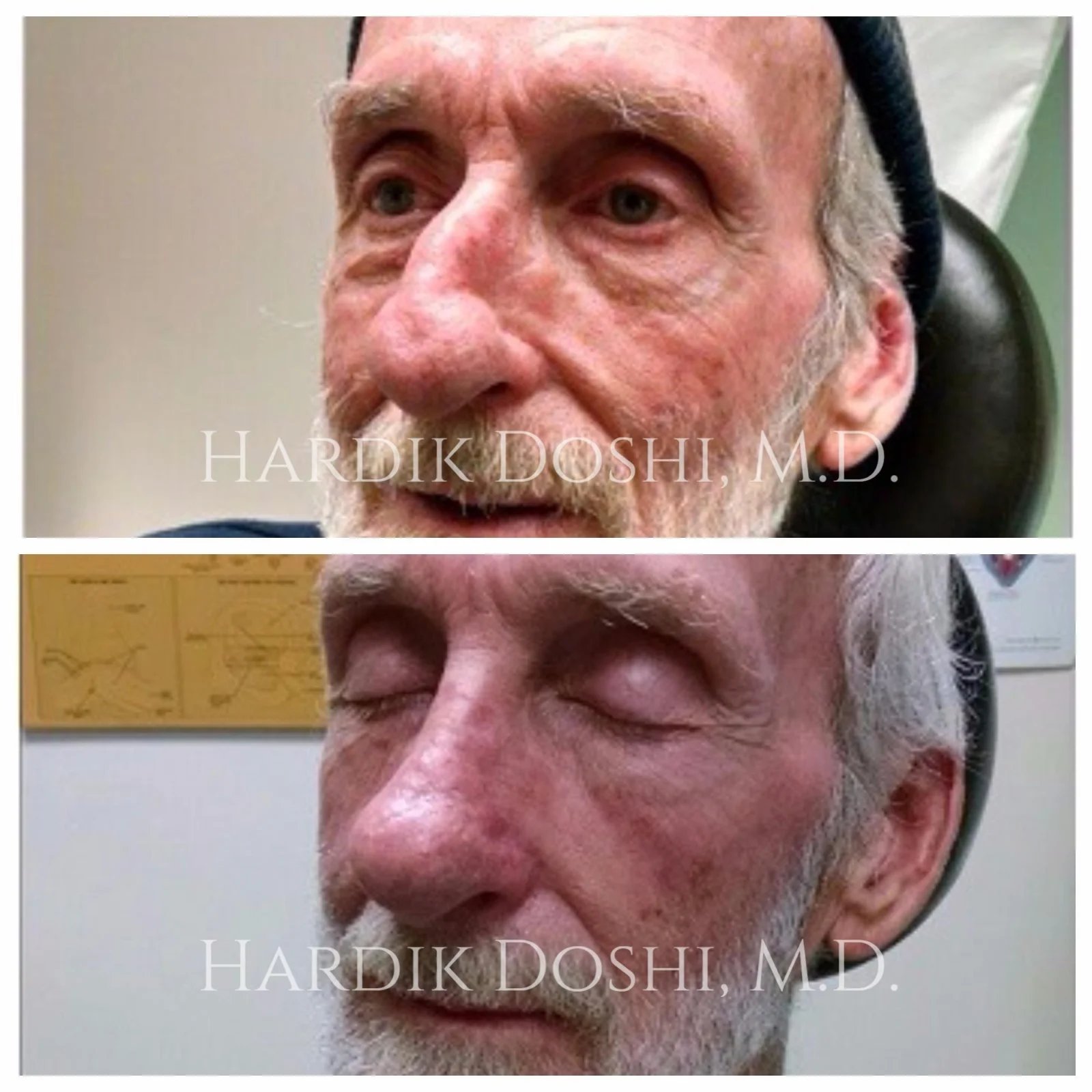
In a primary rhinoplasty, the surgeon is generally working with native, undisturbed cartilage and bone, and the surgical plan can be built around a relatively predictable set of anatomical starting points. In a revision case, scar tissue from the prior surgery, altered blood supply to the area, and cartilage that may have already been thinned, removed, or repositioned all complicate the planning and execution of the surgery considerably. Some revision cases require harvesting cartilage from other areas of the body, such as the ear or rib, to rebuild structural support that was compromised during a previous procedure.
Dr. Doshi evaluates revision cases with this added complexity in mind from the outset, since setting realistic expectations for what a second surgery can achieve, given the altered anatomy left behind by a prior procedure, is an essential part of a successful revision consultation.
How Breathing Correction Integrates With Cosmetic Goals
For patients whose consultation reveals a genuine functional issue, whether a deviated septum or another structural airway problem, breathing correction is generally addressed as part of the same surgical session as any cosmetic goals, rather than treated as a separate, unrelated procedure.
This combined approach offers real practical advantages. Patients undergo a single recovery period rather than two, and addressing both concerns simultaneously allows the surgical plan to account for how structural changes made for breathing purposes might affect the external appearance of the nose, and vice versa, rather than planning each independently and risking a mismatch between the two goals.
Patients who have lived with mild, undiagnosed breathing difficulty for years sometimes describe a meaningful improvement in daily comfort after this kind of combined procedure, an outcome distinct from and in addition to the cosmetic improvement they initially sought.
Recovery Expectations: What Makes This Nose Different From the Next
Recovery timelines and specific details vary somewhat depending on which technique was used, whether preservation or a more traditional approach, and whether functional correction was addressed at the same time as cosmetic refinement.
In general, initial swelling and bruising, particularly around the eyes, are most pronounced in the first week, with a nasal splint typically worn during this period to support the healing structure. Most visible bruising resolves within the first one to two weeks, though subtle swelling, particularly at the tip, can take considerably longer to fully resolve, often continuing to refine gradually over up to a year following surgery.
Patients who underwent preservation techniques sometimes describe a somewhat different swelling pattern compared to traditional techniques, given that less of the underlying structural framework was disrupted during surgery. Dr. Doshi discusses the specific expected recovery pattern relevant to each patient's particular surgical plan during consultation, rather than offering a single generic recovery timeline applicable to every technique.
Setting Expectations Around Results
Because rhinoplasty involves swelling that can take up to a full year to fully resolve, patience is an important part of a satisfying outcome. Patients often see a reasonably accurate approximation of their final result by around three to six months, with continued subtle refinement, particularly at the tip, occurring gradually over the following months.
Dr. Doshi is direct with patients about this extended timeline during consultation, since expecting an immediately final result within the first few weeks after surgery often leads to unnecessary anxiety during a period when the nose is still actively settling into its eventual shape.
Why Technique Selection Should Never Be One-Size-Fits-All
The overarching theme across all of these distinct aspects, breathing-first evaluation, preservation versus traditional technique, ethnic and gender-specific planning, and primary versus revision complexity, is that rhinoplasty is not a single, standardized procedure applied uniformly to every patient. Dr. Doshi's approach treats each of these variables as genuinely important inputs into a customized surgical plan, rather than defaulting to a single preferred technique regardless of a given patient's specific anatomy, history, and goals.
Patients researching a nose job on Long Island are encouraged to ask specific questions during any consultation, with any surgeon, about how these variables are being factored into their own individual surgical plan, since the answers to these questions often reveal more about likely outcomes than photos or marketing materials alone can.
Why Skin Thickness Changes What's Surgically Possible
One anatomical detail that surprises many patients researching rhinoplasty is how much skin thickness affects what a surgeon can realistically achieve, independent of how skilled the surgical technique itself might be. Thin skin reveals fine structural changes to the underlying cartilage and bone with considerable precision, meaning small refinements to the tip or bridge tend to show clearly in the final result. Thicker skin, by contrast, can mask a meaningful amount of underlying structural change, since the added soft tissue volume sits over the reshaped framework and can soften or obscure some of the fine detail work performed beneath it.
This matters significantly for setting expectations during consultation, since two patients with identical surgical technique applied to their tip cartilage can end up with visibly different final results purely based on how thick their overlying skin is. Dr. Doshi evaluates skin thickness directly as part of the physical examination, since patients with thicker skin sometimes benefit from a somewhat different surgical strategy, occasionally involving more aggressive cartilage work to compensate for the skin's tendency to mask fine changes, or a longer timeline of patience as swelling within thicker skin takes longer to fully resolve and reveal the final result.
Non-Surgical Alternatives and When They Make Sense Instead
Not every patient who comes in asking about rhinoplasty is necessarily a good candidate for, or even in need of, surgery. For patients with very mild concerns, such as a small dorsal irregularity or minor asymmetry, non-surgical rhinoplasty using injectable filler can sometimes address the concern without an operation at all.
This approach works by adding volume strategically to camouflage a small irregularity, such as filling in the area above or below a subtle bump to create a straighter appearing profile, rather than by removing or restructuring tissue the way surgery does. It is important to understand that this technique cannot reduce the size of a nose or reshape a tip requiring cartilage modification, and it is not a substitute for surgery in patients with a functional breathing concern, since filler addresses appearance only and does nothing to correct an underlying structural airway issue.
Dr. Doshi discusses this option directly with patients whose concerns are mild enough to be reasonably addressed non-surgically, since recommending a full surgical procedure to a patient whose concern could be resolved with a much less invasive option would not serve their actual best interest. For patients with more significant concerns, particularly involving nasal size reduction, tip reshaping requiring cartilage work, or any functional breathing issue, surgery remains the only technique capable of achieving a meaningful, lasting result.
How Age Factors Into Rhinoplasty Planning
Age plays a meaningful role in how Dr. Doshi approaches rhinoplasty consultations, particularly for younger patients whose facial growth may not yet be complete. Operating on a nose before the underlying facial skeleton has finished developing carries real risk of an unpredictable long-term result, since further growth after surgery can alter the outcome in ways that are difficult to anticipate at the time of the original procedure.
For this reason, Dr. Doshi generally declines to perform rhinoplasty on patients whose facial growth has not yet stabilized, typically recommending they wait until their late teens, once growth has more reliably concluded, before considering surgery. This is a firm boundary rather than a flexible guideline, since the goal is protecting a young patient's long-term outcome rather than accommodating an immediate request.
On the other end of the age spectrum, older patients considering rhinoplasty sometimes have additional considerations related to skin quality and slower healing, since skin elasticity naturally decreases with age and can affect how smoothly the skin redrapes over a reshaped nasal framework. Dr. Doshi factors these age-related tissue quality differences into surgical planning and recovery expectations for older patients accordingly.
Combining Rhinoplasty With Other Facial Procedures
Some patients considering rhinoplasty are also evaluating other facial concerns at the same time, and Dr. Doshi considers how the nose relates to the rest of the face as part of a comprehensive consultation rather than looking at the nose in complete isolation.
Chin projection, in particular, has a strong visual relationship to how the nose is perceived. A nose of entirely normal proportion can appear larger than it actually is when paired with a recessed or underprojected chin, since the eye reads the nose and chin together when assessing facial profile balance. For patients with both concerns, addressing chin projection through chin augmentation alongside rhinoplasty can sometimes produce a more balanced and satisfying overall result than operating on the nose alone.
Patients also occasionally combine rhinoplasty with eyelid procedures or other facial refinements during the same surgical session, since combining complementary procedures into a single recovery period is often more efficient than staging them separately. Dr. Doshi evaluates any such combination on a case-by-case basis, factoring in the total surgical time, anesthesia considerations, and how a combined recovery would affect the patient's overall experience.
Rhinoplasty for Out-of-Town and Traveling Patients
Given the extended recovery and swelling timeline involved in rhinoplasty, patients traveling to Long Island specifically for this procedure need to plan their trip carefully around the surgical and initial recovery schedule. Dr. Doshi regularly works with traveling patients, and the consultation and planning process is generally structured to allow for at least one in-person evaluation, whether that happens well ahead of the procedure or is combined with the trip itself, followed by adequate time locally after surgery to attend the initial follow-up visits before a long flight or drive home.
Patients are generally advised to plan for at least a week to ten days in the area following surgery, allowing time for the nasal splint removal, an early assessment of healing, and confirmation that swelling and bruising are resolving as expected before undertaking extended travel. Prolonged air travel shortly after rhinoplasty is generally discouraged given the combination of cabin pressure changes and prolonged immobility, both of which can affect swelling and comfort during the earliest phase of recovery.
Cost Considerations
The cost of rhinoplasty depends on several factors, including whether functional correction is being addressed alongside cosmetic goals, whether the case is primary or revision, and the specific technique being used, since preservation and more complex revision cases can require additional surgical time and planning compared to a straightforward primary cosmetic case. Dr. Doshi discusses a personalized cost estimate only after a full consultation and evaluation, rather than offering a generic quote before assessing a patient's specific anatomy and goals. Patients can begin this conversation in person or through a virtual consultation if they prefer to start remotely.