
Deciding whether it is the right time for a facelift is rarely about a single wrinkle or a specific birthday. It is usually a combination of smaller changes that add up over several years until a patient looks in the mirror one morning and no longer recognizes the tired or heavier face looking back. Some of these changes are obvious and some are subtle enough that patients only notice them once they are pointed out during a hands-on consultation.
This guide walks through fifteen of the most common signs that come up in consultation, why each one specifically points toward surgical correction rather than a non-surgical alternative, and how these signs typically cluster together rather than appearing in isolation. It is meant as a starting point for anyone trying to figure out whether they are a reasonable candidate for a facelift before booking a formal evaluation.

1. Jowls Along the Jawline
A defined jawline is one of the clearest markers of a youthful face, and its gradual loss to jowling, the accumulation of loose skin and descended fat just below the corner of the jaw, is one of the single most common reasons patients seek out a consultation in the first place. Jowls form as the deep ligaments that anchor cheek fat in its youthful position loosen, allowing that tissue to slide downward and settle along the jawline instead. Once jowls have formed, no amount of skincare, laser treatment, or filler reliably removes them, since the underlying issue is descended tissue rather than a surface problem, and this is one of the clearest signals that surgical repositioning is the appropriate next step.
2. A Deepening Nasolabial Fold
The nasolabial fold, the crease running from the side of the nose down to the corner of the mouth, deepens as midface volume is lost and the cheek tissue above it begins to descend, pushing tissue into that crease from above. Many patients try filler here for years with reasonable results, but once the fold is being driven primarily by descended tissue rather than simple volume loss, filler placed directly in the fold tends to look heavy or artificial rather than actually correcting the underlying cause, and lifting the cheek surgically addresses the source of the problem rather than masking it.
3. Marionette Lines
The vertical lines running from the corners of the mouth down toward the chin, sometimes called marionette lines, form for similar reasons as the nasolabial fold and often deepen alongside it. When these lines are present together with jowling and midface descent, a facelift typically corrects all three simultaneously, since they share a common underlying cause in loosened facial support structures rather than being three separate isolated problems each requiring its own treatment.
4. Loss of Cheek Volume and Structure
A youthful cheek has a rounded, forward-projecting quality that flattens over time as the deeper fat compartments of the face lose volume and the tissue above them descends. Patients sometimes describe this as their face looking longer or more gaunt, even without significant weight loss. A modern deep plane facelift repositions this descended tissue back to a more youthful vertical position rather than simply pulling skin tighter, which is why the resulting improvement in cheek fullness looks structural rather than stretched.
5. Excess Skin and Fullness Under the Chin and Neck
A loose, hanging quality under the chin and along the neck, sometimes called a turkey neck, is one of the most common complaints in patients over fifty and is frequently the single feature that finally motivates someone to schedule a consultation, even if they had been putting off addressing facial aging for years. This is corrected by a neck lift, which is often performed at the same time as a facelift, since the platysma muscle band and skin laxity responsible for a loose neck typically respond well to surgical tightening in a way that non-surgical treatments cannot replicate for anything beyond very mild cases.
6. A Face That Looks Tired Even When Well Rested
Patients often describe being asked if they are exhausted or unwell by friends and coworkers despite feeling completely fine, and this disconnect between how someone feels and how their face reads to others is one of the more emotionally significant signs that surgery may be worth considering. This appearance is usually driven by a combination of jowling, midface descent, and sometimes brow position rather than any single feature, which is why a thorough consultation looking at the whole face, rather than fixating on one area, tends to produce the most satisfying overall result.
7. Diminishing Returns from Injectables
Many patients in their forties and early fifties manage facial aging successfully with Botox and filler for years before noticing that the same amount of product no longer produces the result it once did, or that more and more filler is needed just to maintain a look that used to require very little. This pattern usually means that structural descent, rather than simple volume loss, has become the dominant issue, and it is one of the clearest practical signals that the non-surgical toolkit has reached its limit for that particular patient.
8. Skin Laxity That Does Not Respond to Tightening Devices
Radiofrequency and ultrasound skin-tightening devices can produce a modest improvement in mild to moderate skin laxity, particularly in patients in their late thirties and early forties. Once laxity has progressed further, these devices tend to produce underwhelming results relative to their cost, and patients who have tried one or more rounds of non-surgical tightening without meaningful improvement are frequently good surgical candidates, since it suggests the degree of laxity present has moved beyond what energy-based devices are designed to correct.
9. Age Alone Is Not the Deciding Factor
It is worth stating directly that there is no correct age for a facelift. Genetics, sun exposure, weight fluctuation, and smoking history all influence how quickly facial aging progresses, and some patients in their late thirties already show significant jowling and skin laxity while others in their sixties have comparatively mild changes. The fifteen signs in this guide are far more reliable indicators of candidacy than a birthday, and a good consultation focuses on what the mirror actually shows rather than what a patient's driver's license says.
10. Significant Weight Loss Has Left Excess Facial Skin
Patients who have lost a significant amount of weight, whether through lifestyle changes or GLP-1 medications, sometimes find that facial skin does not retract fully to match their new, smaller facial volume, leaving loose, hanging skin that did not exist before the weight loss. This is a distinct pattern from ordinary aging, since the skin laxity is driven by volume loss rather than gradual ligament stretching, but a facelift addresses the resulting excess skin regardless of which mechanism caused it in the first place.
11. Asymmetry That Has Become More Noticeable With Age
Nearly everyone has some degree of natural facial asymmetry, but aging can exaggerate a previously minor difference between the two sides of the face if one side loses support or volume slightly faster than the other. Patients who notice that a formerly subtle asymmetry has become more pronounced over the past several years are often good candidates for a facelift planned with specific attention to correcting or balancing that asymmetry rather than only pursuing a generic bilateral lift.
12. You Have Already Researched and Compared Facelift Techniques
Patients who arrive at a consultation already familiar with terms like deep plane, SMAS, or mini facelift, and who have spent real time comparing these approaches, are frequently at a genuine decision point rather than simply browsing out of curiosity. This kind of pre-consultation research is a reasonable sign that surgery is being seriously considered rather than idly explored, and it typically leads to a more efficient and detailed consultation, since less time needs to be spent on basic education before getting into the specifics of that patient's own anatomy.
13. You Are Emotionally Ready, Not Just Physically Ready
Candidacy for a facelift is not purely a physical assessment. Patients who feel pressured into surgery by someone else's opinion, or who are considering it during a period of major life stress or as a way to address an unrelated personal crisis, are generally counseled to wait, since the best surgical outcomes come from patients who are making the decision clearly for themselves and have realistic expectations about what surgery can and cannot change. A patient who has thought through the decision over a period of months, rather than acting on a sudden impulse, tends to be a more satisfied patient afterward regardless of how technically successful the surgery itself turns out to be.
14. You Are in Good General Health
Facelift surgery, particularly more extensive techniques performed under general anesthesia, requires a baseline level of health to minimize surgical and healing risk. Well-controlled chronic conditions such as diabetes or high blood pressure do not automatically rule someone out, but they do need to be discussed openly during consultation, and smoking or nicotine use of any kind needs to be stopped well in advance of surgery given its significant negative impact on healing and skin blood supply after this specific procedure.
15. You Are Willing to Commit to the Recovery Process
A facelift involves a real recovery period, typically two to three weeks before feeling comfortable in public and several months before the final result has fully settled. Patients who cannot realistically set aside this time, whether due to work obligations or family responsibilities, are often better served waiting until their schedule allows for a proper recovery rather than rushing into surgery around a demanding calendar. Patients who go into surgery with a clear, realistic recovery plan already in place tend to have a considerably smoother experience than those who try to compress or rush the healing timeline.
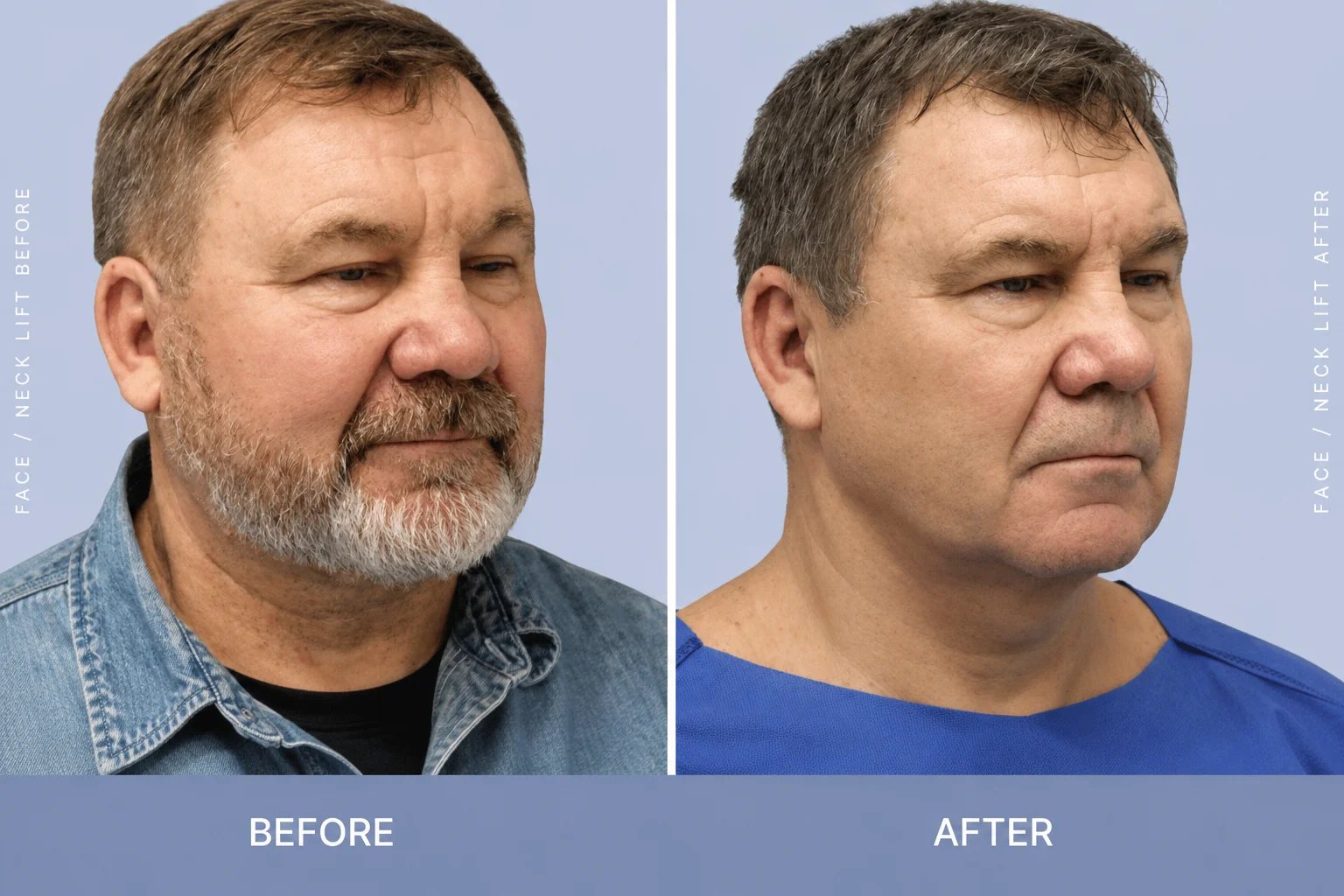
Techniques Available: Matching the Procedure to the Signs You Have
Not every patient showing several of these signs needs the same procedure. Patients with primarily jowling and neck laxity and comparatively good midface volume are often excellent candidates for a mini facelift, a smaller procedure with a shorter recovery than a full facelift. Patients with more significant midface descent, deeper nasolabial folds, and volume loss typically benefit more from a deep plane facelift, which repositions the deeper facial tissue layer rather than only tightening skin, and is generally regarded as producing more natural and longer-lasting results for patients with these more advanced changes. A detailed comparison of how these techniques differ, and which patients are better suited to each, is available in the practice's master guide to the preservation deep plane approach for anyone wanting to understand the surgical decision in more depth before their consultation.
Patients who have had a previous facelift and are noticing recurrence of some of these same signs years later are candidates for a distinct category of surgery, revision facelift, which requires a different technical approach than a first-time procedure given the scar tissue and altered anatomy left behind by the original surgery.
What Consultation Actually Involves
A facelift consultation should include a hands-on physical examination of skin laxity, fat distribution, muscle tone, and bone structure, along with a candid conversation about which of the fifteen signs above are present and how significant each one is for that individual patient. Photographs are typically taken from multiple angles, and older photographs the patient brings from ten or fifteen years earlier are genuinely useful for understanding how that specific face has changed and what a natural, restored version of it should look like.
Patients are encouraged to review the surgeon's training background and credentials before their visit, along with the practice's approach to combining anesthesia and safety protocols for facial surgery, since these are reasonable and important questions regardless of which surgeon a patient ultimately chooses to work with.
Cost and Practical Planning
Facelift pricing depends heavily on which technique is used, whether a neck lift or eyelid surgery is performed at the same time, and the overall complexity of the individual case. An honest breakdown of what typically drives cost up or down for Long Island patients is covered in detail in a separate article, and financing options are available for patients who prefer to spread the total cost over time rather than pay the full amount upfront.
Patients traveling from outside the immediate area, which is common given how many patients research surgeons well beyond their local market before choosing one, should plan to stay in the area for a short follow-up period after surgery so early healing can be checked in person before returning home.
Seeing Results Before Committing
Reviewing a gallery of prior results in patients with a similar starting pattern of jowling, neck laxity, or midface descent is one of the most useful steps before committing to surgery, and the practice's facial surgery gallery includes a range of pre- and post-operative photographs across different techniques and starting points. Patients who are not yet ready to travel in for an in-person visit can also start with a virtual consultation to discuss candidacy and ask preliminary questions before scheduling a formal appointment.
Combining a Facelift with Eyelid Surgery or a Brow Lift
Many of the fifteen signs described above involve the lower two-thirds of the face, but patients evaluating whether it is time for a facelift frequently have upper-face concerns developing on a similar timeline, including hooded upper eyelids, under-eye bags, or a low, heavy brow. Addressing these areas during the same operation as a facelift is common and often more efficient than staging the procedures months apart, since it means a single recovery period rather than two separate ones. During consultation, the surgeon should evaluate the whole face together rather than focusing narrowly on the area that originally prompted the visit, since patients are often surprised to learn that a tired-looking upper face is actually contributing more to their overall appearance of fatigue than the jowling or neck laxity that brought them in.
This whole-face evaluation is particularly relevant for patients whose chief complaint is looking tired despite feeling rested, since that specific complaint frequently involves brow position and eyelid skin at least as much as it involves the jawline and neck.
Anesthesia and Surgical Safety
A facelift is typically performed under general anesthesia or deep intravenous sedation in an accredited outpatient surgical facility, with a board-certified anesthesiologist present throughout the procedure. Surgery generally takes between three and six hours depending on the technique used and whether additional procedures are performed at the same time. Patients considering a combined procedure, such as a facelift with neck lift and eyelid surgery together, should ask directly about total anesthesia time and how the surgical team manages longer combined cases safely, since this is one of the more important safety questions a prospective patient can ask regardless of which surgeon she ultimately chooses.
Pre-operative clearance, including basic lab work and sometimes a cardiology evaluation for older patients or those with existing health conditions, is a standard part of preparing for a procedure of this length, and this evaluation is completed well in advance of the actual surgery date so that any concerns can be addressed before the patient is already on the schedule.
Long-Term Maintenance After a Facelift
A facelift resets facial aging by several years but does not stop the aging process entirely. Most patients enjoy a natural-looking, meaningfully younger appearance for ten years or more, and the aging that continues afterward tends to happen from a more favorable starting point than it would have without surgery. Sun protection, a consistent skincare routine, and continued use of neuromodulators to manage dynamic wrinkling all help preserve the result, and many patients maintain their results for well over a decade before considering any further surgical intervention.
When further correction is eventually needed, it is usually a smaller, more limited revision procedure rather than a full repeat of the original surgery, since the deeper structural correction from a well-performed facelift tends to hold considerably longer than skin alone would.
How These Signs Typically Show Up Together
In real consultations, these fifteen signs rarely appear as a single isolated concern. A patient who comes in specifically worried about jowling will very often also have some degree of nasolabial fold deepening and early neck laxity that she had not consciously registered as related, simply because they developed gradually over the same years and she stopped noticing the incremental change. A patient focused entirely on her neck will frequently also show midface volume loss that is contributing to an overall tired appearance she attributes to fatigue rather than facial structure. This is one of the more important reasons a thorough, whole-face consultation produces better surgical planning than one narrowly focused on whatever single feature originally prompted the visit, since correcting only the complaint the patient walked in with, while ignoring related changes elsewhere on the face, tends to produce a result that looks locally improved but still somewhat mismatched with the rest of the face.
Surgeons who routinely see this pattern will typically walk a new patient through each of the fifteen signs individually during the physical exam, pointing out areas the patient had not specifically mentioned but that are clearly present, since this thorough approach at the start of the process tends to produce more comprehensive surgical planning and, ultimately, a more naturally balanced result.
Choosing the Right Surgeon for This Decision
Because facelift surgery involves so many possible technique variations, and because the right combination of procedures depends heavily on which of the fifteen signs are present and how significant each one is, the choice of surgeon matters considerably more than it might for a simpler, more standardized procedure. Board certification in facial plastic and reconstructive surgery specifically, rather than general plastic surgery, is a reasonable baseline requirement, since facial anatomy and facial aging are a distinct area of specialization within the broader field. A surgeon's specific experience with deep plane technique, given how much more technically demanding it is than an older, more superficial approach, is also worth asking about directly, along with how many facelifts that surgeon performs in a typical year.
Reviewing a gallery of results in patients with a starting pattern similar to your own, rather than a general gallery of unrelated procedures, along with reading or watching real patient testimonials describing their actual experience with recovery and satisfaction, tends to give a far more realistic picture of what to expect than marketing materials or before-and-after photographs alone.
Preparing for Surgery Once You Have Decided
Once a patient and surgeon have agreed that surgery is the right next step, preparation typically begins several weeks in advance. Blood-thinning medications and supplements, including many common over-the-counter anti-inflammatory drugs and certain herbal supplements, need to be stopped for a defined period before surgery to reduce bruising and bleeding risk, and a complete medication review is part of standard pre-operative planning. Smoking and any nicotine products, including vaping, must be stopped well ahead of the surgery date, since nicotine significantly impairs blood flow to the skin and increases the risk of healing complications specifically at the incision sites used in facelift surgery.
Arranging reliable help at home for the first several days, preparing easy-to-eat meals in advance, setting up a comfortable recovery space with extra pillows to keep the head elevated while sleeping, and having ice packs on hand all make the early recovery period considerably more manageable. Patients are also encouraged to clear their calendar of any non-essential obligations for at least the first two weeks, since underestimating the visible healing timeline is one of the more common sources of frustration during recovery.