
If you have had a rhinoplasty, or you are about to have one, there is a good chance you have typed some version of "after nose surgery swelling" into a search bar late at night, zooming in on your own profile in bad bathroom lighting, wondering if what you are seeing is normal. It almost always is. Rhinoplasty produces one of the longest and most unpredictable swelling timelines in facial plastic surgery, and the gap between what patients expect and what actually happens is where most post operative anxiety comes from.
This guide lays out, as specifically as possible, what swelling actually looks like week by week after rhinoplasty, covering both primary and revision surgery and both open and closed technique, so you know what is normal, what is worth a call to your surgeon's office, and why the "final" result takes so much longer to appear than most people are told going in. Dr. Hardik Doshi, a double board certified facial plastic surgeon on Long Island, walks nearly every rhinoplasty patient through this exact timeline during consultation and recovery, precisely because so much of the anxiety around swelling comes from not knowing what to expect next.
Why Rhinoplasty Swelling Behaves Differently Than Swelling After Other Facial Surgery
Most facial procedures, such as a facelift, an eyelid lift, or a chin implant, have swelling that resolves within a matter of weeks. Rhinoplasty is different because of the anatomy involved. The nose has thin, tightly adherent skin sitting directly over cartilage and bone, with very little soft tissue in between, and it relies on a dense, slow draining lymphatic and vascular network. When that skin is lifted, even briefly, during surgery to reshape the underlying structure, it swells. Because there is so little loose tissue available to let that swelling redistribute or drain quickly, it can take considerably longer to resolve than swelling almost anywhere else on the face.
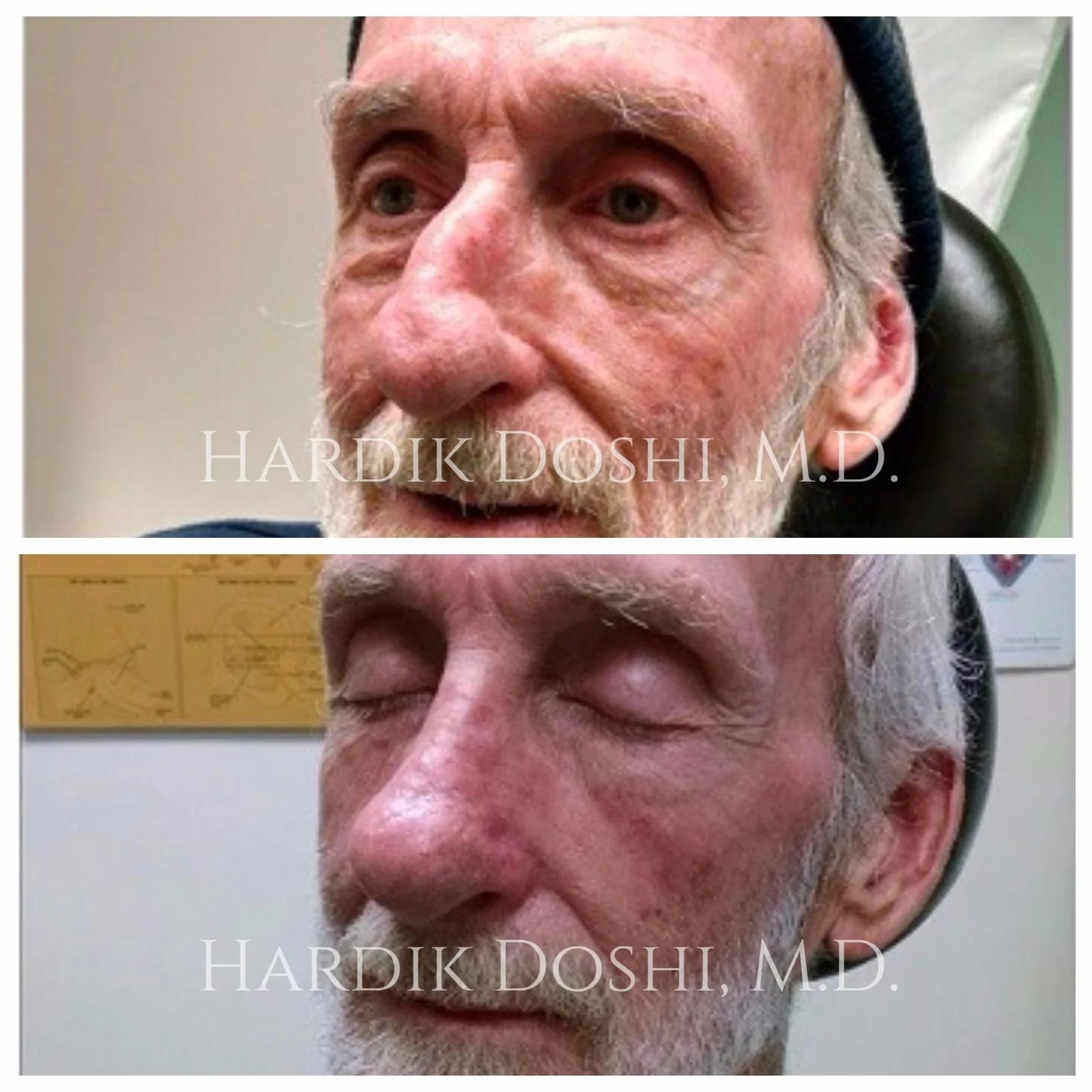
The nasal tip in particular holds swelling longer than the bridge. The tip has thicker, oilier skin with a more limited blood supply, which is why so many rhinoplasty patients notice their tip still looks slightly rounded or a bit "bulbous" for months after the bridge already looks finished. Understanding this difference between the tip and the bridge early on can save patients a lot of unnecessary worry in the months following surgery.
Dr. Doshi explains this anatomy to patients before surgery for a reason: understanding why the nose swells the way it does makes the entire recovery feel far less alarming once it is actually happening. It also helps to understand that swelling is not one single, uniform process. There are actually several layers of change happening under the skin at once: fluid swelling that comes and goes with daily habits, deeper tissue swelling that resolves on a slower biological schedule, and the gradual settling of the skin envelope itself onto the newly reshaped cartilage and bone framework underneath. Each of these layers resolves at its own pace, which is part of why the overall healing timeline can feel so inconsistent from one week to the next.
The Realistic Rhinoplasty Swelling Timeline
This is the point at which your nose will look the most swollen, and if you have a splint, the most unrecognizable. Bruising under the eyes is common, especially if any bone work, known as osteotomies, was performed to narrow or straighten the bridge. Bruising tends to peak around day two or three before starting to fade. A splint or cast is usually worn during this period to protect the new shape while the initial swelling is at its worst.
What is normal at this stage includes significant swelling, bruising around the eyes, nasal congestion, and mild discomfort. What is worth flagging to your surgeon includes severe swelling on only one side, fever, or bleeding that does not slow down with light pressure. Dr. Doshi's office provides patients with a direct line for exactly this kind of early concern, since the first few days are when questions tend to be most urgent.
The splint typically comes off between day five and day seven. This is an emotionally loaded moment for most patients. The nose underneath the splint is still quite swollen, and it is common to feel a wave of disappointment seeing the shape for the first time, because what is visible at this stage is roughly forty to fifty percent swelling layered on top of the real result. Bruising is usually fading well by the end of this week, and most patients feel noticeably more presentable than they did just a few days earlier. This is also typically when Dr. Doshi sees patients for their first in person follow up, to check the healing incision and reset expectations for the weeks ahead.
Most patients feel comfortable returning to work, school, or normal social settings during this window, particularly with a bit of concealer over any lingering bruising. The nose still looks swollen, particularly at the tip and along the sides of the bridge, but the general shape is starting to become recognizable. This is generally when patients start feeling like themselves again, even though the nose still has a long way to go before it reaches its final form.
This is one of the most psychologically tricky points in rhinoplasty recovery. Swelling drops noticeably during this window, and the nose can start to look close to its final shape, close enough that many patients assume they are basically done healing. They are not. This is sometimes referred to as the first plateau, and it is a common point where patients begin comparing their result to their expectations and feel a temporary dip in confidence, without realizing that another eighty five to ninety percent of the healing process still lies ahead. Dr. Doshi flags this exact window during pre operative counseling so patients recognize it for what it is when it arrives, rather than mistaking it for a sign that something went wrong.
By this stage, most numbness in the tip and along the sides of the nose, which is common after the skin is lifted during surgery, has substantially improved, though some patients notice areas of altered sensation that continue improving for up to a year. Swelling continues its slow decline during this period, though it can still fluctuate day to day, especially with sodium intake, alcohol, hot showers, or intense exercise.
The tip is almost always the last part of the nose to fully de swell. By four to six months, most patients can see the general shape of their result clearly, but the tip in particular may still look slightly fuller or rounder than its ultimate destination, especially when viewed from below or in profile under harsh lighting. This is completely normal and does not indicate a problem with the surgery itself. Dr. Doshi reviews photos with patients at this stage specifically to compare against their own baseline rather than against someone else's timeline, since tip swelling resolves on such an individual schedule.
This is where the last, subtle layer of swelling resolves, the kind that is really only visible to the patient themselves, or in side by side comparison photos rather than in a mirror on any given day. Skin thickness plays a large role here. Patients with thicker, oilier skin, which is common in ethnic rhinoplasty and revision rhinoplasty cases, tend to hold on to tip swelling longer than patients with thin, fair skin.
For most primary rhinoplasty patients, somewhere between twelve and eighteen months marks the point at which the result is truly final. The tip has fully settled, and any subtle asymmetries from residual swelling have resolved. Revision rhinoplasty patients, along with patients who have thick or oily skin, sometimes take slightly longer, closer to the eighteen to twenty four month mark, because of more extensive scar tissue and a longer, slower lymphatic recovery process.
Why Some Patients Swell Longer Than Others
Swelling duration is not random. It is driven by a handful of predictable factors, and understanding them can help set realistic expectations going into surgery. Dr. Doshi assesses each of these factors individually during consultation, since a patient's own skin type and surgical history matter far more to the swelling timeline than any general rule of thumb.
Skin thickness and oiliness play a major role. Thicker, sebaceous skin, common in male rhinoplasty and certain ethnic rhinoplasty anatomies, holds swelling considerably longer than thin, fair skin.
Whether the surgery is primary or revision also matters a great deal. A revision rhinoplasty operates through pre existing scar tissue, which has a less predictable healing and swelling response than tissue that has never been operated on before.
The extent of the work performed is another factor. A tip only refinement typically de swells faster than a full rhinoplasty involving bone work, grafting, and significant structural changes to the underlying framework.
The surgical technique used also has some influence. Open rhinoplasty, performed through a small incision at the base of the nose, generally involves slightly more initial swelling than closed rhinoplasty, which is performed entirely inside the nostrils, although the difference tends to even out by month three or four.
Individual healing and lymphatic drainage vary from person to person. Just as some people bruise more easily than others, some people's lymphatic systems simply clear post surgical fluid more slowly. This varies significantly from patient to patient and is not something that surgical technique alone can control.
Sun exposure and skincare habits during healing can also affect the timeline. Ultraviolet exposure on healing nasal skin can prolong redness and, in some cases, contribute to a longer swelling course overall.
What Actually Helps Reduce Swelling During Recovery
While no technique eliminates the underlying biological swelling timeline, a few habits reliably help patients get through it more comfortably, and in some cases modestly speed up the visible resolution.
Sleeping with your head elevated, at roughly thirty to forty five degrees, for the first two to three weeks helps fluid drain away rather than pool in the face overnight.
Cold compresses around the eyes, though not placed directly on the nose itself, are helpful during the first forty eight to seventy two hours.
Limiting sodium intake reduces overall fluid retention throughout the body, including in the face.
Avoiding alcohol for the first few weeks is worthwhile, since alcohol promotes vasodilation and fluid retention.
Steering clear of strenuous exercise for at least three to four weeks helps as well, since increased blood pressure and heart rate can worsen both swelling and bruising.
Gentle lymphatic massage, sometimes recommended by your surgeon starting a few weeks after surgery, can help move residual fluid along more efficiently.
Strict sun protection on the healing nasal skin for several months is important too, since ultraviolet exposure can prolong redness and, in darker skin tones, contribute to pigmentation changes in the healing scar tissue.
When Swelling Is Not Normal
Most swelling follows a slow, steady downward trend, with day to day fluctuation layered on top of that gradual decline. A few patterns, though, are worth a call to your surgeon rather than simply waiting it out.
These include sudden, significant swelling on only one side of the nose, especially if accompanied by pain, occurring well after the first week has passed. Swelling accompanied by fever or spreading redness can indicate infection and should be evaluated promptly. A sudden increase in swelling after a period of steady improvement is also worth mentioning to your surgeon's office. Finally, any swelling accompanied by a change in breathing that feels different from your baseline post surgical congestion deserves a call as well.
These situations are the exception rather than the rule. The vast majority of rhinoplasty swelling, even when it feels alarmingly slow to resolve, is simply the nose doing what nasal skin does after surgery. Dr. Doshi's practice encourages patients to call with any concern that feels off rather than waiting it out on their own, since it is always easier to rule something out early than to address it later.
Managing the Emotional Side of a Long Timeline
Rhinoplasty recovery asks for more patience than almost any other facial procedure, and that is genuinely hard for most patients. It is common, and completely normal, to feel a dip in confidence around the four to six week mark, when swelling has dropped enough to reveal a rough shape but not enough to reveal the final one. Patients who look back at photos from month two compared with month eight are often shocked at how much changed in between, precisely because the day to day change is too slow to notice in real time.
Dr. Doshi recommends this practice to nearly every rhinoplasty patient, since it is one of the simplest ways to stay grounded during a long recovery. Keeping consistent, well lit photos from the same angles every few weeks is one of the most useful things you can do during recovery. This is not meant to encourage obsessing over the process, but rather to have an honest, objective record of progress available for the moments when your in the mirror perception is telling you something less accurate.

It also helps to remember that swelling rarely resolves in a perfectly straight line. Some weeks will feel like real progress, and others will feel like a step backward, particularly after a salty meal, a long flight, or a poor night of sleep. None of this day to day noise reflects the underlying trajectory of your healing, which is almost always moving steadily in the right direction even when it does not feel that way in the moment.
A Note on Comparing Your Recovery to Other People's
One of the more common sources of frustration during rhinoplasty recovery comes from comparing your own timeline to someone else's, whether that is a friend who had surgery with a different surgeon, or a stranger's video online. Because swelling duration depends so heavily on individual factors like skin thickness, the extent of surgery performed, and whether the procedure was primary or revision, two patients who had what looks like a similar operation can have meaningfully different recovery timelines. This is not a sign that anything went wrong. It is simply a reflection of how differently individual tissue responds to surgery.
Wondering Where You Are in Your Own Timeline?
Every rhinoplasty heals on its own schedule, shaped by your specific anatomy, skin type, and the extent of your surgery. If you are currently in recovery and want reassurance about where you are in the process, or you are considering rhinoplasty and want a realistic picture of what recovery will actually involve, Dr. Doshi's team is glad to walk through it with you in detail.
You can read more about pre operative rhinoplasty instructions and post operative rhinoplasty care, or explore primary rhinoplasty, revision rhinoplasty, ethnic rhinoplasty, male rhinoplasty, female rhinoplasty, and preservation rhinoplasty to understand which approach applies to your situation. You can also read our rhinoplasty post operative tips and pre operative instructions for rhinoplasty blog posts for additional guidance. When you are ready, schedule a consultation to talk through your specific timeline with our team.