There is a question that patients who have been using Botox consistently for five, eight, or ten years carry quietly through their regular appointments but rarely ask out loud. What happens if I stop? Will my face look dramatically worse? Will the muscles overreact? Have I become dependent on the treatment in a way that makes stopping worse than continuing?
These are legitimate questions, and the fact that they go unasked at most appointments reflects a gap in how the long-term relationship between neuromodulators and the face gets discussed. The consultation that introduces a patient to Botox rarely includes a conversation about what the treatment does to the face over a decade of consistent use. The renewal appointment that refills the prescription every three months rarely steps back to assess whether the treatment is still serving the same purpose it was serving years ago.
This blog addresses that conversation directly. What actually happens physiologically when regular Botox treatment ends. What the research and clinical evidence says about long-term muscle effects. Whether stopping makes the face look worse than before treatment began. When Botox is delaying a surgical conversation that should be happening. And what patients on Long Island who have been in a maintenance cycle for years should understand about where they are in the arc of facial ageing and what their options actually are.
For patients who want to understand the full range of neuromodulator options at Doshi Plastic Surgery, the Botox page and the wrinkle relaxers overview provide foundational information on what the treatment involves and how it is used.
How Botox Works: A Refresher on the Biology
Botulinum toxin type A, marketed under brand names including Botox, Dysport, and Xeomin, works by blocking the release of acetylcholine at the neuromuscular junction. Acetylcholine is the neurotransmitter that signals a muscle to contract. When its release is blocked, the muscle receives no contraction signal and remains relaxed regardless of what the overlying nerve is telling it to do.
This effect is temporary because the neurotoxin does not permanently damage the nerve or the muscle. The nerve terminal slowly regenerates new acetylcholine release sites over a period of approximately three to four months, after which the muscle regains its normal contractile response. This is why Botox wears off and why regular retreatment is required to maintain the effect.
The clinical consequence of this biology is that the facial muscles being treated, most commonly the frontalis, the corrugators, the procerus, and the orbicularis oculi, are put into a state of partial or complete reduced activity for the duration of each treatment cycle. Over many years of consistent treatment, the muscles cycle repeatedly between periods of reduced activity and periods of gradual return to function. This repeated cycling has physiological consequences that are different from simply having a muscle always at full function or always at zero function.
What Actually Happens When You Stop: The Short-Term Picture
The immediate consequence of stopping Botox is the gradual return of muscle activity as the current treatment wears off. This is not an abrupt change. The effect of botulinum toxin does not end on a specific day. It fades progressively over three to four months as the nerve terminals regenerate new release sites and acetylcholine signalling is restored incrementally.
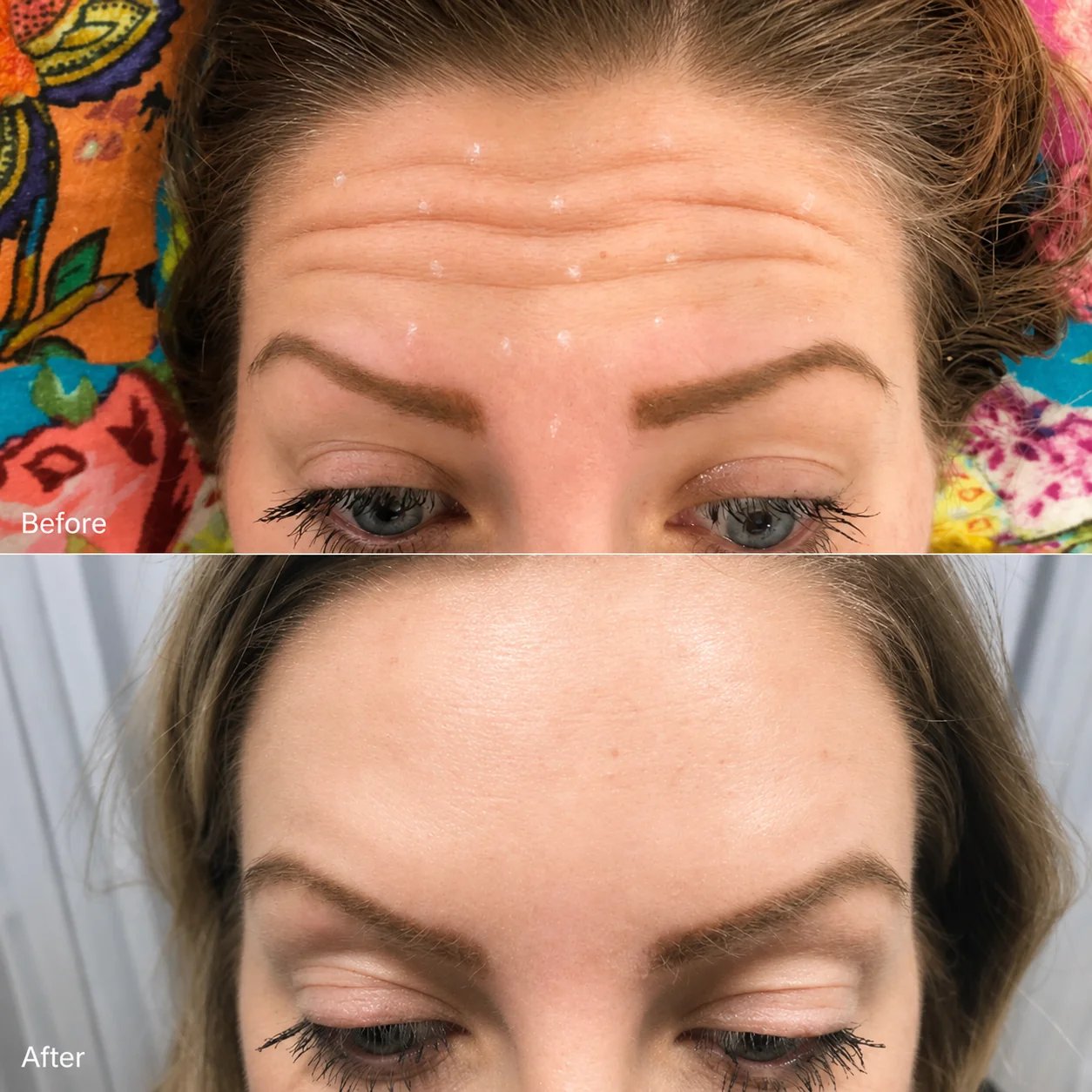
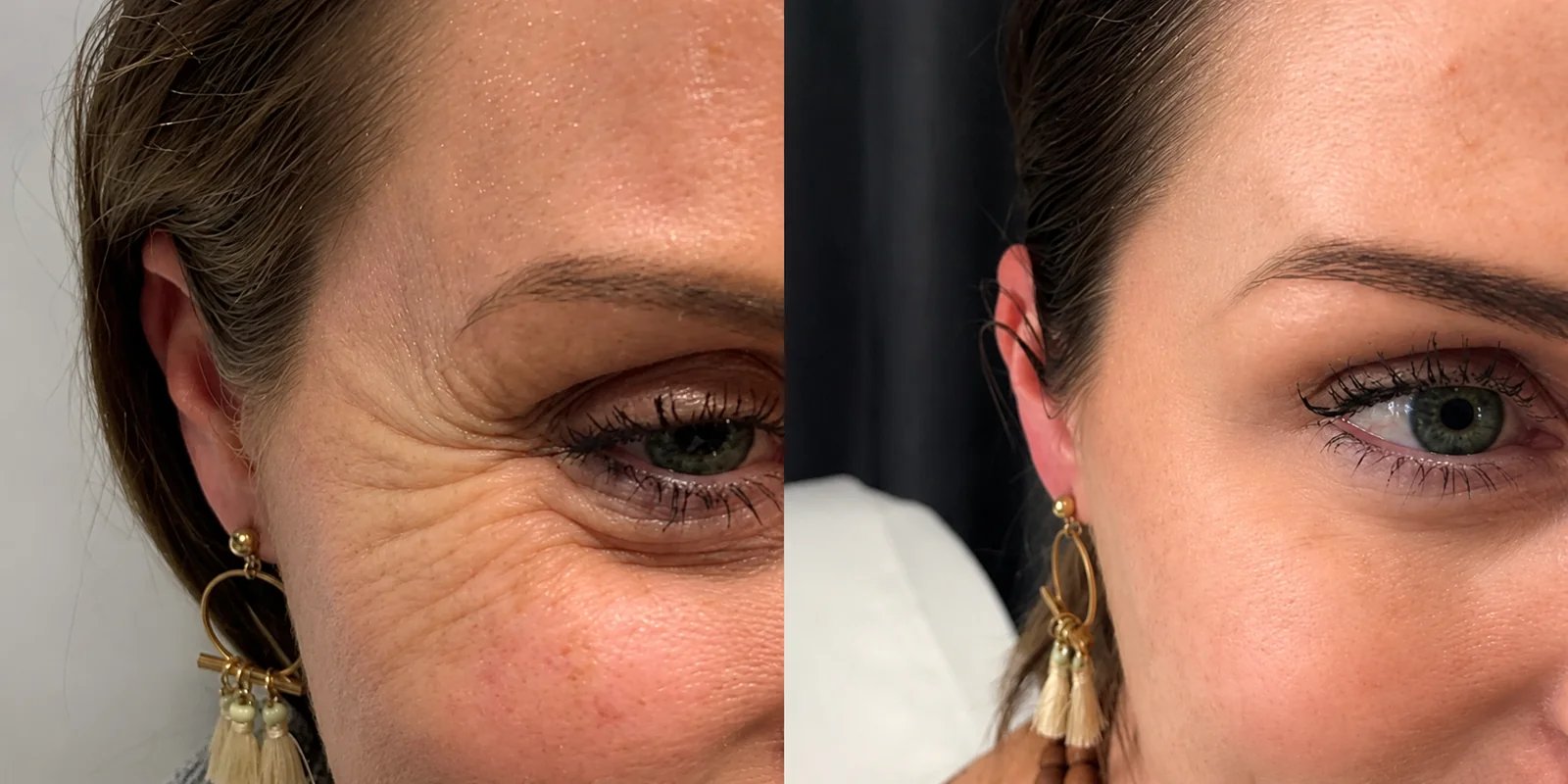
In practical terms, a patient who stops Botox after years of regular treatment will notice, over a period of weeks to months, that the lines in the treated area begin to return. The forehead lines that were suppressed begin to appear with expression, then become visible at rest. The glabellar frown lines soften between the brows. The lateral orbital lines return with smiling.
The critical question for patients is whether the face looks worse than it did before Botox treatment began. The evidence, both clinical and anecdotal across large patient populations, is that it does not. The lines that return are approximately the lines that would have been present at the patient's current age without any treatment. In many patients, they are actually slightly softer than they would have been without treatment, for reasons discussed below.
What patients sometimes perceive as looking dramatically worse after stopping is more often a psychological effect of contrast rather than an objective deterioration. A face that has had smooth, line-free skin for five or ten years looks more lined to the patient who has grown accustomed to that appearance than it would look to someone seeing the patient for the first time. The face at 52 without Botox is not dramatically worse than the face at 42 before Botox began. The patient's frame of reference has shifted.
The Long-Term Muscle Effects: Does Botox Produce Muscle Atrophy?
This is the question that generates the most anxiety among long-term Botox users and the most controversy in aesthetic medicine, and it deserves a direct answer based on what the evidence actually shows.
There is clinical evidence that long-term, consistent Botox treatment in specific muscles produces partial reduction in muscle bulk over time. This is not a surprising finding. Muscles that are kept in a state of reduced activity for extended periods do reduce in cross-sectional area relative to muscles maintained at full activity. This is a well-established physiological principle in other contexts, such as limb immobilisation and disuse atrophy in rehabilitation medicine. The facial application of this principle is less studied than in limb muscles, but the direction of the evidence is consistent.
In the facial muscles most commonly treated with Botox, specifically the frontalis and the glabellar complex, the degree of bulk reduction observed with long-term treatment is typically modest. It is not dramatic wasting. It is a subtle reduction in the mass of muscles that were never large to begin with.
Is This a Problem or a Benefit?
For most patients, partial reduction in the bulk of the frontalis and glabellar muscles is not a clinical problem. These are not muscles that patients need at full strength for functional purposes. Their role is primarily in facial expression. Reducing their bulk slightly means they generate less mechanical force on the overlying skin when they do contract, which translates to less line formation and, when Botox is discontinued, the lines that return are formed by a somewhat weaker muscle pulling on skin that has been mechanically stressed less than it would have been without treatment.
The practical consequence is that many long-term Botox users who discontinue find that the lines return more softly than they would have anticipated, precisely because the muscles generating them are not at the full activity level they would have had without any treatment history.
For some patients, particularly those concerned about the appearance of their forehead in a way that extends beyond lines specifically, the reduction in frontalis bulk can create a slightly different brow position and forehead contour than the patient is accustomed to seeing. This is a subtle effect and one that most patients do not find problematic. But it is worth understanding as part of the complete picture of what long-term treatment does.
The Skin Quality Question: Does Botox Protect Skin Over Time?
There is reasonable evidence, though not yet conclusive at the level of large randomised trials, that consistent Botox use in specific areas can slow the development of static lines in those areas over time. The mechanism proposed is that reducing repetitive mechanical stress on the overlying dermis, the stress generated by repeated full-force muscle contractions over years, slows the cumulative breakdown of collagen and elastin in the skin at those high-stress points.
Static lines, the lines visible at rest without any muscle contraction, are the end result of many years of dynamic stress on the skin combined with the natural loss of skin quality that occurs with chronological ageing. If the dynamic stress component is reduced through years of Botox treatment, the formation of static lines may proceed more slowly in the treated areas than it would without treatment.
This benefit, if it is real at the magnitude suggested by some clinical observations, means that a patient who has been using Botox consistently for ten years may have subtly better skin quality in the treated areas than they would have without treatment, even after they stop. This is a different claim from saying that Botox reverses ageing or prevents it entirely. It is a claim about one contributor to one category of visible ageing change.
The other dimensions of facial ageing, volume loss, skeletal resorption, ligamentous elongation, and soft tissue descent, continue regardless of Botox use. Botox has no effect on these processes. This is the most important limitation to understand in the context of long-term use.
When Botox Is Delaying a Conversation That Should Be Happening
This is the dimension of the long-term Botox discussion that is most clinically important and least often addressed: the point at which Botox maintenance is obscuring the patient's ability to accurately assess their actual ageing picture, and at which continuing to treat dynamic lines is delaying a conversation about structural changes that require a different approach.
The Narrowing Return on Investment
Botox addresses dynamic lines, the lines created by facial muscle movement. In a patient in their 30s, dynamic lines may represent the dominant facial ageing concern. In a patient in their 50s who has been using Botox since their 30s, the dynamic lines remain managed, but the face has accumulated two additional decades of structural change: volume loss, tissue descent, skin quality decline, and the accumulation of static lines that persist regardless of muscle activity.
The patient who looks at their face and sees it continuing to age despite consistent Botox is not experiencing a failure of the treatment. The treatment is doing exactly what it was always doing: suppressing dynamic line formation in the areas where it is injected. What has changed is the proportion of the overall ageing picture that Botox can address. The dynamic line contribution to the patient's concern has not grown. The structural contribution has grown considerably, and Botox has no effect on it.
The practical manifestation of this is the patient who describes looking tired or older despite good Botox results. The forehead is smooth. The glabellar area is relaxed. But the face still looks aged in ways that Botox cannot explain or address. This patient is typically experiencing the cumulative effect of volume loss, jowling, eyelid change, or other structural ageing that falls entirely outside what any neuromodulator can address.
The Signals That Surgery Should Be on the Table
Several specific clinical findings indicate that a patient who has been managing facial ageing with Botox should consider a consultation about surgical options alongside continuing non-surgical maintenance:
- Visible jowling along the mandibular border that is not present in photographs from earlier years and that does not improve with Botox or filler.
- Upper eyelid heaviness that persists despite Botox treatment in the forehead and brow area, suggesting that brow descent or eyelid skin redundancy is the primary driver rather than dynamic muscle activity.
- Neck banding or loss of cervicomental angle definition that has appeared or worsened over recent years.
- Loss of midface definition and deepening of the nasolabial fold that filler alone is not adequately addressing.
- An overall impression of facial tiredness or ageing that persists despite maintenance treatments being well-executed and effective at what they do.
Patients who recognise these patterns in their own situation are encouraged to schedule a consultation to assess facelift options, eyelid surgery, or brow lift as potential interventions for the structural concerns that Botox cannot address.
Botox Before Surgery: Should You Stop and When?
Patients who are planning facial surgery and who are currently on a regular Botox schedule will at some point need to allow their treatment to wear off before their procedure. Most surgeons recommend allowing Botox to metabolise fully before operating in or adjacent to the treated area, both because active neurotoxin creates a different tissue environment than normal muscle tone, and because surgical assessment of the face in its natural active state, with full muscle function, is important for accurate planning of certain procedures.
The general guideline is to allow at least three months for Botox to wear off before surgery in the treated area. Some surgeons have specific preferences about this timing, and patients should discuss their Botox history and timing when scheduling a surgical consultation so that any necessary gap between treatment and surgery can be planned.
After surgery, Botox can typically be resumed once the recovery is complete and the surgeon has cleared the patient for injectable treatments. In most cases, this is several months post-operatively. Reintroducing Botox after facial surgery, in appropriate areas and with appropriate technique, can complement the surgical result by addressing the dynamic dimension of ageing in areas that surgery does not directly target.
The Combined Approach: Surgery and Botox Together
The most effective approach to comprehensive facial rejuvenation for patients in their 40s and 50s who have been using Botox for years is typically a combined one. Surgery addresses the structural changes that Botox cannot: tissue descent, skin laxity, volume loss, eyelid changes. Botox and other non-surgical treatments continue to address the dynamic and surface-level changes that surgery does not directly target. The two are not alternatives to each other. They are complementary tools that address different anatomical problems.
For patients who have been delaying a surgical consultation because their Botox has been keeping things manageable, the combined approach offers a path that preserves the benefits of non-surgical management while addressing the structural dimension of ageing that maintenance alone cannot reverse. A deep plane facelift combined with continued Botox for dynamic lines in the forehead and crow's feet, and facial fat transfer or dermal fillers for volume restoration, produces a result that addresses the full picture of facial ageing in a way that any single treatment category cannot.
What to Do With This Information
The patients this blog is written for are not patients who need to stop Botox. They are patients who need to have a more complete conversation about what Botox is doing for them, what it is not doing, and whether their current treatment approach is serving all of the goals they actually have.
If Botox is working well, producing results that meet expectations, and the face is ageing in a way that feels managed and appropriate, continuing is entirely reasonable. The evidence does not suggest any harmful long-term consequences from consistent, properly administered Botox treatment.
If Botox is producing good results in the areas it treats but the overall facial appearance continues to look tired or aged in ways that persist despite good treatment, that is the signal to expand the conversation. The structural changes that are accumulating outside the domain of what Botox can address will not be resolved by adjusting the Botox dose or technique. They require a different category of intervention.
The most useful step for patients in this position is a frank consultation that assesses the full facial picture, identifies which concerns are within the scope of ongoing non-surgical management and which require surgical consideration, and develops a plan that addresses both dimensions. That is the conversation that most long-term Botox users have not yet had and that, for many, would significantly change their approach to facial rejuvenation.
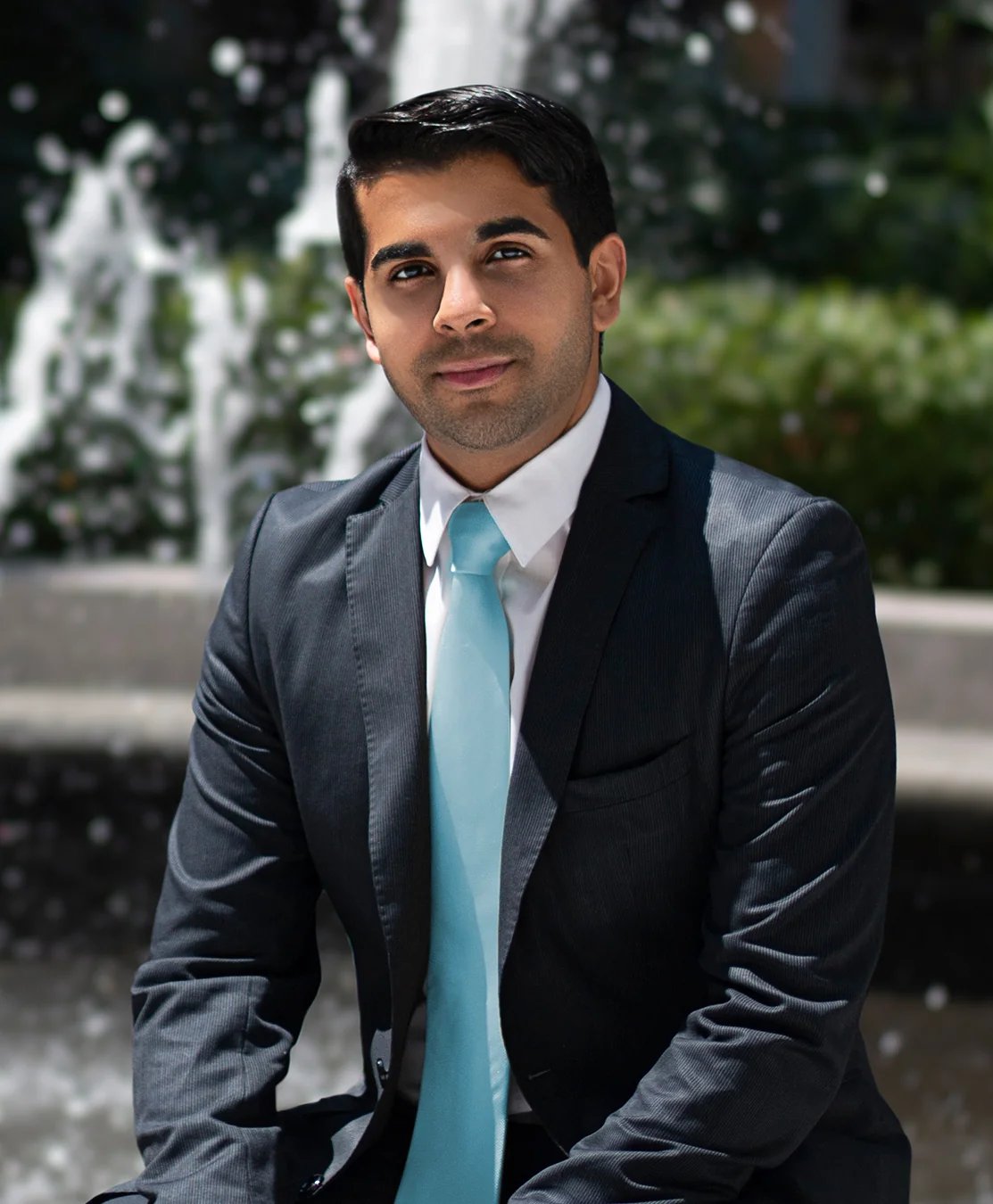
Dr. Hardik Doshi sees patients for consultations that address the full range of non-surgical and surgical options at Doshi Plastic Surgery in Garden City, Long Island and in Manhattan. Virtual consultations are available for patients who want an initial assessment before committing to an in-office visit. To schedule, visit doshiplasticsurgery.com or contact the practice directly.
About Dr. Hardik Doshi
Dr. Hardik Doshi is a double board-certified facial plastic surgeon and founder of Doshi Plastic Surgery, with offices in Garden City, Long Island and Manhattan, New York. He is certified by the American Board of Facial Plastic and Reconstructive Surgery and the American Board of Otolaryngology-Head and Neck Surgery, and has performed over 5,000 facial plastic surgery procedures. Dr. Doshi provides comprehensive facial rejuvenation across surgical and non-surgical approaches, including neuromodulator treatment, facelift, blepharoplasty, and fat transfer. To schedule a consultation, visit doshiplasticsurgery.com.