
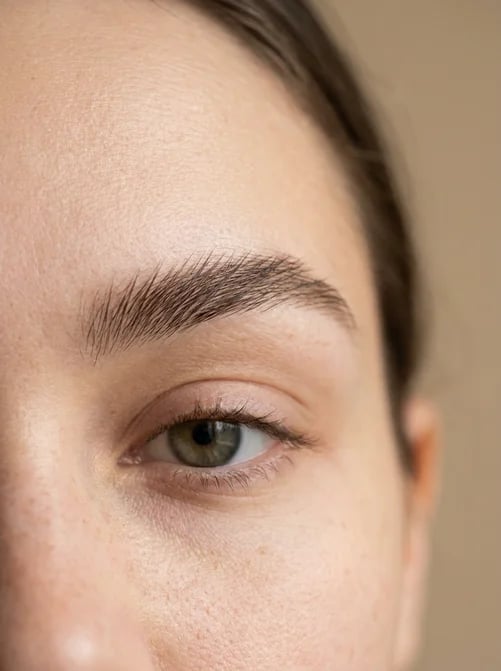
An eyebrow transplant on Long Island is a small operation with an outsized effect on the face. Brows frame the eyes, signal expression, and carry much of what people read as youth, warmth, or fatigue. When they are thin, gapped, or missing, makeup and tattooing can only imitate them. Transplanted hair grows. That is the appeal, and it is also the responsibility: hair that grows has to be placed in a shape, direction, and density that will still look right in ten years.
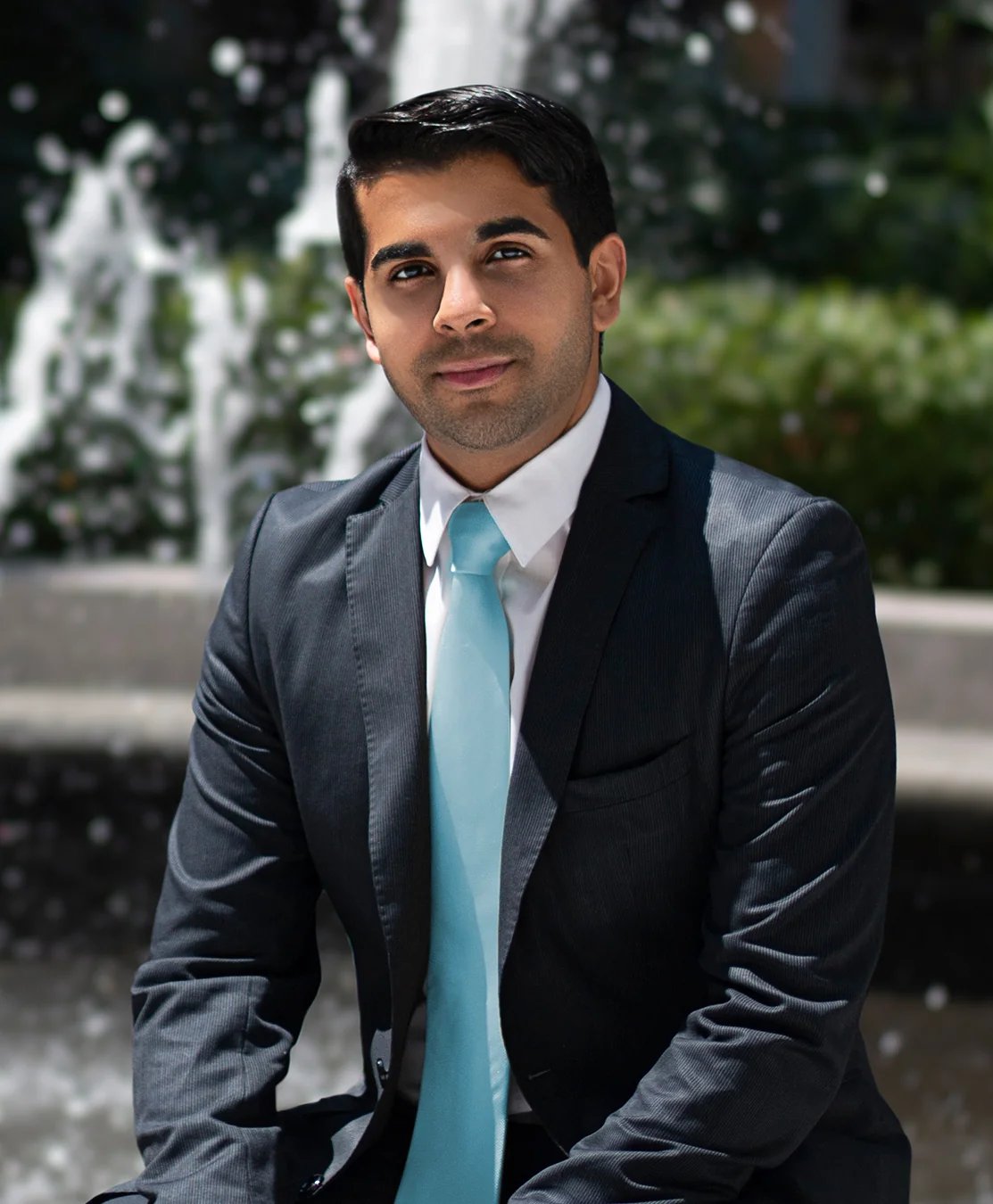
Dr. Hardik Doshi is a double board-certified facial plastic surgeon, and he thinks about eyebrows the way he thinks about any facial feature: in proportion to the eyes, the forehead, and the bone underneath. This guide explains how brow shape is designed, why single-hair grafts and very flat angles matter, what living with transplanted brows actually involves, and, importantly, when an eyebrow transplant is the wrong answer. Some patients who come in asking for "more brow" really need a brow lift. Others have a medical hair loss condition that needs diagnosis before anyone moves a single follicle.
What an Eyebrow Transplant Actually Is
An eyebrow transplant is a hair transplant performed in miniature. Individual follicles are harvested from a donor area, most often the back or sides of the scalp, and implanted into the brow one at a time. The transplanted follicles keep the characteristics of the donor site. They grow in a cycle, they can be shaped and trimmed, and in a properly selected patient they tend to last because donor hair from the back of the scalp is generally resistant to the hormonal thinning that affects the top of the head.
What makes the eyebrow different from the scalp is scale and precision. A scalp restoration may involve large numbers of grafts spread across a broad area, where a slightly imperfect angle in one graft disappears among neighbors. An eyebrow is a narrow strip of skin where every hair is visible at conversational distance. Direction errors show. A graft that sits slightly too upright will stick out like a whisker. A graft with two or three hairs will look like a tuft. The work is closer to drawing with a fine pen than painting with a roller.
Brow Shape Design: The Part Most Pages Skip
The operation itself is technical. The design is where the result is won or lost. Before any harvesting, Dr. Doshi marks the brow with the patient sitting upright, looking straight ahead, with their face relaxed. He and the patient look at it together in a mirror, and they adjust until the shape suits the face rather than a trend.
The three landmarks: head, arch, and tail
A useful framework divides the brow into three parts:
- The head (medial brow) sits roughly above the inner corner of the eye or the side of the nose. Starting too close to the midline creates a heavy, frowning look. Starting too far out makes the eyes look wide set.
- The arch (peak) is the highest point. In many faces it sits somewhere between the outer edge of the iris and the outer corner of the eye when looking straight ahead. Moving it inward tends to look surprised. Moving it too far out can look flat or tired.
- The tail (lateral brow) tapers and should end at a height roughly level with or slightly above the head. A tail that drops below the head line makes the whole face look sad or older.
These are starting points, not rules. Facial asymmetry is normal, and the two brows are designed to look balanced together, not to be mirror images. If one eye sits a little higher, the brows are adjusted so the overall impression is even.
Gender differences in brow shape
Brow design is one of the clearest places where gender shows in the face, and he pays close attention to it.
| Feature | Typically more feminine | Typically more masculine |
|---|---|---|
| Position | Sits slightly above the bony brow ridge | Sits at or along the brow ridge |
| Arch | Defined peak, usually in the outer third | Flatter, more horizontal line with a soft or minimal peak |
| Thickness | Thinner overall, tapering to a fine tail | Fuller throughout, with less taper |
| Head | Softer, more rounded or feathered start | Squarer, denser start |
| Density | Even, refined density | Heavier density, can tolerate a slightly less tidy edge |
These are tendencies, not prescriptions. A woman may want a strong, straight, full brow. A man may want a more groomed shape. Transgender and nonbinary patients often find brow design an important part of facial congruence with their identity, and the plan should reflect the face the patient wants to present. What matters is that the design is chosen deliberately, because once hairs grow, the shape is semi-permanent. Hair can be trimmed or removed later, but adding a softer arch to an overly straight transplanted brow is much harder than getting it right the first time.
Designing for the future face
Faces change. The forehead skin descends with age, and the brow tends to drop, particularly at the tail. Dr. Doshi designs conservatively so that a shape that looks appropriate at 35 still looks appropriate at 60. That usually means avoiding a very high, dramatic arch and avoiding extremely heavy density near the tail, where descent is most visible. It also means being honest when the problem is position rather than hair.
Single-Hair FUE Grafts at Flat Angles
Most eyebrow transplants today use follicular unit extraction (FUE), in which individual follicular units are removed from the donor area with a tiny punch. If you want a deeper explanation of how harvesting works, the article on FUE hair transplant technique covers the method in more detail. For brows, three technical details shape the result.
Why single-hair grafts
Natural eyebrow hairs emerge one at a time. Scalp follicular units often contain two, three, or four hairs. Placing a multi-hair unit in a brow creates a clump that looks unnatural, especially at the front edge and tail. For that reason, eyebrow work relies almost entirely on single-hair grafts. Where a donor unit contains more than one hair, it can be trimmed or the single-hair units selected preferentially. Some surgeons may use a small number of two-hair grafts in the dense central body of a masculine brow, but the borders are always single hairs.
Why the angle is so flat
Eyebrow hairs lie almost flat against the skin. That is the single biggest difference from scalp hair, which rises at a steeper angle. To reproduce this, each recipient site is made at a very acute angle, close to parallel with the skin surface. If the site is too steep, the hair grows outward toward the viewer and becomes obvious.
Direction changes across the brow
The direction of brow hair is not uniform:
- In the head, hairs tend to point upward and slightly outward, sometimes nearly vertical at the very front.
- In the body, hairs angle outward and gradually flatten.
- Along the top and bottom edges, hairs converge toward the center line of the brow, which gives the brow its slight "herringbone" crossing pattern.
- In the tail, hairs lie almost horizontally, pointing toward the temple.
Each recipient site is made to match this flow. This attention to direction is something the practice brings from every hair transplant on Long Island it performs, but the brow requires an even finer hand, because the field is so small and so central to the face.
Graft count is a design outcome, not a sales number
How many grafts a brow needs depends on whether the plan is filling a gap, rebuilding a tail, or creating a brow from almost nothing. It also depends on the patient's native brow, skin, and hair caliber. Dr. Doshi does not quote a number until he has examined the brows and agreed on a design. A brow that is overpacked can look harsh, and the survival of very densely packed grafts is not guaranteed, so there are cases where a second, smaller session gives a more natural result than trying to do everything at once.
Living With Transplanted Brows: Lifelong Trimming
This is the part patients most often underestimate, and Dr. Doshi wants every candidate to understand it before deciding.
Transplanted follicles from the scalp keep behaving like scalp hair. They grow longer than native brow hair, which typically stops at a short length. That means transplanted brow hairs need regular trimming, often every week or two, for as long as they grow. Many patients find this easy and even enjoy the control it gives them. But it is a real, ongoing commitment.
Other practical realities:
- Hair character may differ. Scalp hair can be finer or coarser, straighter or curlier, than native brow hair. Curly scalp hair can be more challenging in a brow. A brow gel or grooming product helps train direction, especially in the first year.
- Color can differ slightly. If the native brow is a different shade from scalp hair, a tinted brow gel or occasional tinting can blend them.
- Graying follows the donor. Transplanted hair will gray on the timeline of the scalp donor area, not the brow.
- Longevity is generally good. Because the donor hairs are chosen from a region that tends to be resistant to pattern thinning, transplanted brows often last long term. The same principles behind why hair transplants are considered permanent apply here, with the caveat that permanence depends on the donor hair staying healthy and on there being no active disease in the recipient area.
If the idea of trimming your brows every week sounds unbearable, that is worth knowing now, before surgery.
Eyebrow Transplant vs Microblading vs Brow Lift
Patients often arrive having already tried one approach or researched all three. They solve different problems, and choosing between them begins with a simple question: is the issue hair, or is the issue position?
| Eyebrow transplant | Microblading or cosmetic tattooing | Brow lift | |
|---|---|---|---|
| What it changes | Adds real, growing hair | Adds pigment that imitates hair strokes | Raises the position of the brow and forehead tissues |
| Best for | Thin, sparse, over-plucked, or scarred brows with healthy donor hair | Patients who want a quick change or cannot or prefer not to have surgery | Brows that have dropped, heavy upper lids from brow descent, a tired or angry look |
| Look up close | Three-dimensional hair with texture | Flat strokes that can look natural when fresh | Does not add hair; changes shape and height |
| Maintenance | Lifelong trimming | Periodic touch-ups as pigment fades; color can shift over time | Minimal once healed; aging continues |
| Downtime | Short; donor and recipient healing | Short; some flaking and healing | Longer surgical recovery |
| Reversibility | Hairs can be removed, but it takes effort | Fades; laser removal possible but may take multiple sessions | Not reversible in a simple way |
Drooping brows need a lift, not hair
This is the single most important distinction - when a brow has descended, especially at the tail, adding hair does not fix the problem. It can make it worse, because now you have a fuller brow sitting in a low, heavy position, and it draws attention to the very thing that makes the face look tired.
Signs that brow position, not hair density, is the main issue:
- You find yourself raising your eyebrows to open your eyes, and your forehead lines deepen as you do.
- Your upper eyelids look heavy or hooded, and lifting the brow with a fingertip makes them look better.
- The outer tail of your brow sits lower than the inner head.
- Friends say you look tired or upset when you are not.
For these patients, a surgical brow lift repositions the tissue. In some patients, both problems coexist: a dropped brow that is also thin. In those cases, the usual approach is to address position first, allow healing, and then design hair restoration for the brow in its new location. Placing hairs first and then lifting can carry the transplanted hair to an unexpected height.
Where microblading fits
Microblading is a reasonable choice for many people and is not Dr. Doshi's enemy. It is fast, nonsurgical, and can look very good. Its limits are that it is pigment rather than hair, so it lacks the three-dimensional texture of real brows, it fades and needs touch-ups, and color can shift toward gray, blue, or warm tones over the years. Some patients come to the practice after years of microblading, wanting real hair. A transplant can be placed into an area with old pigment, but it is helpful for him to know your microblading history, and heavy or poorly placed old pigment may need attention before or alongside restoration.
Over-Plucked, Scarred, and Thin Brows
Over-plucked brows
Repeated plucking over many years can injure follicles until they no longer produce a hair. If a gap has stayed empty for a long time despite leaving it alone, the follicles there are often gone. These are frequently excellent candidates, because the surrounding skin is healthy and the cause is mechanical and finished. The design challenge is that the remaining native hairs may be scattered, so the transplant must blend in with what is left rather than overwrite it.
Brow scars
Scars are a common reason people seek brow restoration. A scar that crosses the brow interrupts the line and is often more noticeable because of the gap than because of the scar itself. Grafts can be placed into many mature scars, but scar tissue has less blood supply than normal skin, so graft survival can be lower and a second session is sometimes planned from the start. The scar should be fully mature, which usually means waiting many months after the injury. Raised, tight, or very shiny scars may benefit from scar treatment before grafting. Each scar is assessed individually.
Alopecia and Frontal Fibrosing Alopecia: When to Be Cautious
Not all brow loss is cosmetic. Several medical conditions cause brow hair to fall out, and transplanting into active disease can waste donor hair at best and worsen the condition at worst. This is where an honest surgeon slows down.
Frontal fibrosing alopecia
Frontal fibrosing alopecia (FFA) is a scarring form of hair loss that most commonly affects women around and after menopause, although it can occur in others. It typically causes gradual recession of the frontal hairline and very often causes loss of the eyebrows, sometimes before the hairline change is noticed. Because FFA is an inflammatory condition that destroys follicles, transplanted hairs placed into an active area can be lost to the same process. If your brows have thinned along with any of the following, please mention it:
- Your hairline at the forehead or temples seems to be moving back.
- The skin along your hairline looks smoother or paler than before.
- You notice redness or small bumps around remaining hair follicles at the hairline.
- You have lost hair on your arms or legs without explanation.
Patients with suspected FFA should be evaluated by a dermatologist, often with a scalp examination and sometimes a biopsy. Transplantation is generally considered only after the condition has been stable for a prolonged period, and even then patients should understand that results can be less predictable and loss can recur.
Alopecia areata and other medical causes
Alopecia areata is an autoimmune condition that causes patchy hair loss and can affect the brows. Because it can come and go, and because transplanted hair may be affected too, it is not usually treated with transplantation. Thyroid disorders, certain skin conditions such as eczema or psoriasis around the brows, nutritional issues, some medications, and chronic rubbing or picking can also thin brows. Many of these improve when the cause is treated.
Nonsurgical options can play a role in selected situations. Some patients ask whether PRP hair restoration could help their brows. PRP is used to support existing follicles on the scalp, but it cannot regrow follicles that are gone, and its role in the brow is less established. Dr. Doshi discusses it case by case rather than as a substitute for diagnosis. The principle is simple: find out why the brows are thin before deciding how to make them fuller.
Self-Check: Is an Eyebrow Transplant Right for You?
Use this checklist before your consultation. It is not a diagnosis, but it helps you arrive with the right questions.
Signs you may be a good candidate
- My brows have been thin or gapped in the same places for a long time, and they are not getting worse.
- I know the cause: over-plucking, a scar, or a naturally sparse brow.
- The hair on the back and sides of my scalp is reasonably dense and healthy.
- When I look straight ahead, my brows sit at a height I am happy with.
- I am comfortable trimming my brows regularly for the long term.
- I can be patient for many months while results develop.
Signs to pause and get evaluated first
- My brow loss is recent, spreading, or patchy.
- My hairline at the forehead or temples is receding, or I have lost body hair.
- I have been diagnosed with alopecia areata, lupus, or another autoimmune condition.
- My brows or eyelids feel heavy, and lifting the brow with a fingertip makes me look more rested.
- I have a recent scar, or one that is still red and raised.
- I have heavy old pigment from microblading or tattooing in the brow.
If most of your checks fall in the first group, a consultation for eyebrow restoration makes sense. If any fall in the second, the practice still wants to see you, but the first step may be diagnosis, scar treatment, or a conversation about brow position.
Recovery and Results Timeline
Healing after an eyebrow transplant is usually straightforward, but the brow is right in the middle of your face, so it helps to know what to expect. The practice's written post-operative instructions for hair transplant patients cover care of grafts and the donor site, and they are tailored for brow patients.
| Timeframe | What you may notice | What to do |
|---|---|---|
| Days 1 to 3 | Tiny crusts at each graft; mild swelling that may settle toward the eyes | Keep the brows dry and untouched as instructed; sleep with your head elevated |
| Days 4 to 10 | Crusts loosen and fall away; swelling resolves | Gentle cleansing as directed; no picking, rubbing, or makeup on the brows |
| Weeks 2 to 4 | Most transplanted hair shafts shed. The brow may look much like it did before surgery | This is expected; the follicle remains below the skin |
| Months 2 to 4 | New fine hairs start to appear | Begin gentle trimming and brow gel once cleared |
| Months 4 to 8 | Growth fills in; hairs thicken and lengthen | Regular trimming; train direction with grooming products |
| Months 9 to 12 and beyond | Results mature | Assess for any refinement or a second session |
Risks to understand
Every surgery carries risk. With eyebrow transplants, the main concerns are poor graft survival, especially in scars; hairs growing in a slightly wrong direction; a shape that does not match expectations; cysts or ingrown hairs; infection; and visible donor marks if very short hair is worn. Many of these are reduced by careful design, conservative density, and following aftercare. Some can be corrected with a small revision.
Summing up
On Long Island, eyebrow services range from salons offering microblading to clinics offering hair transplant packages. Brow restoration sits at the meeting point of hair surgery and facial aesthetics. The surgeon you choose should be able to evaluate brow position, eyelid heaviness, scars, and facial proportion, not only the hair. Patients from Huntington, the North Shore, and across Nassau and Suffolk often come to the practice after hearing that the brow problem might be a position problem, and they want one surgeon who can explain both paths. If position is part of your concern, Dr. Doshi can evaluate a brow lift at the same visit.
How Dr. Doshi Approaches Eyebrow Transplants
If an eyebrow transplant is the right choice, Dr. Doshi will explain the plan, the realistic number of sessions, and the trimming and grooming that come with transplanted hair. If a brow lift or a medical evaluation should come first, he will tell you that directly. Thoughtful planning protects your donor hair and gives you a brow that ages with your face. If you are considering brow restoration, the practice would be glad to see you at Doshi Plastic Surgery, where he can look at your brows with you and decide on the approach that suits you.