
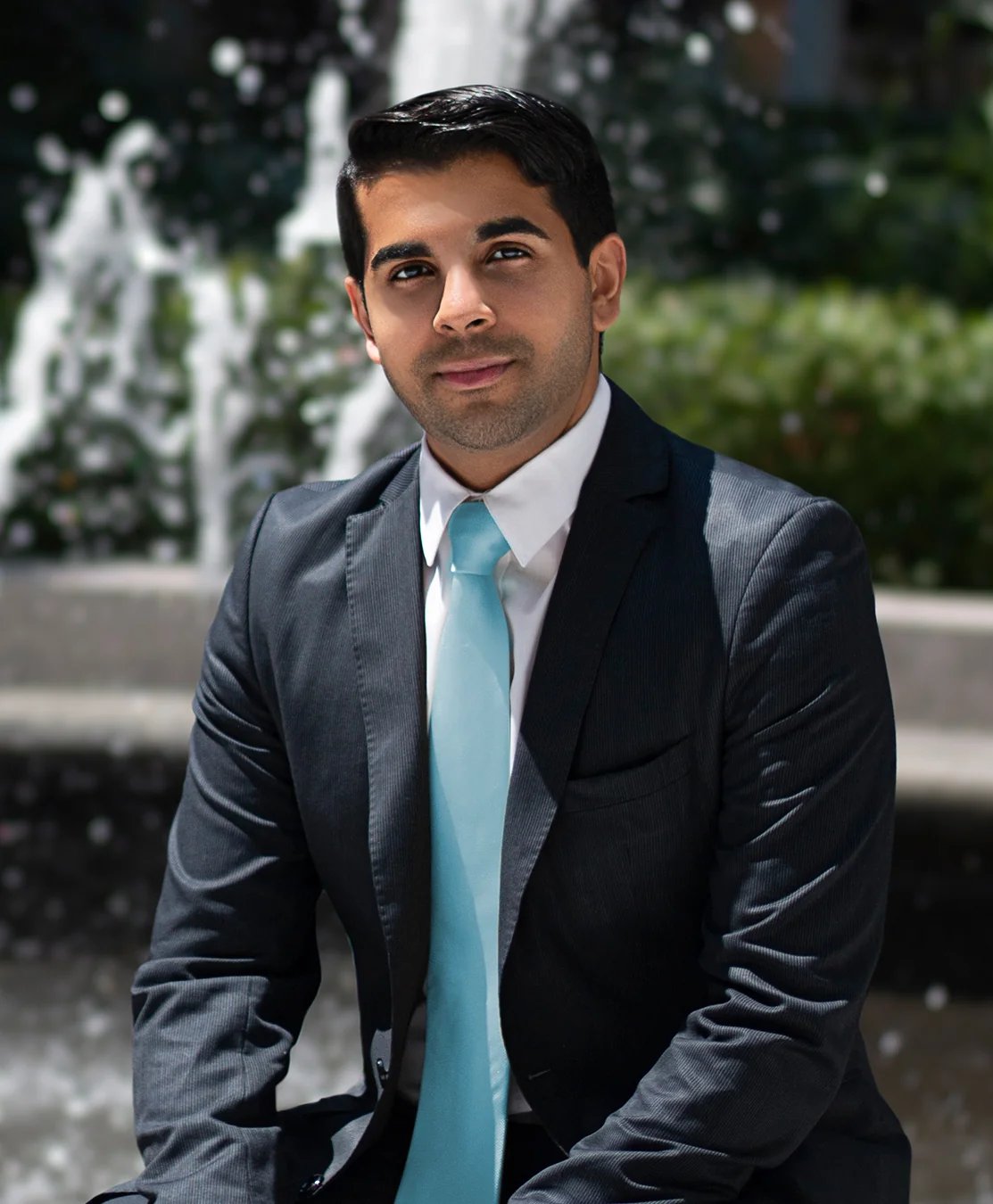
Long Island residents researching facial plastic surgery eventually come across a handful of names that surface again and again, and Dr. Hardik Doshi is consistently among them. But a list of credentials only tells part of the story. What actually distinguishes one facial plastic surgeon from another often comes down to training depth, surgical philosophy, and the judgment a surgeon exercises long before ever picking up a scalpel. This guide takes a closer look at what shapes Dr. Doshi's approach to facial plastic surgery, drawing on his own account of his training, his surgical philosophy, and the specific techniques that define his practice on Long Island.
From Flushing, Queens to Double Board Certification
Dr. Doshi's path into facial plastic surgery did not begin with a fascination with cosmetic procedures. It began with an early interest in biology and science that took root well before medical school. Born in India and raised in Flushing, Queens from the age of a year and a half, he later moved to Long Island during high school, a transition he has described candidly as a difficult one, since it meant a long daily commute back into the city for school.
A summer internship at Weill Cornell during his sophomore year of high school gave him an early window into head and neck science, planting a seed that would eventually grow into a career. That early curiosity carried him through a full academic scholarship at Boston University, where he also served as president of his class, and into one of the most competitive otolaryngology residencies in the country. He has noted that the residency he entered accepted only a handful of candidates each year out of hundreds of applicants, and by his final year he had risen to chief resident, a role in which he was directly involved in training the next generation of residents and medical students.
By the time he completed his residency, Dr. Doshi had participated in close to ten thousand surgical procedures, an experience base that few surgeons entering facial plastics can claim. From there, he pursued one of a limited number of facial plastic surgery fellowships offered nationally, a highly competitive subspecialty within an already competitive field. This combination of otolaryngology residency and facial plastics fellowship is what allows Dr. Doshi to hold double board certification, a distinction that reflects rigorous, verified training in both the broader head and neck specialty and the more focused discipline of facial aesthetic surgery. Patients researching what this dual credential actually means in practical terms can find a deeper explanation on the practice's dedicated post about what double board certification means.
Where Artistry Meets Anatomy
One of the more distinctive threads running through Dr. Doshi's account of his own path is the role that art and performance played in shaping how he approaches surgery today. Long before he considered a career in medicine, he was a singer, performing in choir settings that took him to Yankee Stadium, in front of Congress, on the Today Show, and for two sitting presidents. That early immersion in artistic performance, he has said, never fully left him, and it shows up today in how he describes his surgical philosophy: a marriage between a scientific, methodical approach and a genuine artistic sensibility.
This is not simply a marketing narrative. Dr. Doshi has pointed to a specific moment during his early clinical training, while performing cancer resections in the head and neck, that crystallized this philosophy for him. Patients would come through cancer treatment successfully, and while they were relieved the disease had been addressed, many were equally focused on how their face looked afterward. That observation stayed with him: that patients do not only want to feel better, they want to look like themselves, and the face carries an outsized psychological weight in how people see themselves every single day.
This philosophy directly informs his approach to facial plastic surgery on Long Island today, where the guiding objective in nearly every procedure is to highlight a patient's own natural features rather than imposing a generic aesthetic template onto every face that comes through the door.
Preservation Rhinoplasty: A Technique Dr. Doshi Helped Shape
Among the more technically demanding procedures Dr. Doshi performs, primary rhinoplasty stands out as an area where his contributions extend beyond his own operating room. Early in his career, during his fellowship and into his first year of private practice, he published research examining pedicle flap techniques in rhinoplasty, work that he has described as among the earliest contributions to what is now widely known as preservation rhinoplasty.
The underlying philosophy behind preservation rhinoplasty is rooted in the idea that a person's nose is, in a meaningful sense, an inherited feature, a structural signature passed down within a family. Rather than aggressively breaking down and rebuilding the nose's underlying structure, as older rhinoplasty techniques often did, preservation rhinoplasty aims to alter as little of the native anatomy as possible while still achieving the aesthetic and functional goals a patient is seeking. Dr. Doshi has described this shift as changing the way the broader scientific community thinks about the procedure, moving away from a more destructive, one-size-fits-all approach and toward something more tailored and conservative.
In practice, Dr. Doshi pairs this philosophy with a specific piezoelectric ultrasonic instrument, sometimes referred to by the acronym PISO, that reshapes nasal bone without the traditional cutting tools older techniques relied on. He has explained that this instrumentation meaningfully reduces swelling and bruising following surgery, which in turn shortens the visible recovery window for patients. For those specifically researching this technique in the Long Island area, the practice's dedicated pages on preservation rhinoplasty for Long Island patients and the comparison between preservation and traditional rhinoplasty go into further technical detail.
The Preservation Deep Plane Facelift: Going a Step Further
Facelift technique has evolved considerably over the decades, and Dr. Doshi has walked through this evolution in describing his own approach. Earlier generations of facelift surgery worked more superficially, addressing skin alone, and results, while immediately noticeable, tended to relapse within a handful of years. The deep plane facelift technique represented a significant advance by working beneath the SMAS layer, the connective tissue and muscle beneath the skin, repositioning it into a higher, more youthful position rather than simply pulling the skin tighter.
Dr. Doshi has taken this a step further with what he refers to as a preservation deep plane facelift. Rather than dissecting through more superficial layers before eventually reaching the deep plane, he moves into the deep plane earlier in the procedure. He has described this as technically more demanding, comparing the overall process to assembling a puzzle, where the entire deep plane layer is mobilized as a single unit and pivoted upward into position, rather than being approached in a more piecemeal fashion.
The clinical rationale he offers for this modification centers on reducing complications and improving the naturalness of results. Entering the deep plane earlier is associated with decreased bruising and a lower risk of hematoma, one of the more serious complications associated with facelift surgery. Just as importantly, this approach preserves the natural architecture of key facial structures, which Dr. Doshi argues is what allows patients to look like a refreshed version of themselves rather than an obviously altered one. He has noted that relatively few surgeons currently perform this specific preservation-focused variant of the deep plane technique, a reflection of both how technically demanding it is and how recently it has been refined. Patients researching this specific approach can review the practice's detailed preservation deep plane facelift master guide or the Long Island-specific page on deep plane facelift surgery for a closer technical breakdown, along with the practice's facelift cost breakdown for Long Island patients for those trying to understand pricing considerations. Patients whose concerns are more limited in scope may also want to review the practice's dedicated page on the mini facelift, an option Dr. Doshi offers for patients with earlier, more modest signs of facial aging who do not require the full scope of a deep plane approach.
Recovery as Part of the Technique, Not an Afterthought
A theme that runs consistently through Dr. Doshi's description of his surgical philosophy is that the technique used in the operating room is only part of the equation. He places significant emphasis on what happens after surgery, describing a combination of adjunct therapies he layers into many of his patients' recovery protocols, including hyperbaric oxygen therapy, red light therapy, and IV therapy, used selectively depending on the specific procedure and patient.
This attention to post-operative optimization shows up clearly in his approach to hair transplantation as well. Where a typical hair transplant patient might not see meaningful new growth for around six months, Dr. Doshi has noted that many of his patients, with the right combination of technique, careful post-operative management, and consistent follow-up, begin to see visible growth as early as three months. He attributes this not to any single intervention but to the combination of correct patient selection, technical execution, and the adjuvant recovery protocols layered on top of the surgery itself. Patients exploring hair restoration on Long Island can find more detail on the practice's FUE hair transplant page and its companion post walking through what to expect during a hair transplant consultation.
Choosing Between FUE and FUT: A Patient-Specific Decision
Hair restoration is one area where Dr. Doshi is explicit that there is no single universally superior technique. Follicular unit extraction, commonly abbreviated FUE, and follicular unit transplantation, commonly abbreviated FUT, each involve different trade-offs, and Dr. Doshi has described tailoring the choice to the individual patient rather than defaulting to one method for everyone.
He has specifically noted that some female patients with longer hair, who are less concerned about the small, shaved areas FUE can require, sometimes prefer FUT specifically because it avoids the need to shave hair in the donor area, an important consideration for anyone whose hairstyle depends on longer length. Beyond the harvesting method itself, Dr. Doshi has emphasized that the real artistry in hair restoration lies in placement, creating a hairline with natural angulation and density that matches the surrounding native hair, rather than simply achieving a high graft count.
Who Gets a Facelift Today: A Widening Patient Profile
Dr. Doshi has observed that the demographic profile of his facelift patients has shifted noticeably in recent years. He attributes part of this shift to the popularity of GLP-1 weight loss medications, which can cause rapid weight loss and a corresponding loss of facial volume and support, leading some patients in their mid to late thirties to seek surgical correction well earlier than facelift patients historically did. At the same time, he continues to treat patients well into their eighties, and he has noted that both men and women are increasingly comfortable pursuing surgical correction rather than relying solely on injectables.
This has also given rise to what he refers to as prejuvenation, the idea of addressing early structural changes before they become more advanced, rather than waiting until a patient is in their sixties or older to intervene. He has pointed out practical advantages to this earlier approach, including fewer health complications that can accompany surgery in older age, generally better healing, and more years to actually enjoy the results rather than addressing more advanced aging later in life when recovery may be more difficult.
The Real Goal: Looking Like Yourself, Not Younger
When asked directly what a facelift patient should realistically expect, Dr. Doshi has been candid that his objective is not framed primarily around a specific number of years shaved off someone's appearance. Instead, he describes his goal as helping patients feel more at ease in their own skin, highlighting features he believes deserve emphasis rather than imposing a generic transformation. He is careful to distinguish this from patients who may be exhibiting signs of body dysmorphia, describing his role as showing patients how much is already working in their favor rather than reinforcing an exaggerated focus on flaws.
He has drawn a distinction here between facelift surgery, which addresses tissue that has genuinely shifted due to gravity and years of dynamic facial movement, and procedures like rhinoplasty, where the goal is less about looking younger and more about changing a specific aesthetic feature or addressing a functional breathing concern, while still preserving the sense that the result looks like the patient's own face rather than a different person's.
Eyelid Surgery: A Whole-Face Consideration
Dr. Doshi has expanded on why blepharoplasty carries more technical nuance than patients often expect. He evaluates the eye area as part of a broader complex that includes the brow, the cheek, and the volume relationships across the mid-face, rather than treating the eyelids in isolation. Considerations of race and age also factor into his planning, since eyelid manipulation can shift not just the visual shape of the eye but its functional position, with real risk of complications such as dry eye or impaired closure if too much tissue is removed.
He has also pointed to a broader pattern he has observed in overly aggressive eyelid and brow work, particularly in male patients, where excessive skin removal or an overly elevated brow position can shift a patient's appearance in a way that reads as less consistent with their gender presentation, a result he considers a caution against a less-is-more philosophy being ignored. For lower eyelid work specifically, Dr. Doshi favors a transconjunctival approach, operating from the inside of the eyelid rather than through an external incision. While technically more demanding, this approach avoids external scarring and reduces the risk of ectropion, a condition in which the lower eyelid sags outward, which he has noted was a more common complication with older, externally incised techniques. He frequently pairs this approach with fat transfer to restore volume in the lower eyelid and cheek area, evaluating the eye not in isolation but in relationship to the surrounding facial structure. Patients specifically researching this procedure on Long Island can find more detail on the practice's dedicated blepharoplasty page for Long Island patients as well as the comprehensive post covering everything patients need to know about blepharoplasty, which walks through the nuances that separate a good outcome from a great one in more depth. General background on the procedure is also available on the practice's eyelid surgery page.
The Evolution of Hair Transplant Technique
Dr. Doshi has also described how far hair transplantation has evolved over the course of his career. Early techniques relied on plugs, which produced a visibly unnatural, tufted appearance, followed by strip harvesting methods that removed a linear section of scalp tissue, sutured the donor area closed, and processed individual grafts from that strip under a microscope, a method more closely associated with FUT.
Today, Dr. Doshi primarily uses sub-millimeter circular punches, often in the range of 0.8 to 0.9 millimeters, to individually extract hair follicles without leaving a linear donor scar, the hallmark of the FUE approach. He has emphasized that the technical skill involved goes beyond simply harvesting healthy, viable grafts. Equally important is the artistry of placement, ensuring the resulting hairline has natural angulation and density that blends convincingly with a patient's existing native hair, rather than appearing as an obviously implanted patch.
Perhaps one of the more telling aspects of Dr. Doshi's philosophy is his willingness to turn patients away. He has described specific instances of declining to operate on patients as young as fifteen who requested rhinoplasty, and he has stated candidly that he says no to potential patients more often than he says yes.
This screening process is not incidental to his practice but central to it. He has walked through a consultation process that begins well before a patient ever meets him in person, starting with an initial screening by his patient care team to confirm alignment between what a prospective patient is hoping to achieve and what can realistically and safely be delivered. If, at any point, he does not believe surgery is the right answer for someone, whether because the request seems poorly suited to their anatomy, because their expectations seem misaligned with what is achievable, or simply because he does not believe he is the right surgeon for their particular case, he has said he will refer that patient elsewhere rather than proceed. Patients considering their options can review the practice's guidance on selecting a plastic surgeon for a broader framework on how to vet a surgeon beyond credentials alone, and the practice's credentials and safety page for more detail on Dr. Doshi's specific qualifications.
Inside a Consultation With Dr. Doshi
Dr. Doshi has described his consultation process in considerable detail, and it reflects a deliberately unhurried, thorough approach rather than a quick sales-oriented meeting. By the time a patient sits down with him directly, his team has typically already gathered a substantial amount of background information, including allergies, past medical history, prior surgeries, current medications, smoking status, and any previous treatments the patient has tried.
From there, Dr. Doshi has said his focus shifts to understanding the underlying motivation behind a patient's interest in a given procedure, a line of questioning he frames around understanding the why: why this particular change, why now, and why not earlier. He has emphasized that he tries to avoid overwhelming patients with an exhaustive list of every conceivable option, instead narrowing the conversation to a focused set of choices that genuinely fit what the patient is describing, on the theory that too many options can leave a patient feeling more confused rather than more informed.
He has also described a layered pre-operative process that continues well beyond the initial consultation, including a follow-up conversation to confirm the patient is still aligned with the plan, a dedicated pre-operative visit to review medical history one final time and confirm surgical readiness, and, in some cases, conversations with a patient's family members or even a mental health professional when he believes additional input would help confirm that surgery is the right decision for that individual. On the morning of surgery itself, he walks through the plan one more time with the patient before proceeding. Patients interested in what to expect at each of these stages can review the practice's page describing the consultation process at Doshi Plastic Surgery in more detail.
What Sets His Results Apart, in His Own Words
When asked directly what would tip off another facial plastic surgeon that a set of before-and-after photos belonged to his work rather than someone else's, Dr. Doshi pointed to naturalness above all else. His stated goal in every procedure is for the result to look like the individual patient, not like a generic aesthetic outcome layered on top of their face. He has been particularly critical of overly aggressive, uniform-looking results that he believes fail to respect the individuality of each patient's features, noting that on the East Coast in particular, patients generally want results that look like a refreshed version of themselves rather than an obviously altered appearance.
He has described his approach as one of highlighting a patient's existing natural attributes and key facial landmarks rather than overriding them, a philosophy that shows up consistently across his rhinoplasty, facelift, and other facial procedures. Patients can review the practice's testimonials and browse the practice's before-and-after gallery to see how this philosophy translates into actual patient outcomes.
Giving Back: Free Surgery, Pro Bono Work, and Community Involvement
Beyond his surgical practice, Dr. Doshi has described an ongoing commitment to charitable and pro bono work that extends well beyond occasional donations. He is involved with Face to Face, a program under the American Academy of Facial Plastic and Reconstructive Surgery that provides reconstructive care, often for survivors of domestic abuse and, in some cases, for people affected by conflict zones abroad.
Closer to home, Dr. Doshi has described an annual giveaway in which his practice provides completely free surgical procedures, covering not just his own surgical fee but the anesthesiologist and surgical technician costs as well, entirely out of pocket. He has also mentioned an ongoing pattern of donating Botox, filler, laser treatments, and chemical peels to patients and organizations that reach out, describing himself, with some self-deprecating humor, as someone who says yes to these requests more often than is probably financially prudent. Patients interested in learning more about this side of the practice can review the giving back page directly.
Among the patient stories he has shared, one that has stayed with him involves a cancer survivor who, despite a full remission, was left with hair loss in specific areas that continually reminded her of her cancer history. A free hair transplant resolved that visible reminder entirely. He has also described reconstructive work for survivors of domestic violence and car accidents, noting that patients in these situations often care as much about functional outcomes, whether they can still eat or speak normally, as they do about the cosmetic result itself.
A Track Record Recognized Beyond His Own Patients
Dr. Doshi's recognitions extend into peer and institutional acknowledgment as well. During his medical training, he received the Gold Humanism Honor Society distinction, an honor nominated by supervising physicians specifically in recognition of how a trainee interacts with patients, families, and staff, reflecting an emphasis on empathy that runs alongside his technical training. His full list of professional distinctions, along with his media coverage and academic contributions, is detailed on the practice's awards and recognitions and media and publications pages.
Balancing a Demanding Practice With Family Life
Dr. Doshi has also spoken candidly about the personal side of running a facial plastic surgery practice with this level of surgical volume and complexity. He has described deliberately scaling back his weekend hours after becoming a father, describing fatherhood as both the hardest and most rewarding role he has taken on, and prioritizing time at home over the working pace he maintained earlier in his career. Music remains a constant in both his personal life and his operating room, a continuation of the same artistic sensibility that drew him toward the aesthetic side of his specialty in the first place. This kind of personal grounding, he suggests, is part of what allows him to sustain the level of focus his surgical work demands over the long term.
What This Means for Long Island Patients Researching Facial Plastic Surgery
For patients trying to decide where to go for facial plastic surgery on Long Island, the details above point to a few practical takeaways. Double board certification reflects two separate, rigorous training pathways rather than a single simplified credential, and it is worth confirming that any surgeon under consideration has completed both. A surgeon's willingness to say no, whether to an underage patient, to a procedure that will not achieve a patient's stated goals, or to a request that does not align with sound surgical judgment, is a meaningful signal of judgment and safety-mindedness, not a weakness in a sales-oriented sense. And the specific technique used in a facelift or rhinoplasty procedure, whether that is a preservation-focused approach or an older, more aggressive method, can meaningfully affect both recovery time and long-term naturalness of results.
Patients ready to explore facial plastic surgery on Long Island are encouraged to review Dr. Doshi's full about page and surgical philosophy, and to schedule a consultation to discuss their specific goals directly.
Prejuvenation and the GLP-1 Effect on Facial Aging
One of the more notable trends Dr. Doshi has observed in his own patient population is a direct connection between the rise of GLP-1 weight loss medications and an uptick in younger patients seeking facelift consultations. Rapid, significant weight loss can leave the face with less structural support than it had at a higher weight, causing skin and soft tissue to descend more visibly and at an earlier age than would typically be expected from aging alone.
This has fed into a broader concept sometimes referred to as prejuvenation, the idea of addressing structural changes earlier, before they become more pronounced, rather than waiting until later in life. Dr. Doshi has pointed out several practical advantages to this earlier intervention: younger patients generally have fewer of the underlying health conditions that can complicate a longer surgical procedure, tend to heal more predictably, and have more years ahead of them to enjoy the results, compared with patients who wait until aging changes are more advanced and then need a more extensive procedure to correct them. The practice's dedicated post on the GLP-1 facelift explores this specific connection between rapid weight loss and facial aging in more depth.
Considering Ethnicity and Individual Anatomy in Facial Procedures
Dr. Doshi has emphasized that a one-size-fits-all approach to facial procedures, particularly around the eyes, fails to account for meaningful anatomical variation across different ethnic backgrounds. He has described evaluating eyelid and brow anatomy with specific attention to a patient's ethnic background and individual facial structure, since the same technical approach applied uniformly across every patient can produce results that look inconsistent with a patient's natural features rather than a refined, subtle enhancement of them.
This same principle extends into his approach to rhinoplasty as well, where he has spoken about nasal structure as something inherited within families and closely tied to ethnic background, reinforcing why a more conservative, preservation-oriented technique that respects a patient's existing anatomical framework tends to produce results that patients and their families recognize as authentically their own, rather than a generic aesthetic outcome. Patients interested in this specific consideration within rhinoplasty can review the practice's page on ethnic rhinoplasty for further detail.
Three Offices, One Consistent Standard of Care
Dr. Doshi's practice operates out of multiple office locations, giving Long Island patients more convenient access without requiring a long commute for consultations, pre-operative visits, and post-operative follow-up appointments. He has noted that his primary in-office surgical suite carries the same accreditation standard as a hospital-based operating room, allowing many procedures to be performed comfortably and safely without requiring a separate hospital visit.
This structure reflects a broader emphasis throughout his practice on continuity of care. Rather than a fragmented experience in which a patient sees different providers at each stage of their treatment, Dr. Doshi has described staying personally involved from the initial consultation through surgery and every step of recovery, including personally checking in with patients by phone on the evening of surgery and the following morning, and at regular intervals throughout the recovery process.