A rhinoplasty consultation is the single most important appointment in the entire surgical process. It is where a patient's goals, a surgeon's judgment, and the physical realities of a nose all meet in one room, and it is the last real chance to course-correct before a decision is made. Dr. Hardik Doshi, a double board-certified facial plastic surgeon serving Long Island and Manhattan, has built his rhinoplasty practice around one guiding idea: a consultation should leave nothing unanswered. Patients who walk in prepared with the right questions tend to walk out of surgery with results that match what they actually wanted, not just what looked good on paper.
This guide lays out the questions worth asking before committing to primary rhinoplasty, revision rhinoplasty, or a non-surgical alternative, organized around the questions that actually change outcomes rather than the generic checklist most patients already know to ask.
Why the Consultation Matters More Than People Realize
Most patients walk into a rhinoplasty consultation already having done research online, compared before-and-after galleries, and formed an opinion about what they want. What they often haven't done is figure out whether the surgeon in front of them shares their aesthetic sensibility, understands their functional concerns, and has a plan that matches their specific anatomy. According to Dr. Doshi, one of the most common sources of dissatisfaction after a nose surgery isn't a technical failure. It's a communication failure. In his experience with revision cases, a strong majority of patients seeking a second opinion after a disappointing rhinoplasty describe the same complaint: the surgeon didn't fully listen to what they asked for, or didn't do what was discussed, even when the resulting nose was technically well made.
That single insight should reframe how patients approach their consultation. The goal isn't just to confirm that a surgeon is qualified. It's to confirm that the surgeon has actually understood the goal, and that both parties are picturing the same outcome.
Start With Questions About Fit, Not Just Credentials
"Do you think we're aesthetically aligned?"
Every surgeon has a slightly different eye. Some lean toward dramatic refinement, others toward subtle, barely-there changes. Before any conversation about technique, patients should ask directly whether the surgeon's aesthetic sensibility matches their own. Dr. Doshi is candid about this: he tells prospective patients to look closely at before-and-after galleries, not just for technical quality, but for whether the results resonate personally. A well-executed rhinoplasty that doesn't match a patient's aesthetic goals is still, in the patient's eyes, a disappointing outcome.
The surgical gallery is a useful starting point, but the consultation is where that alignment gets tested directly. Patients should bring reference photos, describe what they like and dislike about their current nose in detail, and ask the surgeon to articulate back what they heard. If the surgeon's summary doesn't match the patient's intent, that's worth resolving before surgery, not after.
"Will you actually be listening, or is this a templated process?"
It sounds like an unusual question to ask a surgeon, but it matters. Practices with a heavy patient volume sometimes streamline consultations to the point where individual goals get flattened into a standard procedure. Dr. Doshi's approach is built around an intake process that starts well before the patient ever sits down with him. Patient care coordinators gather background, medical history, and aesthetic goals in advance, so that by the time a patient is in the room, the conversation can go deeper rather than covering the basics again. Patients should ask how the practice handles this. Is there a screening step to confirm the surgeon is the right fit before booking? Is the surgeon personally involved in reviewing photos and history, or is that entirely delegated?
Why the Surgeon's Background Shapes What Happens in the Room
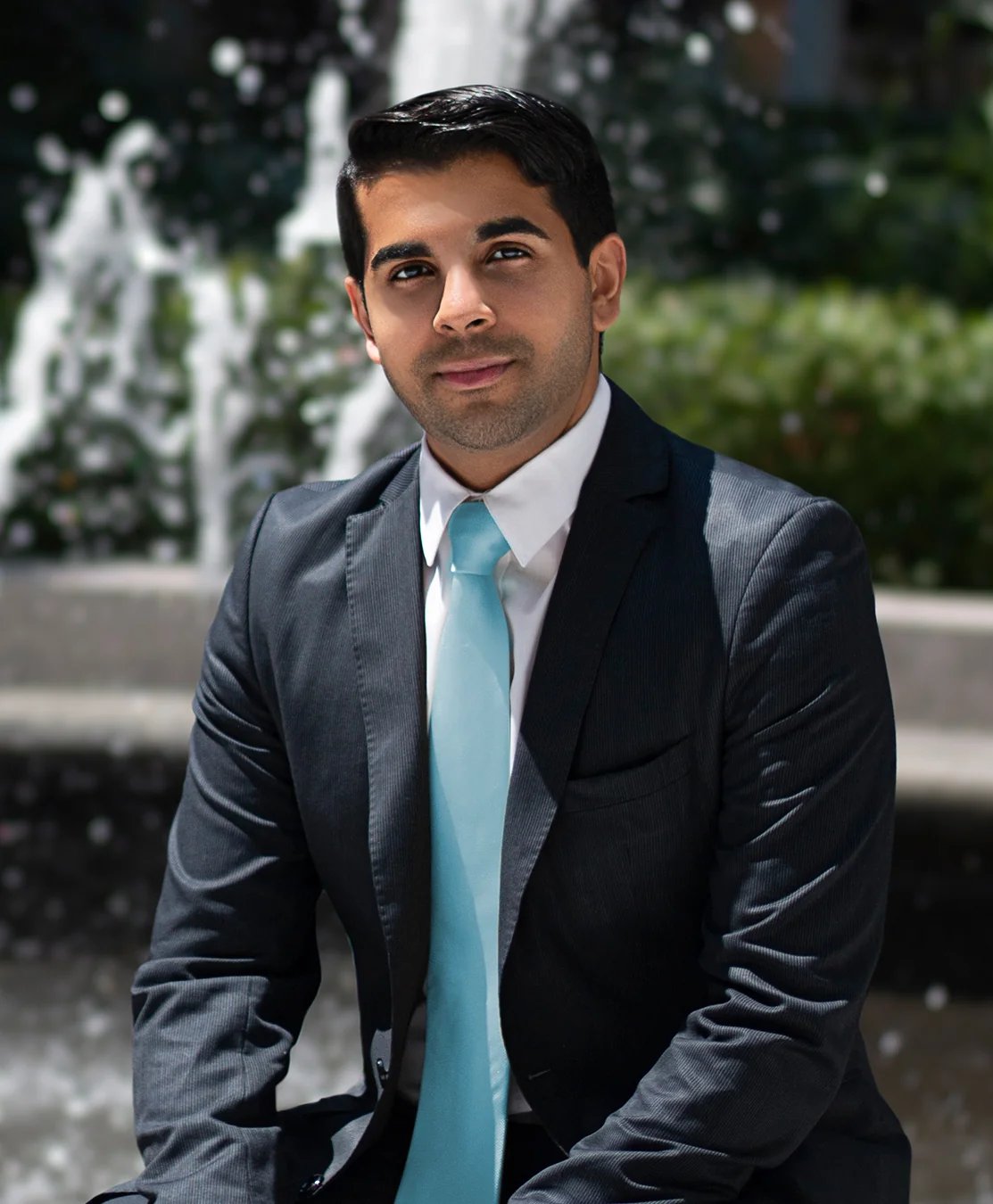
It's worth understanding why Dr. Doshi approaches the consultation the way he does, because his background is unusually relevant to rhinoplasty specifically. Before pursuing medicine, he spent years as a trained vocalist, singing for two U.S. presidents, performing for Congress, singing at Yankee Stadium, and appearing on national television. That artistic training turned out to matter more than a passing biographical detail. Dr. Doshi has described rhinoplasty as "surgical artistry," explaining that his path into facial plastic surgery came from wanting to marry a scientific, structural approach with an artistic eye for proportion, balance, and identity.
That combination shows up directly in how he frames a nose during consultation: not as a defect to be corrected, but as a feature to be understood on its own terms before anything is changed. It's also why he pursued the sub-specialty of otolaryngology (ear, nose, and throat surgery) before further specializing in facial plastic surgery. That dual training means the surgeon evaluating a nose for aesthetic refinement is the same surgeon qualified to evaluate its function, rather than a purely cosmetic specialist working without airway expertise. Patients should ask directly about this dual training background, since it directly explains why breathing, smell, and appearance are treated as a single integrated problem rather than three separate conversations.
Questions About the Research and Evidence Behind the Technique
"Has your surgical approach been published or peer-reviewed?"
It's reasonable to ask whether a surgeon's technique is grounded in published research rather than personal preference alone. Dr. Doshi's early research, published during his fellowship and into his first year of private practice, examined pedicle flap techniques in rhinoplasty and how different tissue components could be preserved and repositioned rather than discarded. That research is considered among the contributing work behind what facial plastic surgeons now broadly practice as preservation rhinoplasty. Asking a surgeon whether their approach has a research foundation, or whether it's simply "the way I was trained," can reveal a meaningful difference in how deliberately a technique has been tested and refined over time.
"How has your approach changed over the course of your career?"
Surgical philosophy tends to evolve substantially over a career, and a surgeon who is honest about that evolution is usually more trustworthy than one who claims to have arrived at a perfect technique from day one. Ask specifically how the surgeon's approach to rhinoplasty today differs from their approach five or ten years ago, and what specifically drove those changes. A thoughtful answer here, referencing evolving technology, published research, or lessons learned from complex revision cases, is a stronger signal than a generic answer about "years of experience."
Questions About the Surgery Day Experience Itself
"What happens on the morning of surgery?"
Ask for a walk-through of surgery day specifically. In Dr. Doshi's practice, this includes a final same-day review of the surgical plan, a chance to look again at any reference photos or morphing images discussed earlier, and a final confirmation of exactly what will and won't be addressed. Patients should ask whether this kind of final check-in happens at any practice they're considering, since it's the last opportunity to catch a miscommunication before anesthesia begins.
"Who is contacting me during recovery, and how often?"
This deserves more attention than most patients give it. Ask specifically whether the surgeon or a staff member calls the evening of surgery, whether there's a follow-up call the next morning, and what the cadence of check-ins looks like over the following weeks. A practice that treats the recovery period as an extension of the surgical relationship, rather than a box to check with a single two-week follow-up appointment, tends to catch complications earlier and manage patient anxiety more effectively.
Questions About the Nose as Part of the Whole Face
"Should anything else on my face be addressed at the same time?"
Rhinoplasty doesn't happen in isolation from the rest of the face, and sometimes a nose that looks disproportionate is actually a signal of a weak chin, heavy brow, or other feature competing for attention. Ask the surgeon directly whether they see the nose as an isolated concern or as one element of overall facial balance, and whether a combined procedure, such as chin augmentation or brow lift, might create a more harmonious result than addressing the nose alone. This isn't a suggestion that every patient needs additional procedures. It's a question worth asking so the decision is made deliberately rather than by default.
"If I'm not a candidate for surgery yet, what should I be doing in the meantime?"
For patients who are told to wait, whether due to age, unresolved medical issues, or simply wanting more time to decide, ask what's reasonable to do in the interim. This might include non-surgical options for minor concerns, skincare guidance, or simply revisiting a consultation in a year once circumstances change. A surgeon who offers a thoughtful answer here, rather than simply turning a patient away, tends to be one who is thinking about long-term patient relationships rather than single transactions.
Questions About the Surgeon's Approach to the Nose Itself
"What is your philosophy on rhinoplasty: preservation or traditional reduction?"
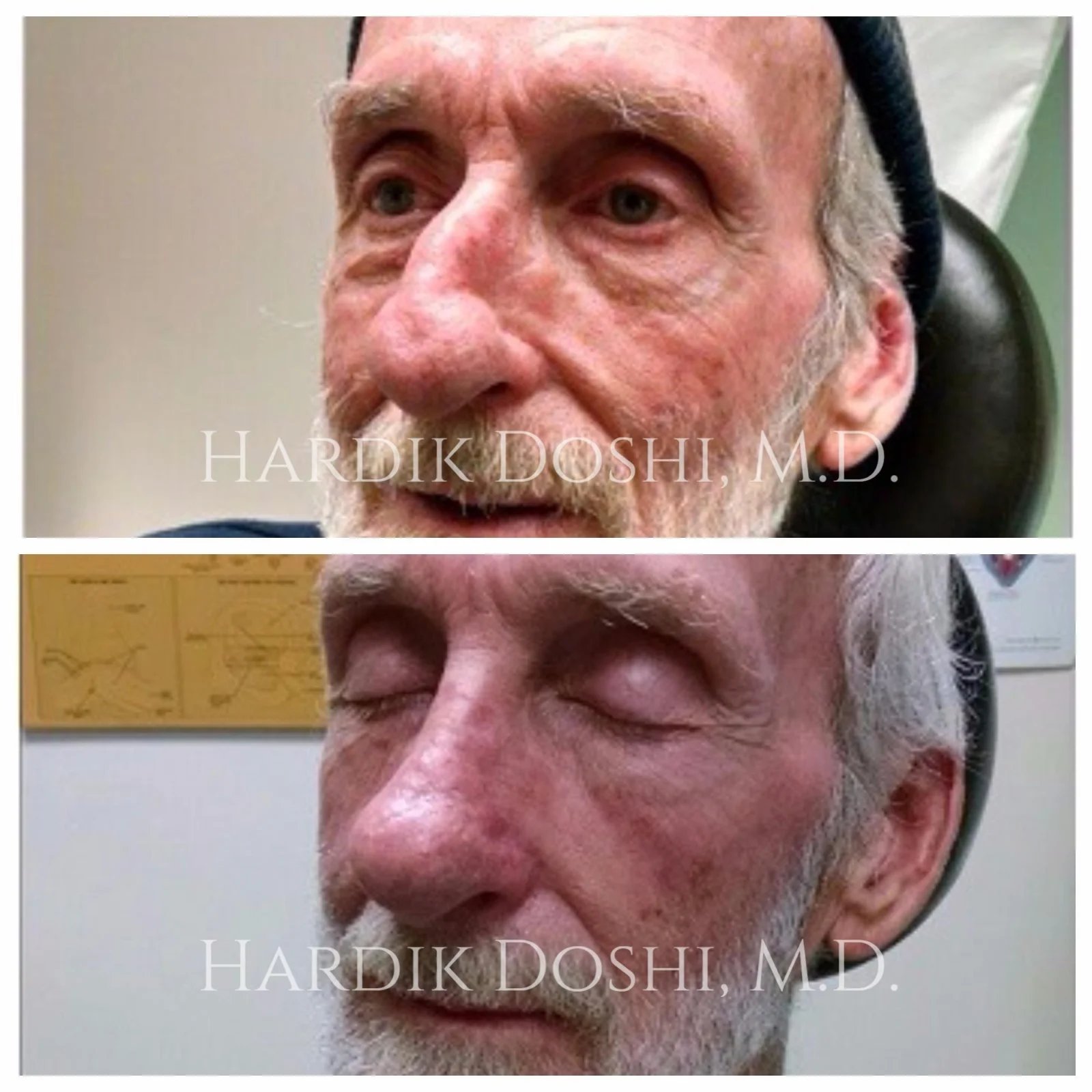
This is arguably the most important technical question a patient can ask, and one that most patients don't know to ask by name. For decades, the standard approach to rhinoplasty involved removing significant portions of cartilage and bone to make the nose smaller, often resulting in the same narrow, pinched look across very different patients. Dr. Doshi describes this as the "take everything out, make a small nose" era, an approach that frequently compromised breathing and erased the natural characteristics that made a nose belong to a particular face.
Preservation rhinoplasty represents a different philosophy entirely. Rather than discarding structural tissue, the surgeon repositions and reshapes what is already there, preserving the natural ligamentous support of the nose. Dr. Doshi has described this using a construction analogy: instead of demolishing a house and building a smaller one from scratch, you take the existing lumber and reframe it into a new structure. The result tends to be a nose that looks refined without looking generic, and one that recovers with less swelling, bruising, and structural disruption. Patients considering surgery on Long Island should ask specifically whether their surgeon practices preservation techniques, since this single philosophical difference affects both the aesthetic outcome and the recovery timeline. A deeper comparison is available in this breakdown of preservation versus traditional rhinoplasty.
"What technology or instruments do you use, and how does that affect recovery?"
Beyond surgical philosophy, the physical tools used during surgery matter. Dr. Doshi uses ultrasonic piezoelectric instrumentation (often referred to as Piezo technology) to reshape nasal bone, rather than traditional osteotomes and mallets that fracture bone more bluntly. Because the ultrasonic technique is more precise and less traumatic to surrounding tissue, patients tend to experience noticeably less bruising, less swelling, and a faster return to normal appearance. This is a fair question to ask any rhinoplasty surgeon: does the practice use ultrasonic bone-shaping technology, or conventional instruments? The answer has a direct, measurable effect on the recovery timeline and the swelling timeline patients can expect.
"How do you prioritize breathing, smell, and appearance?"
It's a question few patients think to ask, but it reveals a lot about how a surgeon actually approaches the nose. Dr. Doshi is explicit about his own priority order: breathing first, sense of smell second, appearance third, every single time he operates on a nose. That doesn't mean aesthetics take a back seat in the final result. It means that no cosmetic change is made at the expense of nasal function. Patients with any history of breathing difficulty, chronic congestion, or prior septoplasty should ask directly how the surgeon plans to protect or improve airflow while addressing cosmetic goals, since these two objectives are not always automatically compatible and require deliberate surgical planning. For patients whose primary concern is functional rather than cosmetic, this breathing correction page outlines the surgical options in more depth.
"Can you show me a visual simulation of what my nose might look like?"
Dr. Doshi's practice uses in-office morphing software during the consultation, allowing patients to see a proposed reshaping applied directly to a photo of their own face. This is a meaningfully different experience than looking at generic before-and-after galleries of other patients. It gives both the surgeon and the patient a shared visual reference point to discuss before surgery, reducing the odds of a mismatch between expectation and result. Patients should ask whether this kind of simulation is available during their consultation, and if so, should use it to have an honest conversation about what is realistic versus what is aspirational.
Questions Specific to Ethnic and Heritage-Conscious Rhinoplasty
"How do you approach preserving ethnic identity in a nose?"
Not every rhinoplasty patient wants a smaller, more uniform-looking nose. Many patients specifically want refinement that preserves the characteristics that reflect their heritage. Dr. Doshi describes the nose as something inherited, calling it "the heirloom of the face," passed down through family lines and worth respecting rather than erasing. Patients from South Asian, Middle Eastern, African, or other backgrounds where the natural nasal structure carries specific ethnic characteristics should ask directly how the surgeon plans to balance refinement with identity preservation. This conversation is especially important in ethnic rhinoplasty, where the wrong approach can produce a technically fine nose that no longer looks like it belongs to the patient's face or family.
"Do you treat male and female rhinoplasty differently?"
Aesthetic goals for a nose often differ meaningfully by gender, with different ideal proportions, dorsal profiles, and tip projections considered attractive. Ask whether the surgeon has specific experience and distinct aesthetic frameworks for male rhinoplasty and female rhinoplasty, rather than a single universal template applied to every patient regardless of gender.
Questions to Ask If This Is a Revision Rhinoplasty
Revision rhinoplasty is a fundamentally different conversation than a first surgery, and it deserves its own set of questions.
"How often do you perform revision rhinoplasty, and what makes it more difficult than a primary case?"
Operating on a nose that has already been surgically altered is significantly more complex than a first-time procedure. Scar tissue, altered blood supply, and previously removed structural support all make revision surgery a genuinely different technical challenge. Dr. Doshi has described revision rhinoplasty as "always an uphill battle," and notes that surgeons tend to become more selective about which revision cases they take on as they gain more experience, precisely because the margin for error narrows. Patients considering revision rhinoplasty should ask how many revision cases the surgeon takes on in a typical year, what the most common complications are in revision work, and whether the surgeon feels confident about the specific correction being requested, or whether a more conservative, staged approach might be safer.
"Is this my second surgery or my third, and does that change your approach?"
Some patients arrive at a consultation having already had multiple prior procedures. Dr. Doshi has worked with patients undergoing a third rhinoplasty following two previous surgeries elsewhere, and each additional surgery reduces the amount of usable cartilage and tissue available for reconstruction. Patients in this position should ask specifically whether there is enough structural material left to work with, whether cartilage grafting from the ear or rib may be required, and how the surgeon plans to manage expectations given the more limited toolkit available after multiple prior surgeries.
"What went wrong with my previous rhinoplasty, in your assessment?"
This is an uncomfortable but valuable question. A surgeon reviewing a revision case should be able to articulate, specifically, what structural or aesthetic issue is driving the current dissatisfaction, rather than offering a vague "we'll make it better." Precision here indicates a surgeon has actually diagnosed the problem rather than planning to make general improvements and hoping for the best.
Questions About Candidacy and Timing
"Am I actually a good candidate for this surgery right now?"
Not every prospective patient should proceed immediately, and a trustworthy surgeon will say so. Dr. Doshi is direct about turning away patients who are not appropriate candidates, most notably teenagers seeking rhinoplasty before their nose has finished developing. His policy is to decline surgery for patients as young as fifteen and ask them to return once they've reached at least eighteen, specifically to avoid operating on a nose that is still growing and changing. Patients of any age with an unusual anatomical situation, an unresolved medical condition, or a psychological readiness question should ask directly whether the surgeon considers them a good candidate today, and if not, what would need to change first.
"What's involved in the pre-operative process, and how personalized is it?"
Beyond the surgical consultation itself, ask what happens between booking and surgery day. Dr. Doshi's practice involves a structured pre-operative process: confirming medications and allergies, verifying a patient has arranged post-operative transportation and support, reviewing pharmacy details in advance, and a same-day review of exactly what will be done before the patient goes under anesthesia. Patients should ask how thorough this process is at any practice they're considering, since a rushed or generic pre-operative process is often a sign of a rushed or generic surgical experience. For patients who want to review this in writing, the pre-operative rhinoplasty instructions are worth requesting ahead of the consultation.
"What does follow-up care actually look like after surgery?"
Ask specifically who calls, when, and how often. Dr. Doshi describes a close follow-up cadence that includes a call the evening of surgery, another the following morning, and regular check-ins at intervals throughout recovery. This level of contact matters especially in the first 72 hours, when most urgent post-operative questions arise. Compare this to a practice that schedules a single follow-up visit two weeks out and offers little in between. The post-operative rhinoplasty instructions give a sense of what the recovery protocol covers.
Questions About Cost, Value, and Transparency
"What does the consultation itself cost, and what does that include?"
Cost transparency starts before surgery is even scheduled. Ask what the consultation fee is, whether it includes a hands-on physical evaluation, digital morphing, and time to ask follow-up questions, or whether it's a brief scripted meeting. Dr. Doshi has framed his own consultation pricing in relative terms: an hour of a double board-certified surgeon's time is comparable to, or less than, many general specialist visits, and it's worth evaluating what's actually included for that fee rather than comparing sticker price alone.
"What is the total cost, and are there financing options?"
Ask for a complete breakdown that includes the surgeon's fee, anesthesia, facility fee, and any garments or post-operative supplies. Patients weighing the investment should also ask about financing options, since many practices offer structured payment plans that make the decision less of an all-at-once financial commitment. A general sense of regional pricing for related facial procedures can also be found in this facelift cost breakdown for Long Island, which illustrates how facility, anesthesia, and surgeon fees typically combine.
Questions About Credentials and Safety
"Are you double board-certified, and in what specialties?"
Board certification is the baseline question, but it's worth asking precisely which boards and in what specialties, since not all certifications reflect the same training in facial anatomy specifically. A surgeon with dual certification in facial plastic surgery and otolaryngology (ear, nose, and throat surgery) brings a different depth of experience with nasal airway anatomy than a surgeon certified in general plastic surgery alone. This distinction matters specifically for rhinoplasty, where the surgeon is operating on structures that affect both appearance and breathing simultaneously. Details on training and certification are available on the credentials and safety page and in this explainer on what double board certification actually means.
"Where is the surgery performed, and is the facility accredited?"
Ask whether the procedure takes place in an accredited surgical facility or hospital-based operating room, and what anesthesia protocols are used. This is a basic safety question that's easy to overlook when the conversation is focused on aesthetics.
"What happens if there's a complication?"
Every surgery carries some risk, and a surgeon who is transparent about complication rates and management protocols is generally more trustworthy than one who implies the risk is negligible. Ask specifically how the practice handles complications after hours, whether the surgeon personally manages complications or refers out, and what the revision policy looks like if a touch-up procedure becomes necessary.
Questions That Reveal How a Practice Actually Operates Day to Day
"How involved is the surgeon personally, versus staff?"
Dr. Doshi has been candid that one of the most common regrets he hears from revision patients is a sense that the original surgeon wasn't sufficiently present or attentive, whether during the consultation, the surgery planning, or the post-operative period. Ask how much of the process the surgeon personally handles versus delegating to staff, particularly around reviewing photos, discussing goals, and managing recovery check-ins.
"How responsive is the team if I have questions after hours?"
This is worth asking directly, because it's one of the clearest signals of how a practice treats patients once the transaction of surgery is complete. A team that's engaged and responsive throughout recovery, not just up until the day of surgery, tends to correlate strongly with patient satisfaction.
"Can I see reviews and speak to prior patients?"
Reviews and testimonials are useful, but Dr. Doshi cautions that they shouldn't be the only factor considered. Look at reviews in combination with before-and-after results, credentials, and the quality of the consultation conversation itself, rather than treating star ratings in isolation.
A Note on Non-Surgical Alternatives
Not every patient who's curious about rhinoplasty is ready for, or a candidate for, surgery. It's worth asking directly whether a non-surgical rhinoplasty using injectable filler could address specific concerns, such as a minor dorsal bump or asymmetry, without committing to a surgical procedure. This isn't right for every concern, particularly ones involving breathing or significant structural change, but it's a legitimate question to raise if cost, downtime, or surgical risk are significant factors in the decision.
Putting It All Together: A Consultation Checklist
Before leaving a rhinoplasty consultation, a patient should be able to answer all of the following with confidence:
- Does the surgeon's aesthetic sensibility match what I actually want, based on the gallery and our conversation?
- Does the surgeon practice preservation rhinoplasty, and do I understand how that differs from traditional reduction?
- What instruments and technology will be used, and how will that affect my swelling and bruising?
- How will breathing and sense of smell be protected during the procedure?
- If this is a revision, does the surgeon have a clear, specific diagnosis of what went wrong previously?
- Am I actually a good candidate today, or is there a reason to wait?
- What does the full pre-operative and post-operative process look like, and how personally involved will the surgeon be?
- What is the total cost, and are financing options available?
- Is the surgeon double board-certified, and where will the surgery be performed?
A consultation that answers all of these clearly, without vague or scripted responses, is generally a strong sign of a surgeon worth trusting with a nose. To schedule a consultation with Dr. Doshi and walk through these questions directly, patients on Long Island and in Manhattan can request a virtual or in-person consultation or learn more about what to expect during a consultation at Doshi Plastic Surgery.