
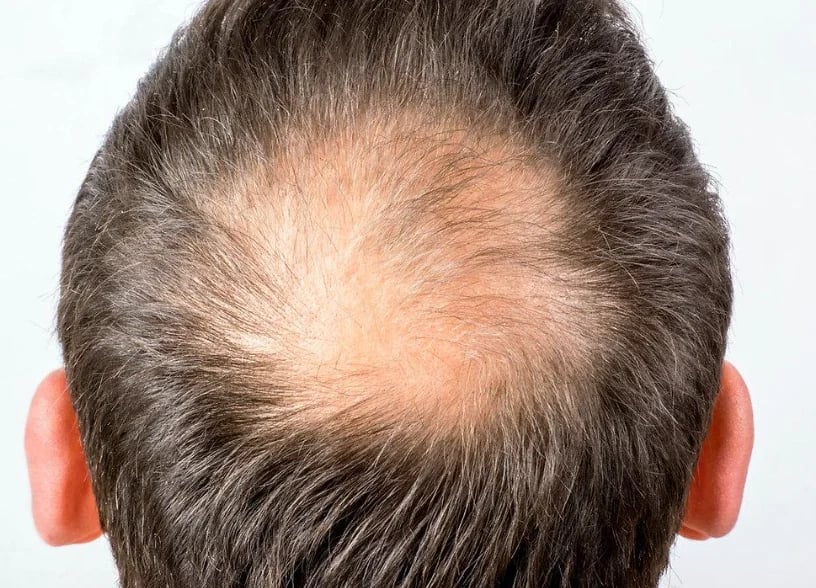
Hair transplantation has a reputation for permanence that is half true. The grafts, moved from the back and sides of the scalp where hair resists the hormone that causes balding, keep growing for decades. The hair around them has no such immunity. A transplant fixes the map of the scalp as it looked on the day of surgery, and the rest of the head carries on with whatever process caused the hair loss in the first place.
This is the single most overlooked fact in the consultation room. Patients ask about density, hairline design and how many grafts they will need. They ask less often what will happen to the hair they still have, and that omission is where many disappointing outcomes begin. A transplant and a medication are not rivals. Used together, they cover each other's blind spots.
The hair that was never transplanted
Pattern hair loss in men is driven by sensitivity of follicles at the front, top and crown to dihydrotestosterone, a hormone derived from testosterone. Follicles in those areas shrink over years, producing finer, shorter, paler hairs until they stop producing visible hair at all. The follicles at the back and sides are not sensitive, which is why they serve as the donor area. When they are moved to a balding area, they keep their own genetic behavior and continue to grow.
The native hair surrounding a transplant has not been moved, and it remains sensitive. If it is left untreated, it continues to thin. After a decade the transplanted hairline may still be intact, but the native hair behind it has receded, leaving an island of dense hair in front of a thinning scalp. The result can look worse than the original loss, because it is unnatural in pattern. This is why surgeons planning a transplant for a younger patient must think about where the hair loss will be in fifteen years, and why the limits of donor supply matter so much for a younger patient's transplant.
What finasteride does, in plain terms
Finasteride works by blocking the enzyme that converts testosterone to dihydrotestosterone, lowering the hormone's level in the scalp and bloodstream. For many men, that slows or stops further loss, and some see partial regrowth. It is a maintenance treatment: its benefit depends on continued use, and when it is stopped, the protected hair tends to be lost over the following months.
Side effects are the reason many men hesitate. A small percentage report sexual side effects such as reduced libido or erectile difficulty, and mood changes have been reported as well. Most men tolerate it without trouble, and the symptoms usually resolve when the drug is stopped, though reports of persistence exist and are debated. Topical formulations have emerged as an option for men who want lower systemic exposure. These are decisions for a prescribing clinician, and a patient should discuss his own history before starting. Women of childbearing potential should not handle crushed tablets, and finasteride is not a general treatment for women's hair loss, since women's thinning follows different patterns and causes.
What minoxidil does and does not do
Minoxidil is a different animal. It does not touch hormones. It appears to prolong the growth phase of the hair cycle and increase the size of follicles, and it is available as a topical solution or foam. Results are modest but real for many users, and the effect, like finasteride's, depends on continued use. Stopping leads to a return to the baseline trajectory.
Oral low-dose minoxidil has attracted attention as an alternative for people who dislike applying a liquid daily. It is used off label and carries its own considerations, including effects on blood pressure and fluid balance and, in some people, growth of fine hair on the face. As with finasteride, it belongs in a conversation with a clinician who can assess the individual.
Why the combination matters
Finasteride addresses the hormonal driver, minoxidil addresses follicle size and growth phase, and transplantation restores areas where follicles have already been lost. The three do not overlap. Medication cannot recreate hair that is gone, and surgery cannot protect hair that is still there.
The practical sequence for many patients is to start medical treatment first, evaluate over six to twelve months and then decide how much surgery is needed. A patient whose hair stabilizes may need fewer grafts, or may be content with a smaller procedure aimed at the hairline. A patient who continues to lose hair despite treatment learns something important about how aggressive the process is, which should shape the surgical plan. Platelet-based therapy sits alongside these options as an adjunct, and the evidence for PRP is real but modest.
Year zero, year five, year ten
It helps to picture the same patient at three points in time. At year zero, he has a receding hairline and a thinning crown. He chooses a transplant to rebuild the front and mid-scalp and uses no medication, because he dislikes the idea. The result is excellent.
At year five, the transplanted hair is thick, but the native hair behind it has thinned and the crown has progressed. He needs a second procedure to fill in, which uses donor hair he may not have to spare. At year ten, the donor area is more depleted, the native hair continues to decline and the plan has become a series of compromises.
Run the same patient with finasteride and minoxidil from year zero. At year five, the native hair has largely held, the transplant blends into a stable background and no second procedure is needed. The medications cost money and require discipline, but they preserve the donor supply, which is the resource that cannot be replaced.
Protecting the donor area
The donor area is finite, and every graft taken is gone from that supply. That is why surgeons think about long-term hair loss before agreeing to extract grafts, and why the health of the donor scalp years later is a topic in its own right, since the donor scalp has to stay healthy for years after follicular unit extraction. A donor area that has been harvested aggressively, or that is itself thinning, has less to offer.
Medication helps here too. If the hair in the donor zone is stable, the surgeon can plan on its density. If a patient has a diffuse thinning pattern that includes the donor area, the surgeon needs to know before promising a result. A good consultation includes an examination under magnification, not just a look at the hairline.
What a transplant can do that medication cannot
None of this diminishes surgery. Medication cannot return a hairline to a bald forehead or fill a scar, and the patient with advanced loss will not regrow a full head of hair on tablets alone. A transplant creates hair where none exists, and the outcome of a well-planned FUE session can be natural and lasting.
The sensible reading of the evidence is that surgery and medication answer different questions. Surgery asks where hair should be, and medication asks how long the hair that exists will last. Patients who treat the two as alternatives are often asking the wrong question.
Timing around surgery
Patients should tell the practice about every medication they take, and prescribed medications are continued unless the patient is instructed otherwise. Routine minoxidil use resumes three weeks after the procedure. The surgeon's written aftercare instructions are the authority on this, and patients should follow them in preference to anything general they read online.
A related point is shedding. After a transplant, many patients lose some of the transplanted hairs within weeks, a normal event known as shedding, and some lose native hair near the grafts as well, a phenomenon called shock loss. Medication does not prevent every instance, but appropriate medical therapy before or alongside the transplant can help manage the overall picture of hair density during and after recovery. Patients who stopped treatment before surgery should discuss restarting it.
Who might choose medication alone
A man in the early stages, with a mild recession and good density, may not need surgery at all. Finasteride and minoxidil can hold the line, and he can reassess at a follow-up in a year. Patients who are wary of surgery, who cannot take time off or whose donor supply is limited may reasonably choose this path.
For men who have already lost a substantial area, the picture changes. Medication will slow further loss but not rebuild what is gone. A realistic plan explains this clearly, and it should also address the question of cost across time, since both medication and a transplant are investments. Surgical fees follow graft numbers and donor limits more than any single price, which is how transplant cost is actually built.
Women, and why the advice is different
Women's hair loss follows different patterns and has different causes, including hormonal shifts, iron deficiency, thyroid disease and genetics. Finasteride is not the standard approach, and a thorough medical evaluation comes before any decision about surgery. The key difference is that diffuse thinning often involves the donor area as well, which makes candidacy for a transplant narrower. Patients should not assume that what works for a man's receding hairline applies to them.
Starting the conversation
A practical first step is a hair transplant evaluation that looks at the pattern of loss, the donor density and the family history, followed by a plan that treats the medical and surgical questions together.
The conversation that matters most is the one about the next ten years, not the next ten weeks. A surgeon who plans only for the day of surgery is solving the smaller problem.